
I. The Dawn in the Clearing
The forest awakens in silence.
Golden light spills between towering trunks, stretching into a meadow where wildflowers open their faces to the sun. Dew clings to blades of grass, each droplet a miniature prism scattering the morning’s first warmth. The air hums with a low, invisible music — bees hovering, leaves trembling, the rustle of something unseen moving through the undergrowth.
It is a world painted in layers of green and gold, a living mosaic that breathes, drinks, and listens. Above, the canopy filters sunlight into shifting ribbons. Below, roots thread the earth in a vast, unseen network.
In this glade, every organism — from the smallest moss to the tallest pine — participates in a conversation billions of years old. Light touches leaf, leaf feeds tree, tree feeds soil, soil feeds life. Energy flows like a current, linking everything in one continuous loop.
Here, where light meets life, the language of the forest is both silent and eternal.
II. The Power of Light — The Alchemy of Photosynthesis
If there is one truth shared by every living thing, it is this: life is written in sunlight.
Every forest, every meadow, every grain of rice or bite of fruit traces its origin to a process so elegant it borders on magic — photosynthesis. In this quiet alchemy, plants capture light energy and transform it into the sugars that sustain all terrestrial life.
Inside each leaf are millions of microscopic structures called chloroplasts, each containing chlorophyll — the pigment that makes plants green. When sunlight strikes these molecules, they excite electrons, setting off a chain of reactions that splits water into hydrogen and oxygen. The plant keeps the hydrogen, combining it with carbon dioxide drawn from the air to create glucose — fuel for growth. The oxygen, a byproduct, is released back into the atmosphere.
That oxygen is our inheritance. Every breath we take — every heartbeat, every word spoken — is made possible by this molecular miracle.
Forests, in their infinite green expanse, are vast solar engines. They convert sunlight into matter, turning intangible energy into food, fiber, and shelter. Through photosynthesis, forests sustain themselves — and us.
Light is not just illumination; it is nourishment. It is life translated into form.

III. The Flow of Energy — The Forest’s Food Web
The light captured by plants begins a chain of giving. Herbivores eat leaves and fruits; carnivores eat herbivores; decomposers recycle everything that falls. In the forest, nothing is wasted.
Producers, Consumers, Decomposers
At the base of the food web are the producers — trees, shrubs, and mosses that harvest sunlight. Above them are the consumers — insects, birds, mammals, each drawing energy secondhand from the sun. And when life ends, the decomposers — fungi, bacteria, and detritivores like beetles and worms — break matter down, returning it to the soil to feed the next generation.
This flow of energy is a slow, circular heartbeat. The forest recycles not only nutrients but time itself, weaving death into life and decay into renewal.
The Role of Decomposition
When a tree falls, it doesn’t die — it transforms. Moss and fungi colonize its bark, insects burrow into its wood, and within months, its structure becomes a living ecosystem. Nutrients once locked in wood leach into the soil, feeding saplings that rise toward the light.
The forest thrives not by denying death, but by folding it into its design.
IV. The Soil Beneath — The Hidden Foundation
The forest floor may seem inert, but beneath its surface lies a universe of life. A single handful of soil can contain more microorganisms than there are people on Earth.
These microbes — bacteria, protozoa, nematodes, and fungi — decompose organic matter and release nutrients that plants can absorb. They form symbiotic relationships with roots, exchanging minerals for sugars in a complex web of trade.
As leaf litter accumulates, it layers into humus — dark, rich organic material that retains moisture and stabilizes the ecosystem. This humus acts as the forest’s memory, recording every season, every fallen leaf, every rainfall. It is the earth’s quiet archive of abundance.
Without healthy soil, the forest cannot stand. Without decomposers, the circle breaks. The health of the canopy depends on the vitality of the dirt — a humbling reminder that all greatness begins underground.

V. The Hidden Network — Fungi and the “Wood Wide Web”
If the forest were a body, then fungi would be its nervous system.
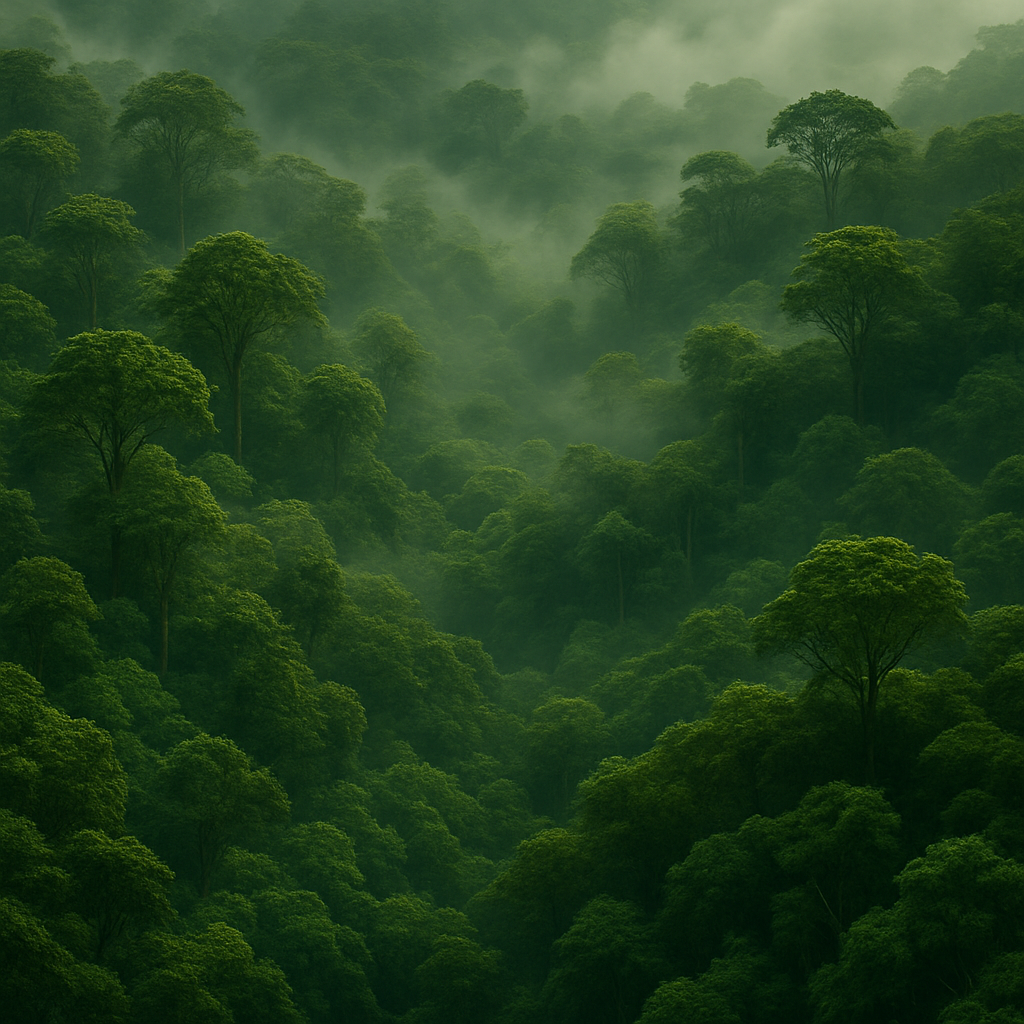
Beneath the forest floor, microscopic fungal threads called hyphae intertwine with plant roots to form mycorrhizae — a living network that connects trees to one another. Through these fungal highways, trees exchange nutrients, share information, and even warn each other of danger.
When a young sapling struggles in shade, nearby trees may send it carbon through this network — a form of resource-sharing that defies our notions of competition. When insects attack one tree, chemical signals travel through the fungal web, triggering neighboring trees to produce defensive compounds.
Scientists have dubbed this network the “Wood Wide Web.” It’s an underground internet millions of years old — older than mammals, older than flowers, older than the soil itself.
The network is particularly influenced by “mother trees” — large, old individuals that act as central hubs. Their expansive root systems and mycorrhizal connections allow them to nourish hundreds of surrounding seedlings. Even as they die, they release stored carbon and nutrients into the soil — one final act of generosity.
In this way, the forest teaches us that strength lies not in isolation but in connection.
VI. The Silent Conversations — Plant Signaling and Communication
It may sound strange to say that trees communicate, but in a sense, they do.

Through both chemical and electrical signals, plants convey information about stress, disease, and opportunity. When caterpillars chew on a leaf, the plant releases airborne chemicals that warn its neighbors. Those neighbors, in turn, begin producing defensive toxins before the attackers arrive.
Acacia trees in African savannas, for example, release ethylene gas when grazed upon. Downwind trees detect the signal and infuse their leaves with bitter tannins, deterring further browsing.
Roots also send electrical impulses in response to stimuli — a slow form of signaling, but communication nonetheless. Plants respond to touch, sound frequencies, even the vibrations of approaching insects.
What emerges from this research is a portrait of intelligence not centralized in a brain, but distributed through a network. The forest thinks — not in words or neurons, but in chemistry, timing, and connection.
To walk through a forest is to walk through a living conversation — one that has been ongoing for hundreds of millions of years.
VII. The Pollinators — Messengers of Light
While roots connect the hidden forest, flowers connect it to the sky.
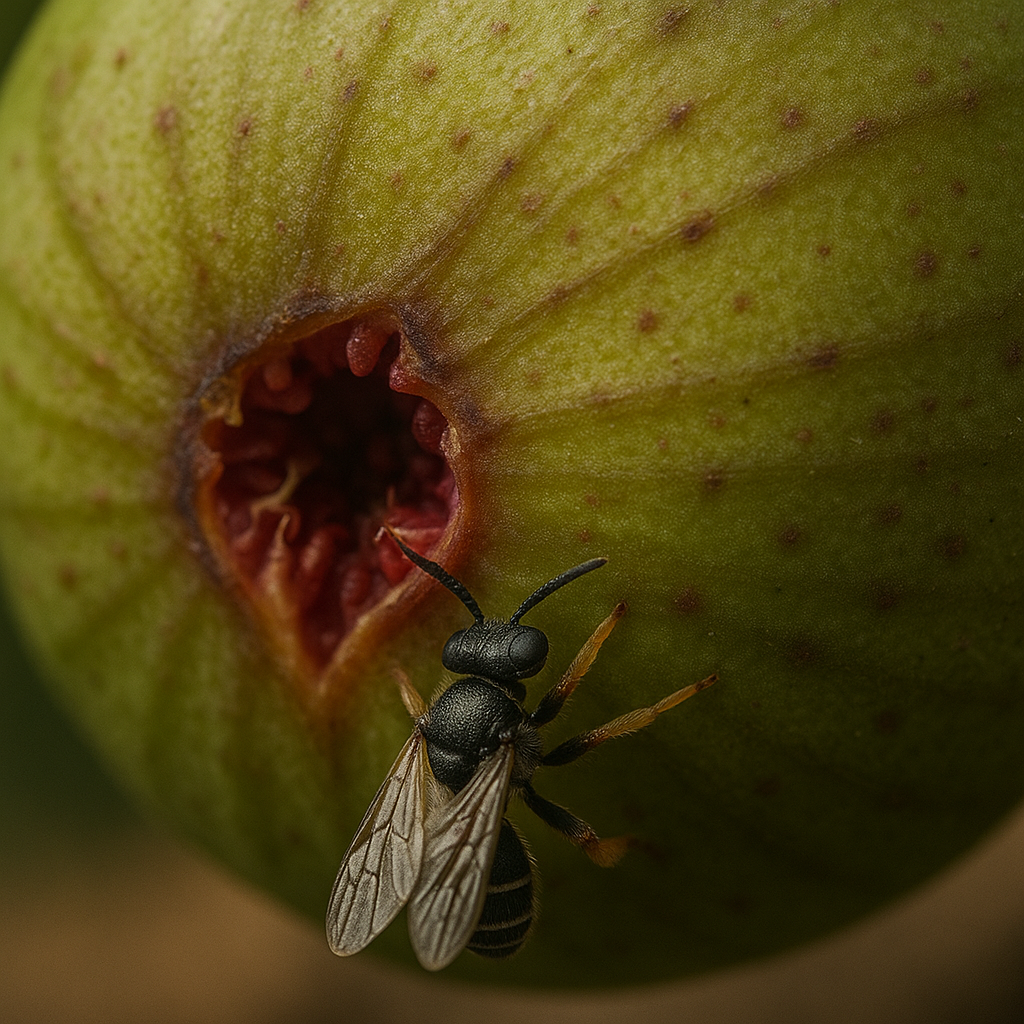
Pollinators — bees, butterflies, beetles, birds, and bats — are the couriers of reproduction, ensuring that the genetic story of plants continues. Each species has evolved intricate relationships with the flowers they visit: shapes, scents, and colors tailored to attract specific partners.
Bees perceive ultraviolet patterns on petals that guide them to nectar. Hummingbirds hover with precision before tubular blossoms engineered for their slender beaks. Bats, nocturnal and unsung, pollinate pale flowers that open only at night.
This exchange of pollen for nourishment is one of nature’s most elegant economies — a barter system powered by sunlight. Flowers turn solar energy into nectar; pollinators turn nectar into motion, carrying life between worlds.
Forests rely on these alliances to sustain diversity. Lose the pollinators, and the web unravels.
Each hum, flutter, and flicker of wings in a sunlit meadow is not just beauty — it is the continuation of life’s rhythm.
VIII. The Harmony of Cycles — Forest Ecology in Motion
A forest is not static. It moves, breathes, and evolves.
Over time, sunlight, rainfall, and disturbance — fire, wind, or disease — shape its structure. After a fire, pioneer species like birch and aspen rush in to capture sunlight. As they grow and die, their presence enriches the soil, paving the way for oaks, pines, and firs. This process of ecological succession reflects resilience — the ability to rebuild from loss.
Every fallen tree becomes a nurse log, sheltering seedlings and insects. Every decomposing leaf releases nutrients that fuel new growth. The forest’s cycles are recursive, weaving decay into creation.
This pattern echoes throughout the biosphere: the carbon cycle, the nitrogen cycle, the water cycle — all in constant motion, maintaining balance.
The forest’s harmony is not the absence of change, but the mastery of it. It adapts, transforms, and persists — a living lesson in resilience.
IX. Lessons in Light — What the Forest Teaches Us
When sunlight filters through a canopy, it doesn’t fall evenly. Some leaves bathe in brilliance, others linger in shade. Yet, together, they form a complete system. The upper leaves capture direct light and perform photosynthesis at full capacity; the lower leaves adapt to dimmer conditions, maximizing what little they receive.
No part hoards all the light; the forest distributes energy efficiently, ensuring that life thrives from floor to crown.
There is a quiet wisdom in this — a model of coexistence where diversity strengthens the whole. Each species, each layer, each organism plays a role. The tallest trees create shade that nurtures ferns; fungi feed from the fallen; insects pollinate the blossoms that sustain birds.
In an age where human systems often prize competition over cooperation, forests offer a counterpoint: life flourishes through connection, not conquest.
X. The Fragile Balance — Threats to the World’s Forests
Despite their resilience, forests around the world face unprecedented challenges.
Deforestation, driven by agriculture, logging, and urban expansion, erases 10 million hectares of forest each year. The consequences ripple outward — increased carbon emissions, loss of biodiversity, disrupted rainfall, and soil erosion.
Climate change compounds these threats. Droughts weaken trees, making them vulnerable to pests and wildfires. Shifting weather patterns alter flowering times, decoupling the synchronized dance between plants and pollinators.
Fragmentation — the breaking up of large forests into isolated patches — interrupts the very networks that sustain life. Species that once roamed freely find their habitats cut off. Genetic diversity declines, making ecosystems more brittle in the face of change.
The forest can adapt, but only if given time and space. And both are running out.
XI. Seeds of Renewal — Restoring the Green Web
Yet even in the face of loss, forests remain among the most forgiving of ecosystems. Given half a chance, they heal.
Around the world, reforestation and conservation projects are rekindling the forest’s song. In Costa Rica, decades of restoration have turned pastures back into jungle. In Scotland, the Caledonian Forest is returning after centuries of deforestation, its pines reclaiming the highlands. Across Asia, mangrove planting protects coasts while capturing carbon.
Natural regeneration — allowing forests to rewild on their own — has proven especially powerful. When human disturbance ceases, birds carry seeds, wind spreads spores, and within years, green shoots break through old scars.
But true restoration is more than planting trees. It means rebuilding relationships — between species, between ecosystems, and between humans and the natural world.
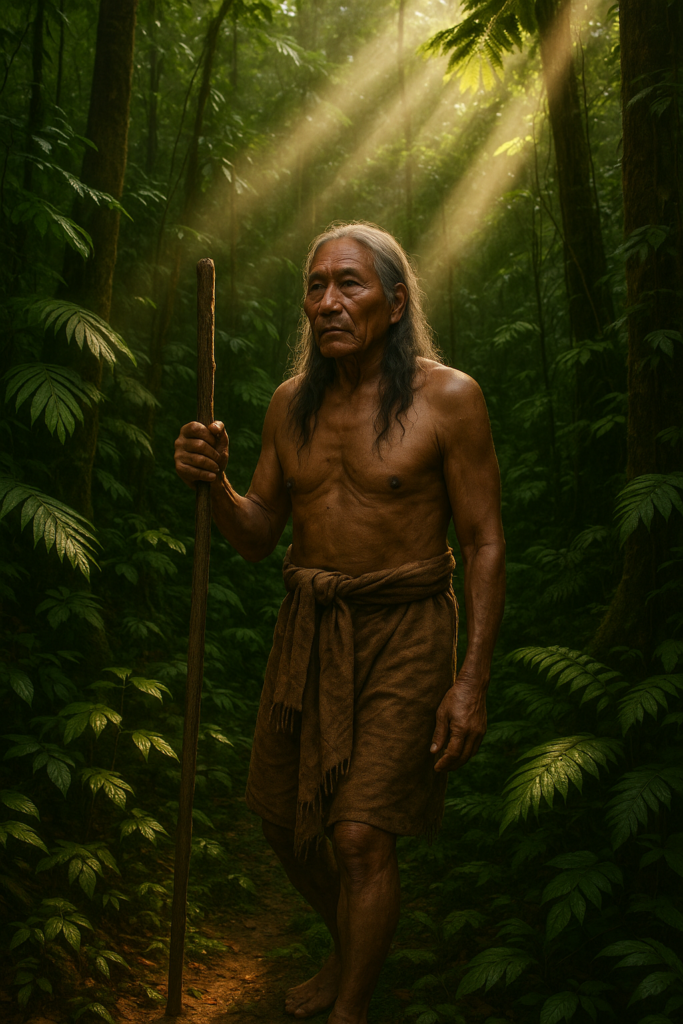
Sustainable forestry, agroforestry, and indigenous land stewardship offer pathways forward. By aligning human livelihoods with ecological rhythms, we can ensure that forests remain both home and healer.
XII. The Forest Within — A Meditation on Light and Balance
As the sun begins to set, the meadow returns to shadow. Fireflies blink between stems of clover. The air cools, scented with pine and damp soil.
You stand beneath the trees, watching as the last rays of light fade into the canopy — and realize that the forest has been speaking all along.
Its message is simple but profound: everything is connected.
The leaves that feed the soil, the fungi that feed the roots, the bees that feed the flowers — all are part of a single story. Each gives, each takes, each transforms. The balance is delicate, yet enduring.
We, too, are part of this web. Our breath contains the oxygen the trees release; their growth depends on the carbon we exhale. Our fates are entwined.
In understanding forests, we learn not only about ecology but about ourselves. We learn that strength lies in diversity, that cooperation sustains more than competition, and that healing begins with reconnection.
If we can remember the lessons of the forest — patience, reciprocity, and respect — we might yet find our way back into balance.
XIII. Epilogue — The Light That Remains
Night settles softly across the glade. The forest, once illuminated, now glows from within — a faint bioluminescent shimmer from fungi on fallen logs, a quiet radiance born not of the sun but of decay and renewal.
Even in darkness, the forest carries light.
That is its greatest secret — that life and light are never truly separate. They are the same energy, cycling endlessly between forms: sunlight into sugar, sugar into breath, breath into soil, soil into leaf.
The forest’s language is one of giving. It speaks through growth and decay, through networks and silence, through resilience and grace.
If we listen closely, it teaches us that the path to survival — for trees, for humans, for the Earth — is not to dominate, but to belong.
And as dawn returns, the light will fall again through the leaves, gilding the forest in gold — reminding us that every sunrise is an invitation to begin again.