I. The Meadow at Dawn
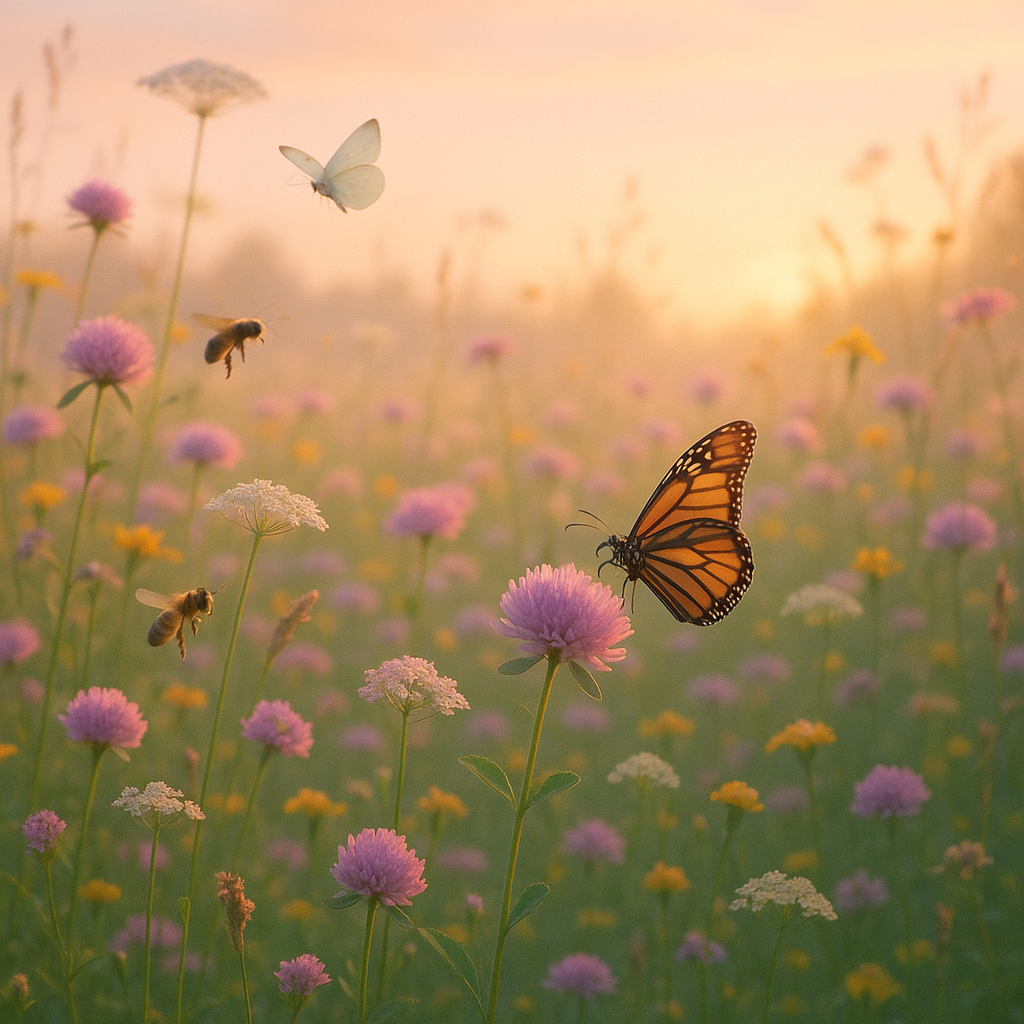
The morning sun rises over a field brushed with pastel light — a gentle glow spreading across wildflowers in pinks, yellows, and purples. Dew clings to petals like tiny jewels. Bees hum softly among the blossoms, wings catching glints of gold as they move from one bloom to the next. Butterflies drift lazily through the air, their patterns flickering like stained glass against the sky.
It is a quiet orchestra, each movement delicate yet essential. The breeze carries the scent of nectar and grass, and the world seems to hum in tune with their rhythm — a slow, patient symphony composed by wings, petals, and light.
Every color, every fragrance, every vibration of flight has a purpose. This meadow is not just beautiful; it is alive with intention. Each bee’s path, each fluttering journey of a butterfly, is a thread in the great web of life — a collaboration millions of years in the making.
To watch pollinators at work is to glimpse nature’s most elegant system: the exchange of sweetness for survival, color for continuity, beauty for balance.
II. The Secret of the Bloom — How Pollination Works
At the heart of every flower lies a promise — not of beauty alone, but of continuation.
The Mechanics of Reproduction
Plants, though rooted, have found ingenious ways to spread their lineage. The key lies in pollination: the transfer of pollen — tiny grains carrying a plant’s male genetic material — to the female part of another flower, where fertilization can occur.
In the simplest terms, pollen must move from the anther (male organ) to the stigma (female organ). For some plants, wind or water does the work. But for the majority of flowering plants — nearly 90% — the task falls to animals: bees, butterflies, moths, birds, bats, and beetles.
This exchange is both biological necessity and evolutionary art. Flowers have evolved shapes, colors, and scents precisely to attract their ideal pollinators. In return, the pollinators receive nourishment — nectar rich in sugar and protein-packed pollen — the fuel that keeps the ecosystem in motion.
The Color Code
Flowers speak in color. Bees, unable to see red, are drawn to ultraviolet patterns — invisible to humans but dazzling to them — that guide them directly to nectar. Butterflies favor bright shades of pink and purple, their long tongues perfectly suited to tubular blossoms. Moths, active by night, rely on pale or white flowers that glow faintly under moonlight.
Each blossom is a billboard designed for a specific visitor. What we perceive as beauty, evolution shaped as function.
The Scent of Invitation
Fragrance, too, is a form of communication. Sweet scents lure bees and butterflies by day; heavy, musky aromas attract moths after sunset. Some orchids mimic the pheromones of female bees, deceiving males into unwitting pollination. Others, like the corpse flower, smell of decay to entice carrion flies.
Through this language of light and scent, plants call to their partners — and the world blooms in response.
III. The Cast of Pollinators — Nature’s Great Collaborators
1. Bees — The Master Architects of Pollination
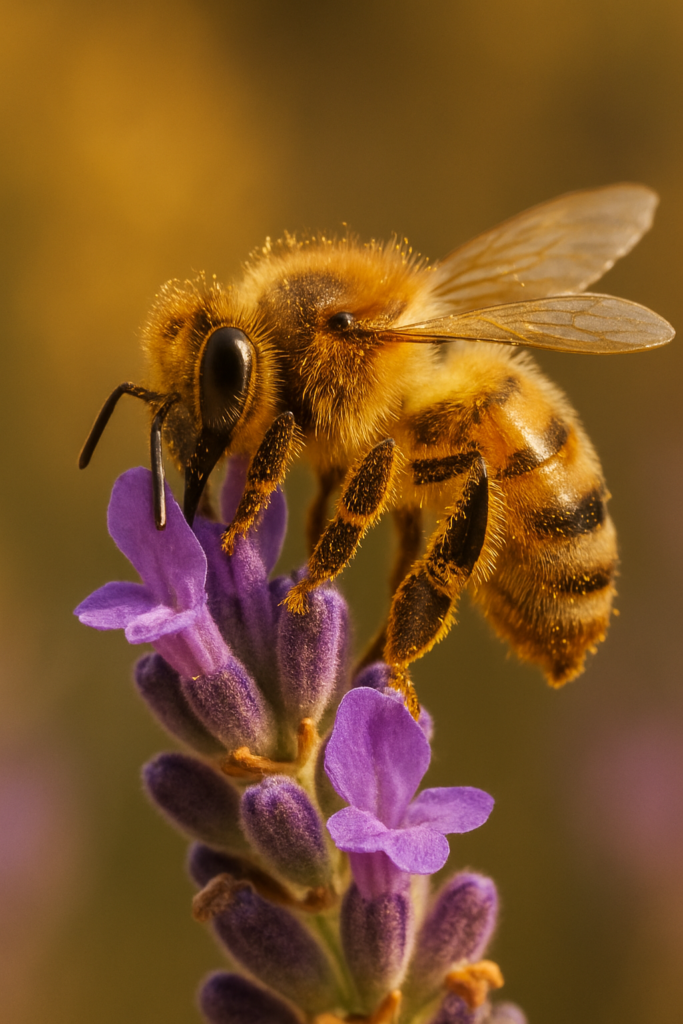
Bees are the cornerstone of pollination. There are over 20,000 known species worldwide, ranging from honeybees and bumblebees to solitary bees like mason, leafcutter, and carpenter bees.
Each bee species has evolved unique habits and body structures for gathering pollen. The familiar honeybee carries it on its hind legs in specialized pollen baskets, while bumblebees perform “buzz pollination” — vibrating their bodies to release pollen from flowers like tomatoes and blueberries.
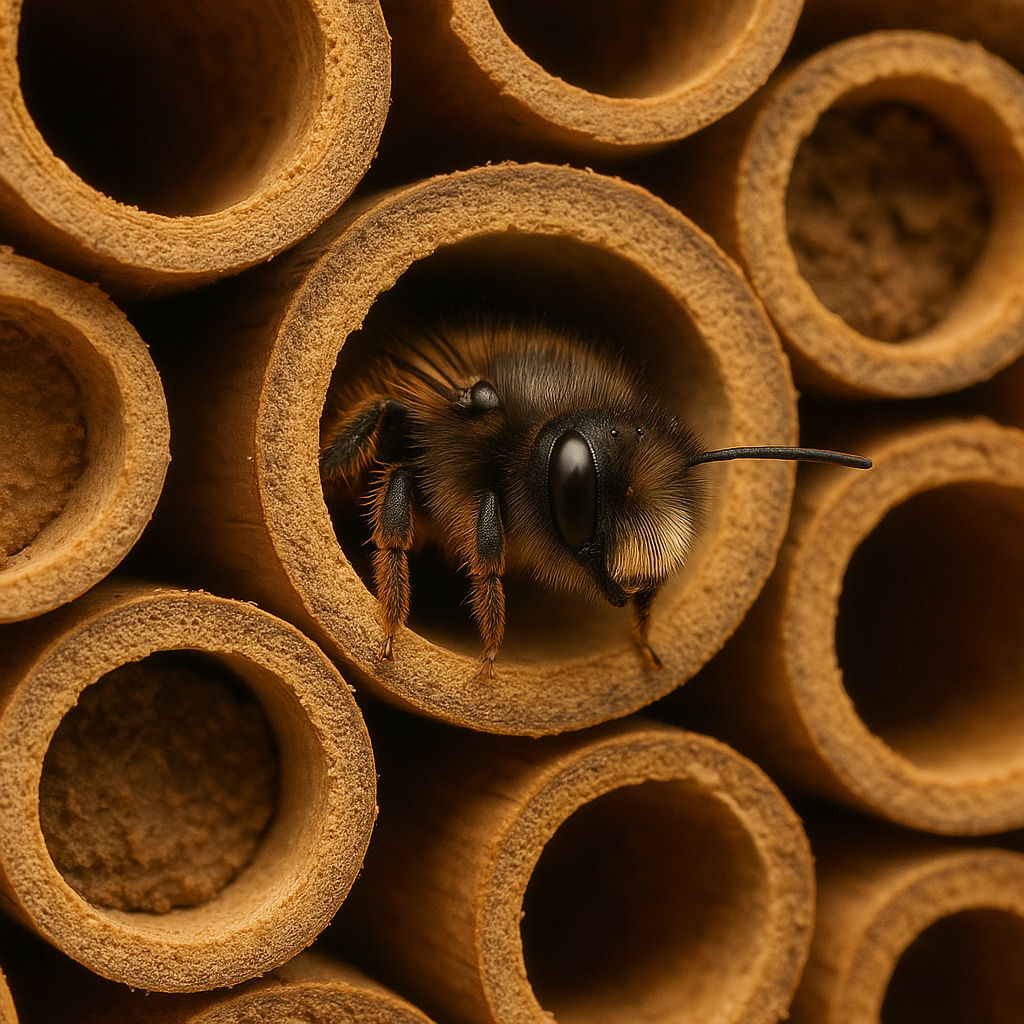
Solitary bees, though often overlooked, are some of the most efficient pollinators. A single red mason bee can pollinate as many flowers as a hundred honeybees. Without their tireless labor, many crops — apples, almonds, and berries — would struggle to produce fruit.
2. Butterflies and Moths — The Wandering Artists
Where bees work methodically, butterflies are wanderers. They flit lightly from bloom to bloom, guided by both color and warmth. Their long, slender proboscis allows them to reach deep into flowers inaccessible to other insects, making them essential partners for plants like milkweed and thistle.
Moths, their nocturnal counterparts, pollinate in the quiet hours of twilight. The yucca moth and the yucca plant, for instance, share a mutual dependence so strong that neither can survive without the other.
Butterflies also serve as indicators of environmental health; their sensitivity to temperature and habitat makes them the canaries of the ecosystem. A decline in butterflies signals imbalance — a warning whispered on fragile wings.
3. Birds, Bats, and Beyond
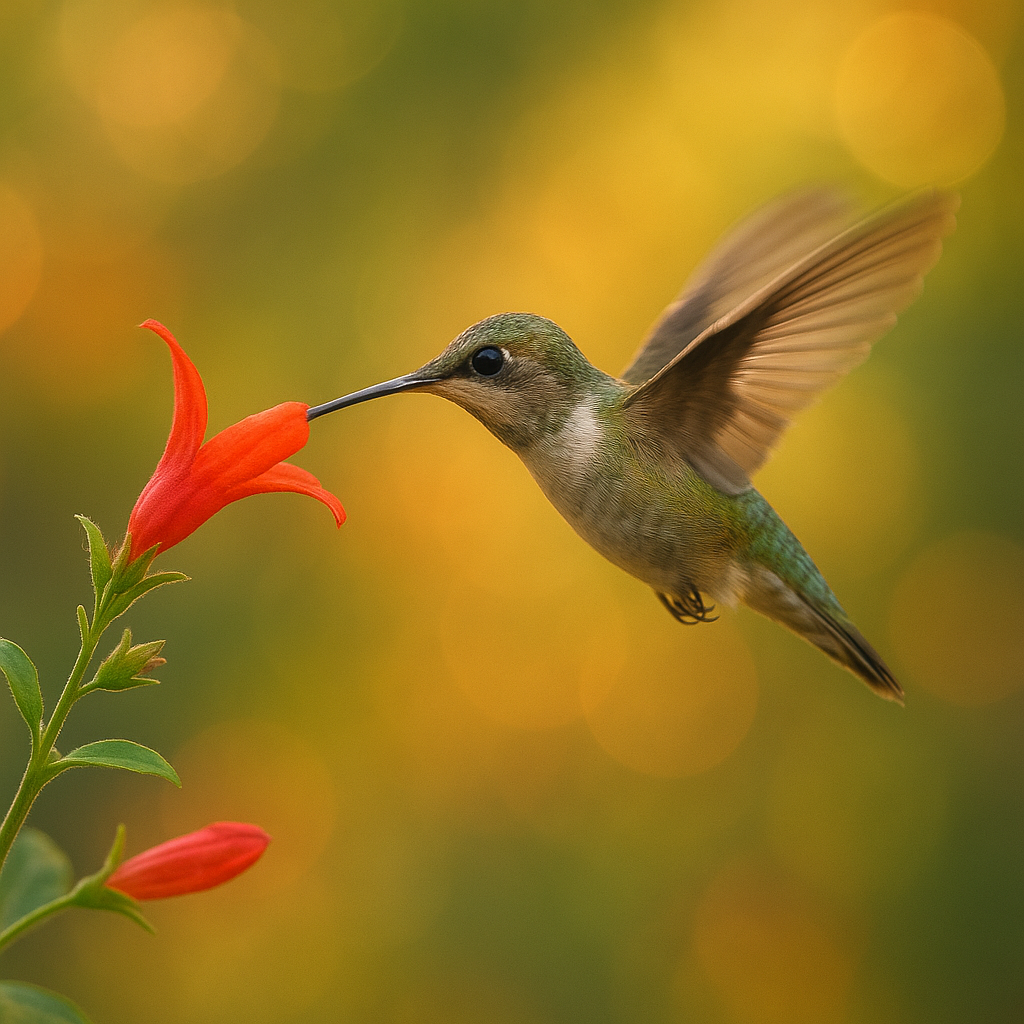
In tropical regions, hummingbirds, sunbirds, and honeyeaters take on the role of daytime pollinators, sipping nectar with long, curved beaks while transferring pollen between blossoms. At night, fruit bats continue the work, especially for plants like bananas and mangroves.
Even unexpected creatures — lizards, rodents, and tiny marsupials — occasionally contribute, turning pollination into a true symphony of diversity.
Each participant, no matter how small, plays its part in the grand continuity of life.
IV. The Global Importance of Pollinators
Without pollinators, the world would lose much of its color — and its sustenance.
Food Security and Agriculture
Pollinators are responsible for one in every three bites of food we eat. Over 75% of global food crops depend to some degree on animal pollination. This includes fruits like apples, mangoes, and cherries; vegetables such as squash, cucumbers, and tomatoes; and even crops that feed livestock, like clover and alfalfa.
The economic value of pollination is staggering — estimated at over $500 billion annually. Yet its true worth cannot be measured in money alone. Without pollinators, entire agricultural systems would collapse, leading to food shortages, economic instability, and ecological chaos.
Biodiversity and Ecosystem Stability
Beyond farms, pollinators underpin wild ecosystems. By enabling plant reproduction, they sustain forests, grasslands, and meadows that in turn shelter countless other species. Pollinators are ecosystem engineers — maintaining genetic diversity, preventing erosion, and shaping landscapes.
When they thrive, so does everything else. When they decline, the silence spreads.
V. The Fragile Symphony — Threats to Pollinators
This ancient partnership between plant and pollinator is now in jeopardy. Across continents, bees and butterflies are vanishing. The reasons are complex, but deeply human.
1. Habitat Loss
Urban sprawl, intensive agriculture, and deforestation erase wildflower meadows and nesting grounds. Bees that once nested in hollow logs or bare soil now find only asphalt and monoculture fields. Butterflies lose their breeding plants as hedgerows are cleared and roads expand.
When wild spaces shrink, the symphony quiets.
2. Pesticides and Chemicals
Neonicotinoid pesticides, designed to protect crops, have had devastating effects on pollinators. These chemicals impair bees’ navigation, memory, and reproduction. Even small doses weaken colonies, making them more vulnerable to disease and starvation.
Herbicides like glyphosate eliminate wildflowers — the very plants pollinators depend on — turning fields into sterile green deserts.
3. Climate Change
Rising temperatures and unpredictable weather disrupt the delicate timing between flower blooming and pollinator emergence. If flowers open too early or too late, their partners may miss them entirely.
Butterflies, whose life cycles depend on temperature, struggle to adapt. Migratory species like the monarch face increasingly perilous journeys as droughts, storms, and habitat fragmentation take their toll.
4. Disease and Invasive Species
The global movement of bees for commercial pollination has spread parasites and pathogens worldwide. Varroa mites devastate honeybee colonies; fungal infections and viruses weaken native species.
Invasive competitors — such as non-native honeybees introduced into fragile ecosystems — can outcompete local pollinators, further reducing biodiversity.
The pollinators’ decline is a warning — not only of ecological imbalance, but of our own disconnection from the natural rhythms that sustain us.
VI. The Wonder of Diversity — Native Bees and Their Hidden Lives
Honeybees may be the best-known pollinators, but they are just one species among thousands. The real heroes are the native bees — diverse, solitary, and often unseen.
In North America alone, there are over 4,000 native bee species. Some, like the blue orchard bee, specialize in fruit trees; others, like the sweat bee, shimmer in metallic hues of green and blue. Leafcutter bees carve perfect circles from leaves to line their nests, while carpenter bees tunnel into wood to create safe chambers for their young.
Many solitary bees live brief, miraculous lives — a few weeks in spring or summer, emerging precisely when their preferred flowers bloom. Their lifespans may be short, but their impact is immense.
Unlike honeybees, they do not form hives or produce honey for humans. Instead, they labor quietly, ensuring that ecosystems persist. In some cases, native bees pollinate plants that no other species can — a perfect example of evolutionary partnership.
Protecting native bees means protecting the very roots of biodiversity.
VII. The Great Migration — Butterflies’ Odyssey
Among all pollinators, few stories are as moving as that of the monarch butterfly.
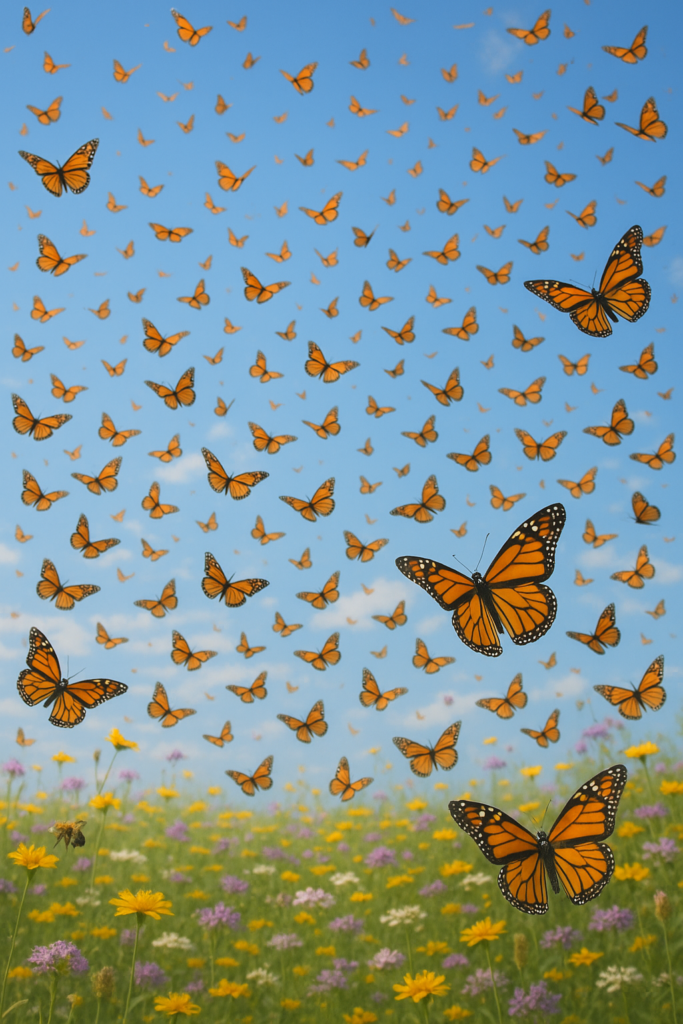
Every autumn, millions of monarchs in North America embark on an epic migration — traveling up to 4,800 kilometers from Canada and the United States to the mountains of central Mexico. There, in oyamel fir forests, they cluster together by the thousands, transforming the trees into living curtains of orange and black.
No single butterfly completes the full journey. The migration spans multiple generations — each born knowing the way, guided by an internal compass attuned to the angle of the sun and Earth’s magnetic field.
Other butterflies, too, migrate — painted ladies cross deserts, red admirals traverse continents — but none with the scale or poetry of the monarch.
Their migration is more than instinct; it is memory passed through wings. A fragile, fluttering miracle of endurance and navigation that speaks to the power of persistence in even the smallest life.
VIII. The Human Response — Conservation and Rewilding
The pollinators’ plight has not gone unnoticed. Around the world, scientists, farmers, and citizens are working to restore what has been lost.
1. Global Initiatives
The UN’s World Bee Day, observed each May, raises awareness of bees’ vital role and the threats they face. The EU Pollinators Initiative seeks to halt their decline through pesticide regulation, habitat restoration, and research. Across North America, the Monarch Joint Venture coordinates conservation across migratory routes, protecting both breeding and overwintering habitats.
In the United Kingdom, “B-Lines” projects create corridors of wildflowers linking fragmented habitats, allowing pollinators to travel safely across the countryside.
2. Rewilding Landscapes
Rewilding efforts — from restoring native meadows to reintroducing wild plant diversity — have proven transformative. When farmlands are allowed to regenerate with native species, pollinator populations rebound.
In the Netherlands, urban planners have converted roadside verges into wildflower strips. In Australian suburbs, councils encourage residents to replace lawns with pollinator-friendly gardens. Even small spaces, when connected, become part of a larger ecological network — a modern-day meadow stretching across cities.
3. Science and Citizen Action
Advances in monitoring technology — from DNA sampling to satellite tracking — are helping scientists understand pollinator movements and health. Yet perhaps the most powerful force for change is citizen involvement.
Community gardens, school projects, and backyard “bee hotels” turn awareness into action. Each patch of flowers becomes a refuge; each person, a caretaker of the pollinators’ symphony.
IX. The Garden as Sanctuary — How to Help Pollinators at Home
You don’t need acres of land to make a difference. Even a balcony, courtyard, or window box can become a haven for pollinators.
Here’s how you can start:
1. Plant for Diversity
Grow a variety of native flowers that bloom across seasons — from early spring crocuses to late-autumn asters. Native species are best adapted to local pollinators. Avoid hybrids bred for appearance over nectar.
2. Choose Colors and Shapes
Bees love blues, purples, and yellows. Butterflies prefer wide, flat flowers like coneflowers or zinnias. Tubular blooms such as foxglove or salvia attract hummingbirds and long-tongued bees.
3. Provide Shelter
Leave patches of bare soil for ground-nesting bees. Drill holes in wood blocks to create bee hotels. Let fallen leaves and stems remain through winter — many pollinators hibernate within them.
4. Avoid Pesticides
Opt for natural pest control. Encourage ladybugs and lacewings to manage aphids. Remember, a slightly imperfect garden is a living one.
5. Create Water Sources
A shallow dish with pebbles and fresh water gives bees and butterflies a safe place to drink and rest. In summer heat, even a single bowl can be a lifeline.
6. Connect Habitats
Coordinate with neighbors or community groups to link gardens and parks, forming corridors that allow pollinators to move freely through urban landscapes.
By turning our gardens into sanctuaries, we help reweave the fabric of life — one flower at a time.
X. The Lesson of the Meadow — Harmony in Diversity
A field of wildflowers is more than a landscape; it is a conversation. Each bloom calls to a specific partner, and together they create harmony — a living symphony that transcends language.
Pollination embodies one of nature’s deepest truths: that survival depends on cooperation. The bee and the flower are not competitors but collaborators. Their relationship is not exploitative but reciprocal. Each gives, each receives, each sustains the other.
This principle — of interdependence, balance, and generosity — offers a model for how humans might live in greater harmony with the world.
The pollinators remind us that no act is too small, no life too insignificant. The flutter of a butterfly’s wings can carry a lineage across continents. The hum of a bee can feed a planet.
XI. Epilogue — The Symphony Continues
As the sun dips toward the horizon, the meadow glows again — petals catching fire in the fading light. The bees return to their hives, the butterflies settle into silence, and the air softens into stillness.
Yet the symphony continues, unseen. Seeds ripen in pods, pollen drifts on the breeze, and life prepares to begin again.
In every flower lies the memory of a visitor — a wingbeat, a touch, a moment of exchange that ensures tomorrow’s bloom.
The world endures through such small gestures of connection. The hum of a bee, the flight of a butterfly, the curve of a petal — all are notes in the same song.
The pollinators’ symphony is ancient, fragile, and ongoing. It plays beneath our feet, beyond our sight, in every season and every breath. And if we choose to listen — truly listen — we can still hear it, soft and unbroken, carrying the rhythm of life itself.