
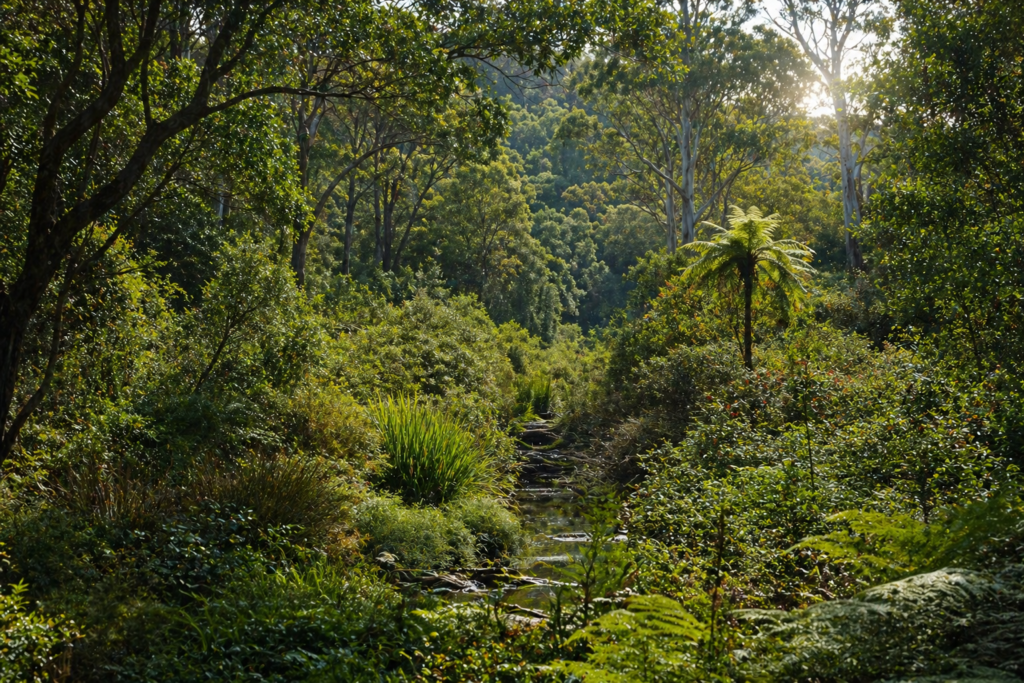
If you walk through a forest, it’s easy to feel like you’re moving through something chaotic. Plants grow where they can, animals move unpredictably, and everything seems to exist in a kind of natural disorder. But beneath that apparent randomness lies something far more structured—something quietly organising life at every scale.
Ecologists call this structure the ecological niche.
A niche is not just a place. It’s not simply where a species lives. It’s the combination of conditions—temperature, water, light, interactions with other organisms—that determine whether a species can exist at all. And once you begin to understand niches, the natural world starts to look very different. Patterns emerge. Boundaries become visible. What once seemed random begins to feel almost deliberate.
The research behind this field shows that biodiversity is not just a result of evolution or chance—it is shaped by the interaction between organisms and their environments, operating continuously over time.
The Illusion of Simplicity
At first glance, ecosystems seem simple. Plants need sunlight and water. Animals need food. Species compete, reproduce, and survive.
But the deeper you look, the more complex it becomes.
Two plants growing side by side may experience entirely different conditions. One might receive slightly more sunlight. The other might have access to slightly more moisture in the soil. These small differences—almost invisible to us—can determine which plant survives and which does not.
Even something as basic as soil moisture, something you might assume is evenly distributed, can vary dramatically over very small distances. This is why tools like the XLUX Soil Moisture Meter are often used in both gardening and research contexts. They reveal something surprising: what appears uniform on the surface is anything but beneath it.
This is how niches begin to form—not as large, obvious divisions, but as countless small variations that create opportunities for different species to coexist.
Species Interactions: The Invisible Web
No organism exists alone. Every species is part of a network of interactions—competition, predation, mutualism—that shapes its survival.
These interactions are not static. They change depending on the environment. A plant that thrives in one setting may struggle in another, not because it has changed, but because the relationships around it have shifted.
For example, two species may compete for the same resource in one environment but coexist peacefully in another. The difference lies in how environmental conditions influence their interaction.
This is one of the key insights from ecological research:
The importance of interactions depends on context
Temperature, resource availability, and environmental stress all influence how strongly species interact. In some cases, harsh conditions reduce competition, allowing more species to coexist. In others, stable environments intensify competition, leading to dominance by a few species.
Want more scenes like this?
Download a curated pack of ultra-realistic images, perfect for wallpapers and inspiration.
Environmental Gradients and Life’s Boundaries
One of the most powerful forces shaping niches is the presence of environmental gradients—gradual changes in conditions such as temperature, moisture, or light.
These gradients create boundaries.
For example:
- As you move up a mountain, temperature decreases
- As you move into a forest, light availability drops
- As you move across a landscape, soil conditions change
Each of these gradients limits where species can survive.
Light, in particular, plays a surprisingly complex role. Plants growing in full sunlight operate under very different physiological conditions than those in shaded environments. This difference is so significant that even controlled setups using something like the LBW Full Spectrum LED Grow Light with Stand can dramatically alter plant growth patterns.
In nature, these differences occur naturally and continuously, creating a mosaic of niches across the landscape.
Adaptation and Constraint
One of the central ideas in ecology is that species are shaped by both adaptation and constraint.
On one hand, species evolve to fit their environments. On the other, they are limited by their evolutionary history.
This creates a tension.
Some species can adapt quickly to new conditions. Others cannot. And when environments change rapidly—such as during climate change—this difference becomes critical.
Many species are constrained by what scientists call niche conservatism, meaning they retain the traits of their ancestors and struggle to adapt to new conditions. This is why rapid environmental change can lead to population declines and extinctions.

Climate Change and Shifting Niches
Climate change is not just altering temperatures—it is reshaping the conditions that define ecological niches.
As environments shift, species must respond. They can:
- move to new areas
- adapt to new conditions
- or decline
But these responses are not always possible.
Barriers such as geography, human development, and competition limit movement. Adaptation takes time. And in many cases, change is happening faster than species can keep up.
This creates a growing mismatch between:
– where species are adapted to live
– and where conditions now allow them to survive
Structure in Complexity
Despite all this complexity, ecosystems are not chaotic. They are structured systems.
Each species occupies a position within that system, shaped by its niche and its interactions with others.
Interestingly, we tend to replicate this structure in our own environments.
When we organise a workspace, for example, we naturally introduce order and separation. Something like the Simple Houseware Bamboo Desk Organizer might seem unrelated to ecology, but it reflects the same principle: structure improves function.
In ecosystems, this structure allows species to coexist. Without it, competition would eliminate diversity.
Want more scenes like this?
Download a curated pack of ultra-realistic images, perfect for wallpapers and inspiration.
Microhabitats: Small Differences, Big Effects
Within any ecosystem, there are countless microhabitats—small areas with slightly different conditions.
These differences might include:
- a shaded patch of soil
- a slightly wetter area
- a small variation in elevation
But they can have enormous ecological consequences.
Different species specialise in different microhabitats, allowing them to coexist without direct competition.
Even indoors, this principle holds. Placing plants at different heights using something like the AIMALL 2 Tier Bamboo Plant Stand creates subtle variations in light and airflow, mimicking natural layering.
These small differences are what make biodiversity possible.
Observing Ecology in Real Time
One of the most fascinating aspects of ecology is that it can be observed at very small scales.
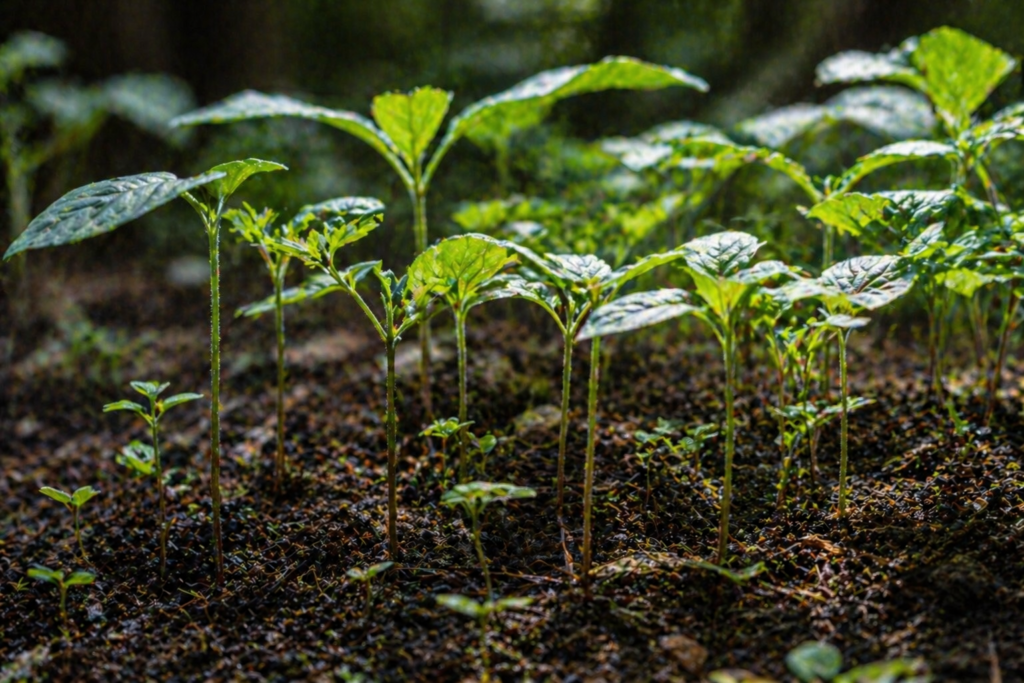
You don’t need a rainforest or a mountain range. You can see ecological principles at work in a simple container of soil.
Starting with seeds makes this especially clear.
Using something like the MIXC Seed Starter Tray Kit allows you to observe how environmental conditions influence growth from the very beginning. Small differences in moisture, light, or temperature can lead to entirely different outcomes.
This is niche theory in action—visible, immediate, and surprisingly complex.
Feedback Loops: Nature Shapes Itself
One of the most important insights from ecological research is that organisms don’t just respond to their environment—they shape it.
Plants alter soil composition.
Animals influence vegetation.
Microorganisms affect nutrient cycles.
These changes feed back into the system, influencing future conditions.
This process, often referred to as niche construction, highlights the dynamic nature of ecosystems.
The Bigger Picture
When you step back, a larger pattern emerges.
Ecological niches:
- define where species can live
- shape how they interact
- influence how ecosystems function
They explain why biodiversity exists, why species are distributed unevenly across the planet, and why ecosystems respond the way they do to change.
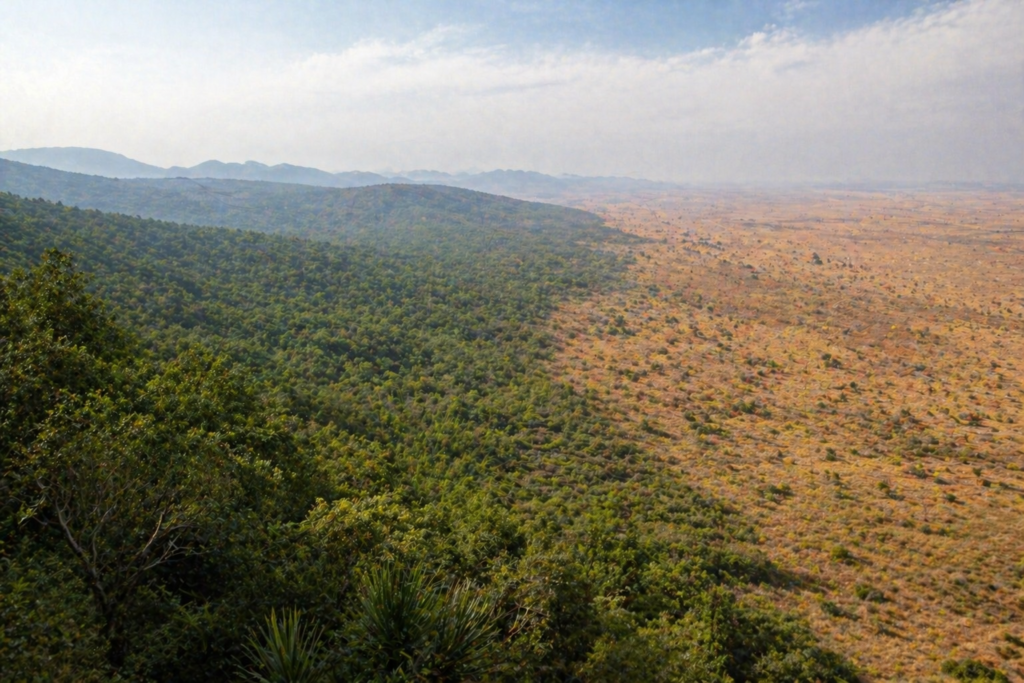
Want more scenes like this?
Download a curated pack of ultra-realistic images, perfect for wallpapers and inspiration.
Final Thoughts
The natural world is not random.
It is shaped by subtle forces—gradients, interactions, constraints—that operate continuously and often invisibly.
Niches define the boundaries of life.
Interactions connect species into systems.
Environmental change reshapes everything.
And all of it is happening all the time, whether we notice it or not.
Conclusion
Understanding ecological niches changes how you see the world.
It reveals that:
- every species occupies a role
- every environment has limits
- every ecosystem is structured
From the largest landscapes to the smallest patch of soil, the same principles apply.
And once you begin to see them, it becomes clear that nature is not chaotic at all—it is deeply organised, interconnected, and constantly adapting.