
If you’ve ever felt the thrill of stepping into a place where ancient giants still roam, where verdant forests hum with life, and rivers conceal silent predators, then a journey into the Daintree Rainforest is a must. In Far North Queensland, the Daintree is not just a forest—it’s a living, breathing time capsule of biodiversity, a theatre of survival, and home to some of Australia’s most spectacular and mysterious wildlife.
In this post, I’ll take you deep into the Daintree’s tangled web of life: from cassowaries striding the forest floor, to crocodiles lurking in muddy rivers, to lesser-known but equally fascinating frogs, possums, and insects that make this place sing. Along the way, we’ll look at behaviors, conservation challenges, and tips for safely encountering the wild residents of this ancient region.
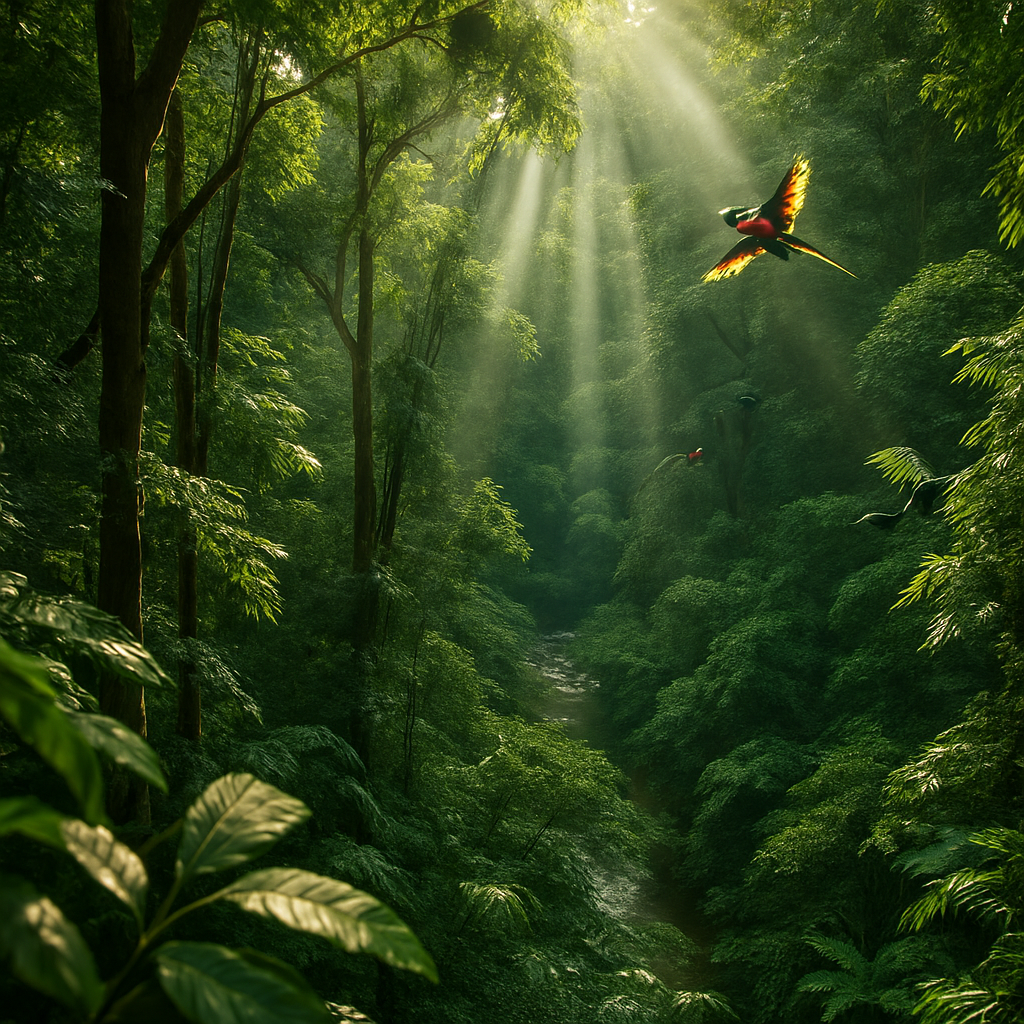
A Prelude: The Daintree — Ancient, Alive, and Vulnerable
Before we meet the creatures, let’s pause to consider the stage on which they play.
The Oldest Rainforest on Earth
The Daintree Rainforest is often described as one of the oldest continuously surviving tropical rainforests on the planet—some estimates place its age at 120 to 180 million years. Wikipedia+1 This means that parts of the forest predate many species and ecosystems that now dominate the planet.
As a remnant of the once-vast forests that covered much of Australia, the Daintree preserves “living fossils” — primitive plant lineages and animals that elsewhere were squeezed out by changing climates or competition. Wikipedia+2ShunCulture+2 Its unique evolutionary history means many species and ecological relationships here are rare, sometimes found nowhere else on Earth.
Biodiversity Hotspot
Though the Daintree Rainforest covers a relatively small area (about 1,200 km² in the national park portion) ShunCulture+3Wikipedia+3Wikipedia+3 it packs in astonishing diversity:
- Over 430 bird species have been recorded within the park. Wikipedia+2Wikipedia+2
- Mammals include marsupials like possums, the musky rat-kangaroo, Bennett’s tree-kangaroo, bandicoots, bats, and more. tourismportdouglas.com.au+4Wikipedia+4ShunCulture+4
- Reptiles and amphibians thrive here: estuarine (saltwater) crocodiles, pythons including the giant scrub python, geckos, dragons, frogs, and turtles. Wikipedia+5destinationdaintree.com+5ShunCulture+5
- It’s home to primitive and endemic plants—of the 19 primitive (basal) flowering plant lineages worldwide, 13 are found here. Wikipedia+1
- Insects, fungi, and microfauna are abundant; the forest is alive with wings, buzzes, webs, and hidden micro-worlds. ShunCulture+2studypress.blog+2
Yet this biodiversity is under pressure. Human encroachment, habitat fragmentation, invasive species, and climate change push many of these creatures toward the edge.
Traditional Custodians & Conservation
The Daintree is not just a natural wonder—it is also country to the Kuku Yalanji people, who have lived here for thousands of years. As of 2021, over 160,000 ha of land stretching from Mossman to Cooktown, including Daintree National Park, was formally returned to native title ownership by the Kuku Yalanji under a historic agreement. Wikipedia Their deep knowledge of the land, plants, and species continues to inform conservation, sustainable tourism, and cultural tours.
Over the past decades, conservation groups have grown in strength. A notable example is the Daintree Cassowary Care Group (DCCG), founded in the early 1990s by residents to raise awareness, reduce road deaths, and protect cassowary habitat. Rainforest Rescue Recent restoration efforts also seek to rehabilitate degraded lands, especially former clearings, to reconnect fragmented habitat corridors. fame.org.au
Giants of the Forest Floor: Cassowaries
If there’s one creature that captures imaginations when people hear “Daintree,” it’s the cassowary. The word itself conjures prehistoric imagery: a large, armored bird with a helmeted head striding through the gloom. But this is no dinosaur—this is a living symbol of rainforest survival.
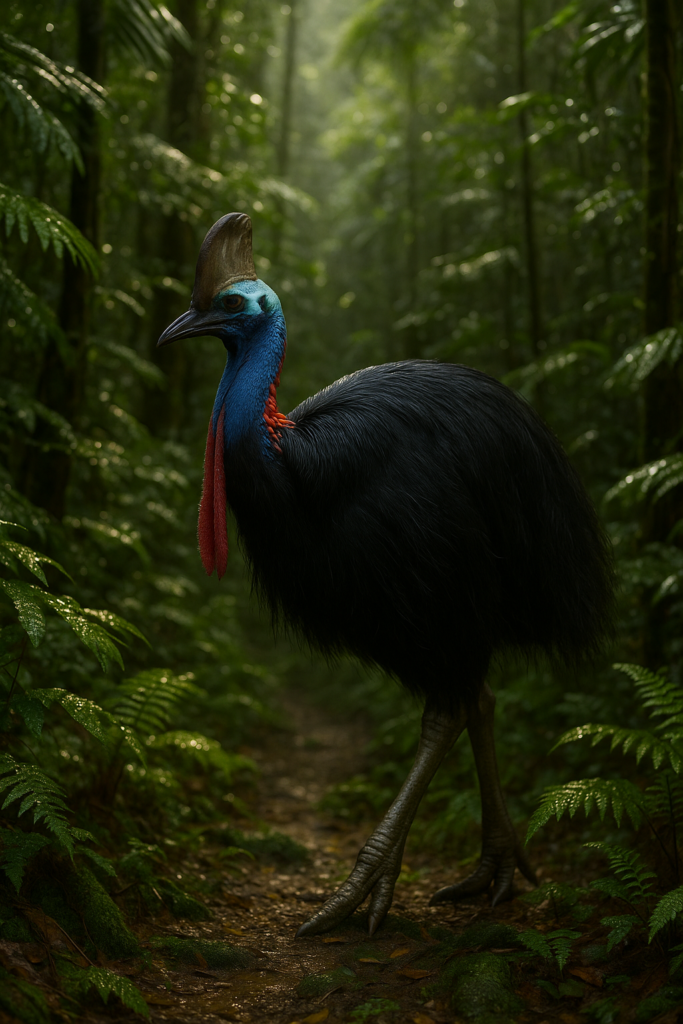
Meet the Bird
The cassowary species you’ll find here is the Southern Cassowary (Casuarius casuarius johnsonii), the only cassowary subspecies in Australia. studypress.blog+4savethedaintree.org+4visitdaintree.com.au+4 Males and females may differ in size; females tend to be larger. visitdaintree.com.au+2savethedaintree.org+2 They can reach heights of up to 1.8–2.0 m and weigh as much as 60–76 kg. tourismportdouglas.com.au+4savethedaintree.org+4visitdaintree.com.au+4 Their plumage is glossy and black, but their heads and necks flash with vivid hues of blue, purple, and red wattles. Above the head sits a casque— a keratinous “helmet” whose function is still debated. Wikipedia+3savethedaintree.org+3visitdaintree.com.au+3
Cassowaries are solitary, secretive, and generally shy—hard to spot. visitdaintree.com.au+2tourismportdouglas.com.au+2 When they move, they walk quietly through leaf litter, often in deep shade. But despite their stealth, they can sprint up to 50 km/h when startled. visitdaintree.com.au+1
Ecological Importance — “Gardeners of the Rainforest”
Cassowaries are more than just impressive fauna: they are keystone species. Their eating habits make them crucial to rainforest regeneration.
- They swallow large fallen fruits whole, including those with hard seeds. The passage through their gut does not damage many seeds; rather, it may help scarify them. visitdaintree.com.au+2Daintree Rainforest Tours+2
- Because they roam significant distances, they act as seed dispersers, spreading those seeds across the forest floor and into new territory. visitdaintree.com.au+2Daintree Rainforest Tours+2
- Some estimates suggest 70–100 species of trees in the Daintree rely mostly or entirely on cassowaries to disperse their seeds. Daintree Rainforest Tours+2SEIT Tours+2
In short: without cassowaries, the forest’s regeneration would be compromised, and over time the structure and composition of the rainforest would shift.
Threats to Survival
Sadly, cassowaries are endangered. In Australia, only an estimated 1,200–1,500 individuals remain. Daintree Rainforest Tours+2visitdaintree.com.au+2 Their decline is tied to several human-driven pressures:
- Habitat Loss and Fragmentation – Logging prior to the late 1980s removed large swaths of forest, and subdivisions introduced roads and barriers. Daintree Rainforest Tours+2Rainforest Rescue+2
- Road Kill – Because they cross open areas, many cassowaries are struck by vehicles. visitdaintree.com.au+3Daintree Rainforest Tours+3Rainforest Rescue+3
- Dogs and Feral Predators – Wild or stray dogs can chase or injure cassowaries; feral pigs also compete for fruit or upset the ground. Daintree Rainforest Tours
- Small Population Effects – isolated groups are vulnerable to inbreeding, disease, and stochastic events.
- Competition from Invasive Species – some invasive plants alter the availability of native fruit sources.
- Climate Change – shifting rainfall patterns and increased extreme events stress the forest ecosystem, potentially reducing fruit yield or altering habitat quality.
Conservation groups like the Daintree Cassowary Care Group (DCCG) have been instrumental in protecting birds and raising awareness. Their efforts have included road signage, speed reductions in key zones, habitat restoration, and public education. Rainforest Rescue Recent projects seek to rehabilitate former infrastructure sites (like a disused airstrip) with native plantings to reconnect fragmented patches. fame.org.au
Spotting a Cassowary — Tips & Safety
Catching sight of a cassowary is a highlight for many visitors. But respect and caution are essential:
- Go early or at dusk — these are low-light birds, and early or late hours increase your odds.
- Stick to boardwalks and designated paths — wandering off-trail is risky and disturbs wildlife.
- Stay quiet and still — sudden movement can startle the bird; let it move away if it’s uneasy.
- Don’t feed them — human food can harm their digestive systems and alter behaviour.
- Respect distance & safety — cassowaries are powerful and, when cornered or threatened, can lash out with strong legs and claws. Wikipedia+2visitdaintree.com.au+2
- When driving — particularly at night or early morning, slow down in known cassowary zones, and heed warning signage. Many road deaths occur during fog or low-visibility conditions.
Anecdotal reports illustrate just how elusive they are: for some, spotting one may take days of quiet observation; for others, it occurs by chance—walking along a boardwalk, one can look down into a stream and see a cassowary quietly drinking not far off the path. Trailing Away+2tourismportdouglas.com.au+2
Crocodiles: Silent Hunters Beneath the Surface
While the forest holds many terrestrial or arboreal animals, the Daintree’s rivers and mangroves hide a more ancient predator: the estuarine or saltwater crocodile (Crocodylus porosus). These are formidable animals — and a reminder that in the Daintree, danger often lies hidden.
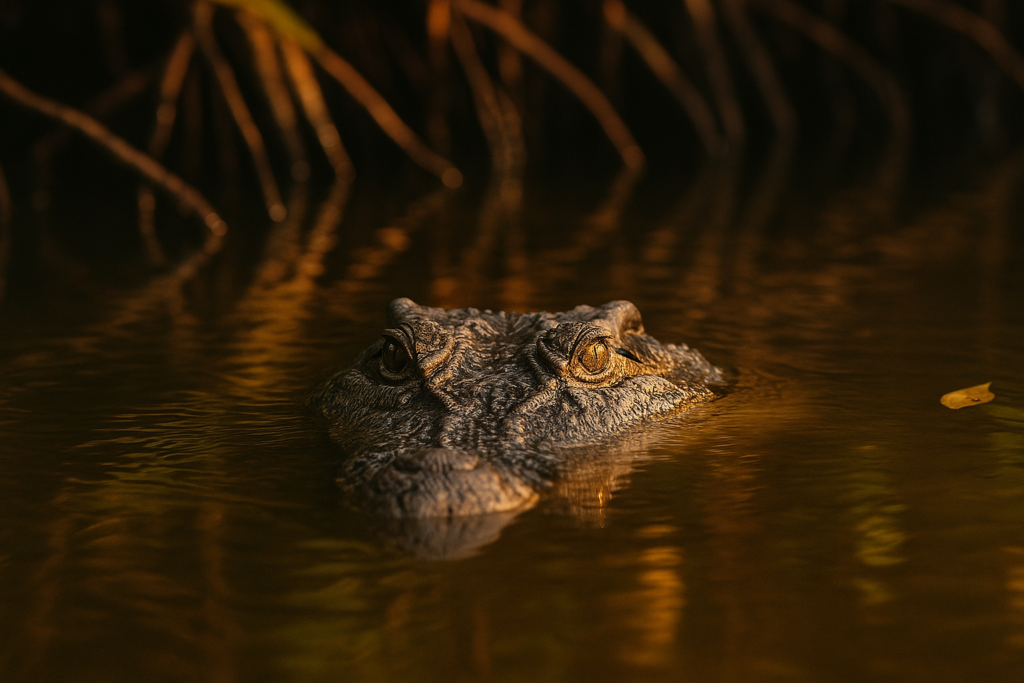
Crocodiles in the Daintree River System
The Daintree River is part of a larger wetland ecosystem. Crocodiles were once threatened by hunting, but protection measures and the wild nature of the system have allowed populations to rebound. Wikipedia+2destinationdaintree.com+2 Saltwater crocodiles can be found throughout the region’s mangrove and estuarine zones, tidal creeks, rivers, and adjacent marshlands. destinationdaintree.com+2Wikipedia+2
In fact, from 2000 to 2012, the Daintree River was second only to the Proserpine River in Queensland for recorded croc sightings. Wikipedia That said, how many you see depends heavily on the season, tides, and boat access. Trailing Away+1
Behavior and Adaptations
Saltwater crocodiles are among Earth’s most successful reptiles, with deep evolutionary roots. Their adaptations are formidable:
- Ambush predators — they often remain nearly motionless, with just nostrils and eyes above water, waiting for prey.
- Powerful jaws and stealth — their jaws deliver crushing force; their bodies are silent, efficient in water.
- Temperature regulation — they bask to regulate body temperature, then submerge to cool down.
- Longevity and size — some individuals live for decades and reach substantial lengths; adult males may exceed 5 meters in parts of Australia. ShunCulture+1
- Salt excretion — they possess glands to deal with salinity, allowing them to venture into marine zones occasionally.
Juvenile crocodiles and hatchlings, of course, are more vulnerable to predation (by birds, larger reptiles, and mammals). But in the river system, few creatures surpass adult crocs as apex predators.
Safety & Viewing on River Cruises
Because of their stealth and potency, crocodiles are not to be underestimated. Tour operators take many precautions to ensure safe viewing experiences:
- Use engine-quiet, shallow-draft boats — allowing safe approach without disruption.
- Always remain within the boat — never lean, dangle hands or feet over the side.
- Avoid approaching under low light or in murky water — crocs can attack mailine over landing zones at night.
- Respect “Croc Exclusion Zones” near marked zones and maintain safe distances. Wikipedia+2destinationdaintree.com+2
- Never swim in rivers, estuaries, or murky water — even at river edges, crocs can lunge out. Trailing Away+2Wikipedia+2
On many Daintree tours—such as the Solar Whisper Cruise—you’ll glide through mangrove-lined creeks, slowly and quietly, scanning banks and branches for amber eyes or tail ripples. Trailing Away Guides will often point out logs that look like drift—but maybe not drift at all.
Crocodiles in the Broader Ecosystem
Crocodiles are integral to their aquatic ecosystems:
- They help regulate populations of fish and mammals that come to drink.
- Their nesting activity (digging cavities) can influence soil and vegetation structure.
- Carrion from their catches provides nutrients for scavengers, fungi, and microfauna.
In a forest system like the Daintree’s, where terrestrial, aquatic, and marine ecosystems merge, crocs act as a powerful connecting node.
Other Fascinating (and Often Overlooked) Residents
Beyond the headline creatures, the Daintree teems with animals both tiny and subtle. Here are just a few you may encounter or hear about if you dive deep enough.
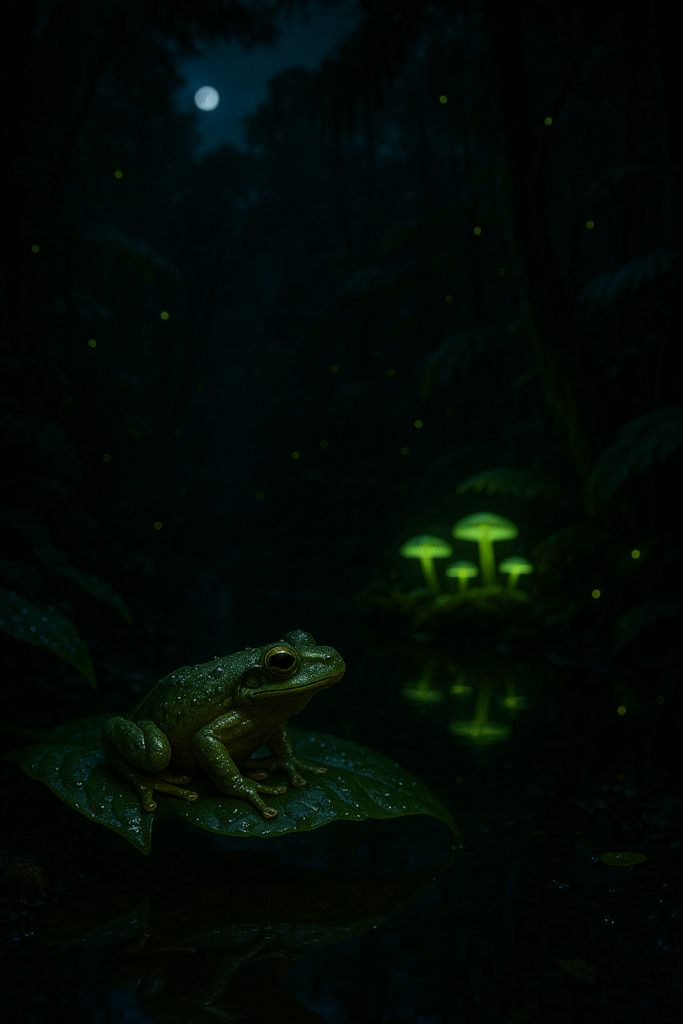
Mammals & Marsupials
- Musky Rat-Kangaroo: One of the most primitive living marsupials. It’s small, ground-dwelling, and sometimes active during daylight hours. ShunCulture+2SEIT Tours+2
- Bennett’s Tree-Kangaroo (Dendrolagus bennettianus): A rare and arboreal kangaroo that moves through the canopy. Sightings are uncommon. ShunCulture+1
- Daintree River Ringtail Possum: A localized species, adapted to cool rainforest streams and upland zones. SEIT Tours+1
- Striped Possum: More common in some lowland rainforest zones north of the Daintree River. Wikipedia+2Wikipedia+2
- Bats: Numerous species of flying-fox and microbats are active at dusk and nighttime, pollinating and dispersing rainforest plants.
- Platypus: Though more associated with inland rainforest rivers, platypuses may be present in certain freshwater systems connected to the Daintree system. ShunCulture
- Echidna, Bandicoot, Wallaby: These terrestrial monotremes and marsupials may be encountered under canopy cover or forest edges. Wikipedia+2SEIT Tours+2
Spotting these animals typically requires patience, low noise, and sometimes a night walk with a guide (where permitted).
Reptiles & Amphibians
- Scrub (Amethystine) Python: One of the largest Australian pythons, occasionally seen sunning on tree branches. ShunCulture+2Wikipedia+2
- Tree Snakes, Leaf-tailed Geckos, Forest Dragons: These reptiles camouflage into foliage, branches, and bark; careful observers may spot them. studypress.blog+3Wikipedia+3Wikipedia+3
- Frogs & Tree Frogs: At night, listen for the chorus— the rainforest’s orchestra of croaks and whistles.
- Turtles, Water Lizards: In slower sections of streams, pools, and swamp backwaters, smaller aquatic reptiles may appear.
Birds
Beyond cassowaries, the Daintree’s skies and canopy support a dazzling array of avifauna:
- Endemic or regionally special species include the tooth-billed bowerbird, golden bowerbird, fernwrens, violet-backed honeyeaters, MacLeay’s honeyeater, bridled honeyeater, fairywrens, and more. Wikipedia+2studypress.blog+2
- Buff-breasted Paradise Kingfisher makes seasonal appearances near rivers and forest edges. Wikipedia+2SEIT Tours+2
- Fruit doves, pigeons, parrots: Many species feed in the forest midstorey and canopy, drawn by fruiting trees.
- Birds of prey like goshawks and kites patrol forest gaps or river corridors.
- For many birdwatchers, the Daintree is a treasure trove of rare, brightly coloured, or localized species.
Insects, Butterflies, and Microfauna
To complete the echoing tapestry of the Daintree, you’ll find:
- Giant Ulysses Butterflies, day-flying moths, and myriad butterfly species flitting in sun patches. ShunCulture+2Wikipedia+2
- Glowworms and bioluminescent fungi in damp forest crevices.
- Leaf-cutter ants, termites, beetles, spiders, centipedes, and millipedes—these creatures break down litter, recycle nutrients, and form the web base for predators.
- Fungi, molds, slime-molds, mosses, lichens — often overlooked but vital for forest health.
A Day in the Daintree: Sample Wildlife-Infused Itinerary
To help bring this to life, here’s how a typical “wildlife-aware” day might unfold if you immerse yourself into the forest:
Before Sunrise: The Quiet Hours
- Begin before dawn. Slip quietly on the Madja or Jindalba boardwalks. In the dim, cool air, the forest breathes. Listen for calls, rustlings, owls, or frogs.
- Watch for signs of cassowaries: broken fruit, droppings, or feathers on the path.
Morning: River Cruise & Crocodile Spotting
- Move to the Daintree River for a solar whisper or eco-boat cruise. Glide along creeks, eyes peeled for crocodile eyes, submerged forms, and birds perched on mangrove roots. Trailing Away+2SEIT Tours+2
- Guides will point out subtle wildlife signs and explain crocodile behavior.
Midday: Forest Walks & Birding
- Swing inland and take a guided rainforest walk around Mossman Gorge or Cape Tribulation. The dense forest interior may reveal geckos, tree snakes, fruit-eating pigeons, or even a shy possum.
- Keep an eye on streams or damp gullies—frogs, insects, and small reptiles abound.
Afternoon: Reaching the Coast
- Drive toward Cape Tribulation, where rainforest meets reef. The transition zone is rich in edge species.
- Walk the Dubuji or Kulki boardwalks for scenic viewpoints and the chance to spot wildlife in mangrove fringe zones. Trailing Away+1
Evening: Night Walk (with guides)
- After dark, some tours allow spotlighting—scanning foliage and paths with red-filter lights (to minimize disruption). This is when nocturnal animals (possum, gliders, frogs, owls) are active.
- End with quiet reflection, listening to the forest hum.
Conservation, Challenges & the Path Forward
The Daintree ecosystem is living on a knife-edge—a place of wonder but also vulnerability. To ensure that future generations can see cassowaries and hear the croaks of wild frogs, we must approach conservation with intention.
Ongoing Threats & Pressures
- Habitat fragmentation: Private land sections nested among public reserves disrupt animal movements, gene flow, and connectivity.
- Invasive species: Feral pigs, cats, dogs, invasive weeds and plants degrade understory and compete with natives.
- Climate change: Altered rainfall patterns, rising temperatures, and extreme weather events stress forest systems and species ranges.
- Human-wildlife conflict: Range overlap, road construction, vehicle collisions, and perilous edges raise risks.
- Tourist impact: Overuse of popular trails, illegal off-trail walks, feeding wildlife, or disregarding protocols can stress animals and degrade habitat.
Positive Efforts & Success Stories
- Restoration projects: Recent planting programs have transformed degraded sites and linked forest patches—nearly 17,000 native trees planted on a 4.5-hectare degraded site as part of cassowary habitat restoration. fame.org.au
- Public engagement & education: Local groups like DCCG push for car speed reductions, signage, and community awareness. Rainforest Rescue
- Land buy-backs and conservation easements: Governments and conservation NGOs have purchased high-risk private parcels to add to the protected matrix. Wikipedia+1
- Cultural partnership: Integration of Indigenous knowledge in fire management, species tracking, and eco-tourism helps safeguard ancestral custodianship and local participation.
- Responsible eco-tourism: Tour operators focused on low-impact, wildlife-safe practices help raise funds, awareness, and local stake in protection.
What You Can Do (As a Visitor or Citizen)
- Support sustainable tourism operators that follow strict environmental and safety protocols.
- Follow trail rules: Never wander off paths, don’t feed animals, stay quiet, and respect distance.
- Use the power of your dollars: Stay in conservation-minded lodges, buy from local enterprises that care for country.
- Raise awareness: Share your wildlife encounters, support conservation NGOs, speak up for protective legislation.
- Volunteer or donate: Many groups accept support for planting, monitoring, or education.
Closing Thoughts: Respect, Wonder, and Responsibility
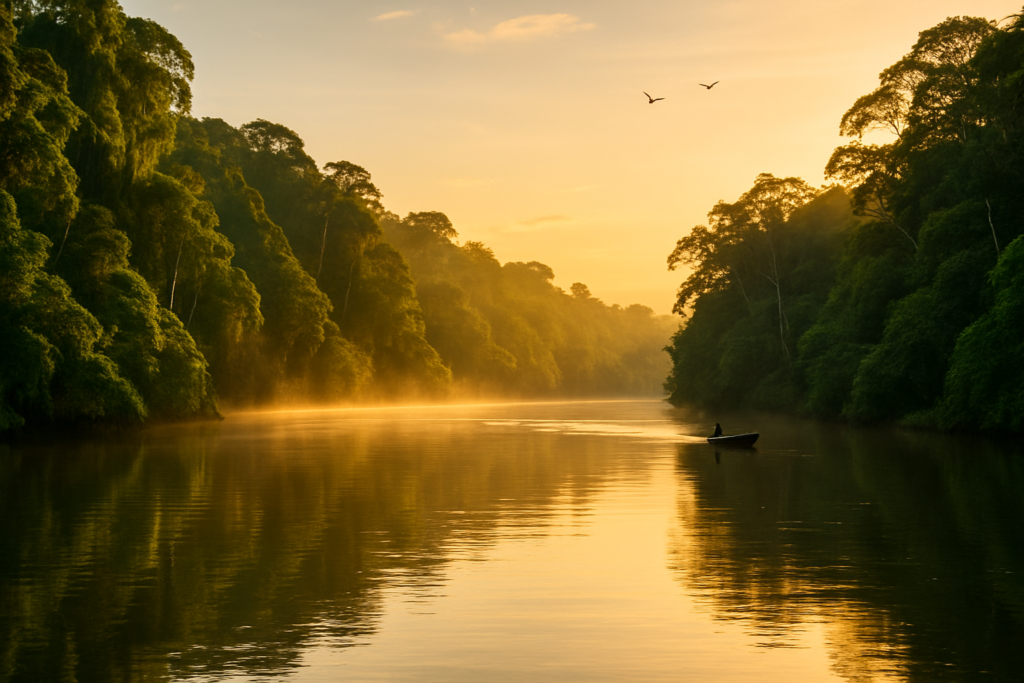
In the hush of the rainforest, where mist flakes through ancient leaves and small songs echo in twilight, life persists in astonishing forms. To see a cassowary pause in a shady stream, or glimpse a crocodilian eye below river surface, is to brush against time itself.
But with those moments comes responsibility—to tread gently, to respect limits, to protect what remains—and to pass it on. The Daintree is not a zoo, not a snapshot, but a living, breathing ensemble of interdependence. Its wild residents don’t belong to us, but rather we are privileged guests in their realm.