We tend to think of reptiles as silent animals — cold-blooded creatures that hiss, burrow, and bask under the sun, not ones that speak. But for decades, scientists have been discovering that many reptile species use vocalizations in surprisingly sophisticated ways. From soft chirps to deep barks, the world of reptile sound is far richer than most people realise.
In the review article “The Diversity and Evolution of Vocal Communication in Nonavian Reptiles”, Camila R. Ferrara and colleagues take us on a comprehensive journey through the latest research on how reptiles produce, perceive, and use sound. This article synthesises decades of work on reptile behavior, anatomy, and evolution, revealing a hidden dimension of communication that connects reptiles with birds, mammals, and other animals that rely on vocal signals.
Reptiles Are Not as Silent as We Thought
The stereotype of reptiles as quiet, unresponsive animals comes largely from early research bias and limited observations. For many years, studies focused on visual or chemical signals — colors, displays, territorial scenting — and largely ignored acoustic behavior. Yet vocal communication has been documented in multiple reptile lineages, including:
- Crocodilians
- Turtles
- Squamates (lizards and snakes)
- Rhynchocephalians (the tuatara)
Even though reptiles are evolutionarily basal relative to birds and mammals, this taxonomic breadth suggests that vocal behaviours are ancient, widespread, and potentially fundamental to how many species interact.
What Counts as “Vocal Communication”?
Before diving into examples, it’s important to clarify what researchers mean by vocal communication. In the context of this review:
- Vocalisations are sounds produced by forcing air through specialized structures (like larynxes or other vocal organs).
- Communication implies that the sounds convey information — signals about identity, emotional state, location, or intent — which other animals can perceive and respond to.
This is distinct from incidental sounds (like movement noises) or mechanical actions (like tail-rattling) that don’t function primarily as signals between individuals.
Crocodilians: The Sound Makers of the Reptile World
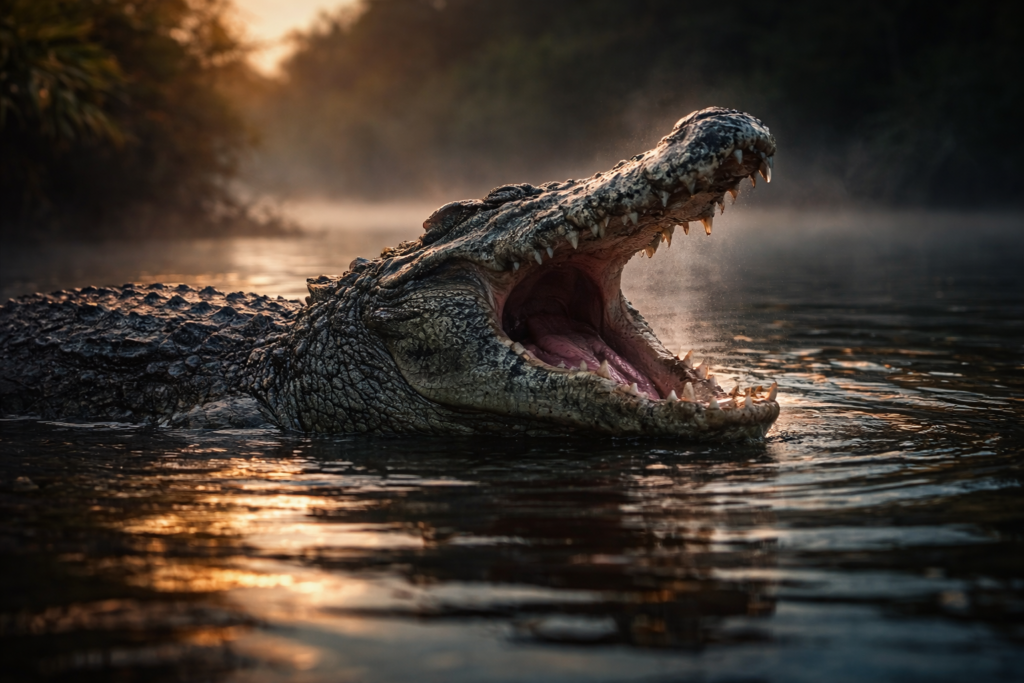
Crocodilians — which include crocodiles, alligators, caimans, and gharials — are the best-known reptilian vocal communicators. Unlike many reptiles, they use a wide variety of sounds in different social and life contexts:
- Barks to signal aggression or territorial presence
- Growls to warn competitors or predators
- Hisses during close confrontations
- Low-frequency calls by young hatchlings to keep contact with their parents
Recent studies show that crocodilian vocalizations are not random; they are structured sounds with specific functions in social behaviour, including coordination between parents and offspring and competitive interactions between adults. This places crocodilians closer to birds and mammals in terms of complexity than many people imagine.
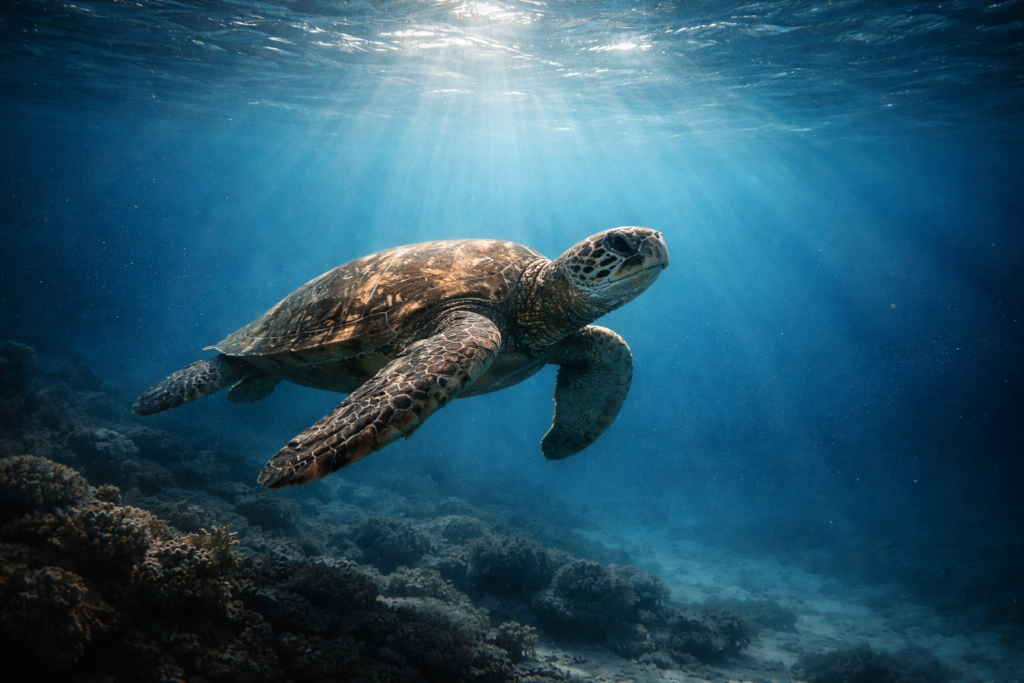
Turtles: Soft Calls Underwater and on Land
Turtles might seem even less likely to vocalise than crocodilians — after all, many turtle species spend most of their time quietly grazing vegetation or gliding underwater. But researchers have documented remarkable sound use in turtles too.
Many aquatic turtles produce underwater calls, especially during social aggregations or breeding. These sounds are often low-frequency and can travel over long distances in water. Some species also emit soft grunts or chirps above water, particularly during interactions between females and males.
This evidence challenges the long-held view that turtles rely primarily on chemical or visual cues during social encounters. Instead, vocal communication plays a silent — but significant — role.
Squamates: Lizards and Snakes That Vocalize
Squamates, the largest group of reptiles, include both lizards and snakes. While many squamate species are known for visual displays like head-bobs, push-ups, and color flashes, recent research has shown that sound production is more common than expected.
Lizards with Vocal Abilities
Several lizard species produce distinct vocalizations:
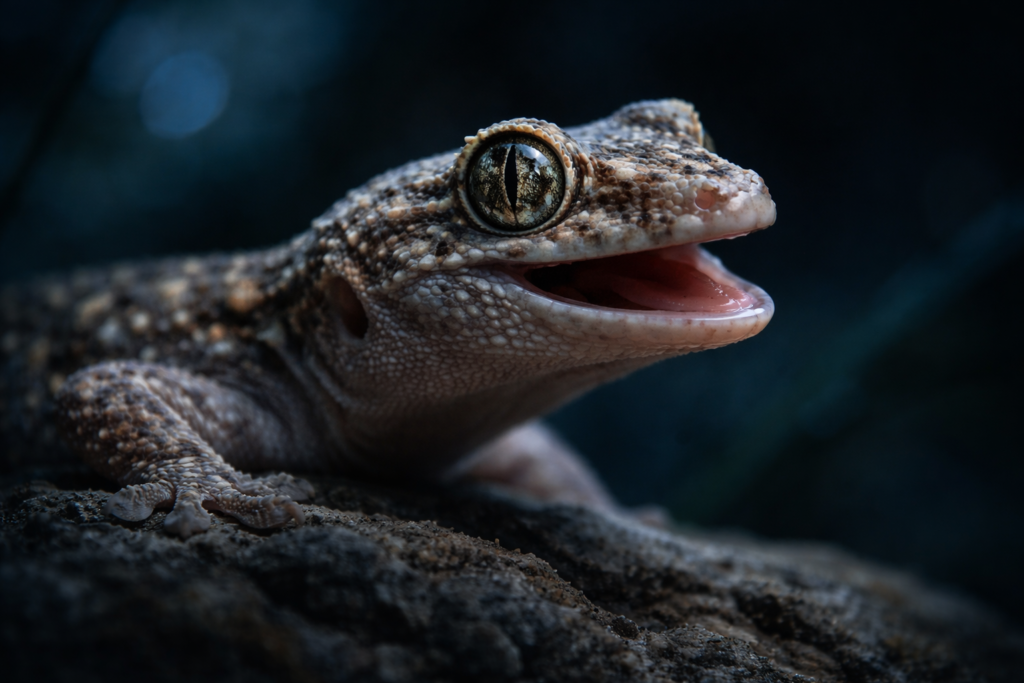
- Geckos are the most vocal lizards, producing chirps, clicks, and barks.
- Some agama species make audible calls during territorial interactions.
- Even species with simpler social roles may emit short calls during courtship or conflict.
These sound signals often serve to:
- Establish territory
- Attract mates
- Warn competitors
- Coordinate social behavior
Snakes: A Subtle Acoustic World
Snakes were long thought to be silent because most lack specialized vocal organs. Still, some species produce low-frequency hisses, rattles, and body-generated sounds that serve as warning signals or defences. While these sounds may not be as communicative as vocal calls in other reptiles, they still serve essential behavioural roles.
Tuataras: Living Fossils with Untapped Acoustic Potential
The tuatara, a reptile species native to New Zealand, is often called a “living fossil” due to its ancient evolutionary lineage. Research on tuatara sound use is limited, but early studies suggest that they may produce low-level sounds during social interactions, especially during mating.
This raises fascinating questions about the early evolution of vertebrate vocal communication, especially since tuataras share features with very early reptilian ancestors.
Acoustic Anatomy: What Allows Reptiles to Vocalize?
Vocal communication depends on specialized anatomy. Birds and mammals have complex vocal apparatuses — syrinxes and larynxes — designed for sound generation and modulation. Reptiles, by contrast, tend to have simpler vocal structures.
Despite this simplicity, many nonavian reptiles share anatomical features that allow effective sound production:
- Elastic vocal folds in crocodilians
- Modified laryngeal tissue in geckos
- Resonant cavities in turtle anatomy
Additionally, some reptiles use skeletal structures or air sac systems to manipulate airflow and produce sound.
These anatomical adaptations illustrate that vocal communication in reptiles is not a rare accident but a functional trait that evolved multiple times in response to ecological pressures.
Reptile Hearing: Perception Matters Too
Communication isn’t just about producing sound; it also requires perception. Many reptiles possess auditory systems adapted to detect and process vocal signals.
Crocodilians, for example, have well-developed inner ear structures capable of low-frequency sound detection. Lizards like geckos demonstrate auditory tuning that matches their vocalization frequencies. Turtles, even without obvious external ears, can perceive underwater sounds through bone conduction and specialized sensory cells.
This co-evolution of vocal production and auditory perception suggests that sound plays a greater role in reptilian life than previously appreciated.
Functions of Vocal Communication in Reptiles
Why do reptiles vocalize? The evidence reveals several key functions:
1. Territorial Defence
Many reptiles use sound to announce occupancy of a territory and deter rivals. These calls reduce the need for physical confrontation, which could otherwise lead to injury.
2. Mate Attraction and Courtship
Vocal signals help individuals identify, locate, and attract potential mates. Females may use specific sound criteria to assess male quality, while males use calls to advertise availability.
3. Parent–Offspring Coordination
Several crocodilian and turtle species use sound to maintain contact between parents and young, especially in early life stages when visual cues are limited.
4. Conflict and Warning
Some sounds, like hisses or loud chirps, act as alarm signals during aggressive encounters or when animals feel threatened.
These functions align reptiles with birds and mammals, despite differences in anatomy and ecology.
The Evolutionary Story: From Silent Ancestors to Sound Users
Understanding how reptiles evolved vocal communication sheds light on broader evolutionary patterns in vertebrates. The presence of sound use in crocodilians, turtles, lizards, and possibly tuataras suggests that vocal communication may have deeper roots in reptilian ancestry than previously thought.
This history connects to the evolution of vocal learning and communication in birds and mammals, hinting at possible shared pathways or parallel adaptations driven by social and ecological pressures.
Gaps in Knowledge: What Scientists Still Don’t Know
Despite rapid progress, many questions remain:
- How widespread are vocal communication abilities across reptile diversity?
- Do some reptiles use vocal signals in contexts we haven’t observed yet?
- How do environmental factors like temperature and habitat complexity influence call structure and use?
- Can reptiles learn or modify calls based on social context?
Answering these questions will require more field studies, laboratory experiments, and integrative work combining behaviour, anatomy, neurobiology, and genetics.
Why This Matters: Bigger Picture Insights
The study of reptile vocal communication is not just about reptiles — it reveals fundamental principles about how animals communicate, evolve, and interact with their environments. It reminds us that:
- Communication systems can evolve in unexpected places
- Complex social behaviours are not limited to mammals and birds
- Reptiles are more behaviourally sophisticated than commonly thought
By exploring these hidden acoustic worlds, scientists uncover new connections between behaviour, evolution, and ecology — enriching our understanding of life on Earth.
Conclusion: Reptiles Speak — Quietly, Clearly, and Deeply
Reptiles may not have the vast vocal repertoires of songbirds or primates, but they do use sound in consistent, meaningful, and evolutionarily significant ways. From crocodile calls at sunset to soft turtle grunts under water, these signals are part of a rich communication tapestry that scientists are only beginning to fully appreciate.
As research continues, the silent image of reptiles that many people hold will give way to a more vibrant, audible, and interconnected view of the natural world — one where even voices once thought absent carry messages of survival, identity, and life itself.
References & Sources
This article is based on the review:
- Ferrara, Camila R., et al. “The Diversity and Evolution of Vocal Communication in Nonavian Reptiles.” Annual Review of Ecology, Evolution, and Systematics, Vol. 56 (2025).
Additional context drawn from related literature on sensory ecology and temperature-metabolism scaling.