How the biggest animals in the sea evolved, shaped ecosystems, and reveal the deep connections between life and environment
Oceans have hosted some of the most remarkable creatures Earth has ever seen — giants so massive that they defy easy imagination. From early arthropods barely visible to the naked eye, to the gigantic whales in modern seas, the story of ocean giants is one of repeated evolutionary innovation and ecological transformation over hundreds of millions of years.
In Ocean Giants Through Time: Evolution and Ecology Intertwined, Catalina Pimiento and colleagues synthesize fossil records and modern data to show how distant clades — unrelated groups of organisms — independently attained giant body sizes in the ocean. They also demonstrate how these giants reshaped food webs, altered energy flows, and influenced nutrient cycling across ecological and geological time.
This article explores that narrative in depth, translating cutting-edge research into an accessible story with insights that matter for understanding the past and future of marine life.
What Makes a Creature a “Giant”?
A giant isn’t just “big.” In biology, gigantism refers to exceptionally large body size relative to other members of a clade or ecosystem. It’s not merely aesthetic — size has profound ecological implications:
- Larger animals have different metabolic needs than smaller ones.
- They often occupy top trophic positions in food webs.
- They can influence nutrient distribution and energy transfer in ecosystems.
In the ocean, where buoyancy reduces the physical constraints of gravity, body sizes often reach extremes unmatched on land. But how and why did this happen repeatedly across Earth’s history?
Gigantism Appears Again and Again — Across Lineages
The evolution of gigantic size is a recurring theme in marine history. It has appeared independently in a variety of organisms, including:
- Early Cambrian arthropods — among the first large animals in the sea
- Ordovician mollusks — expanding into empty niches
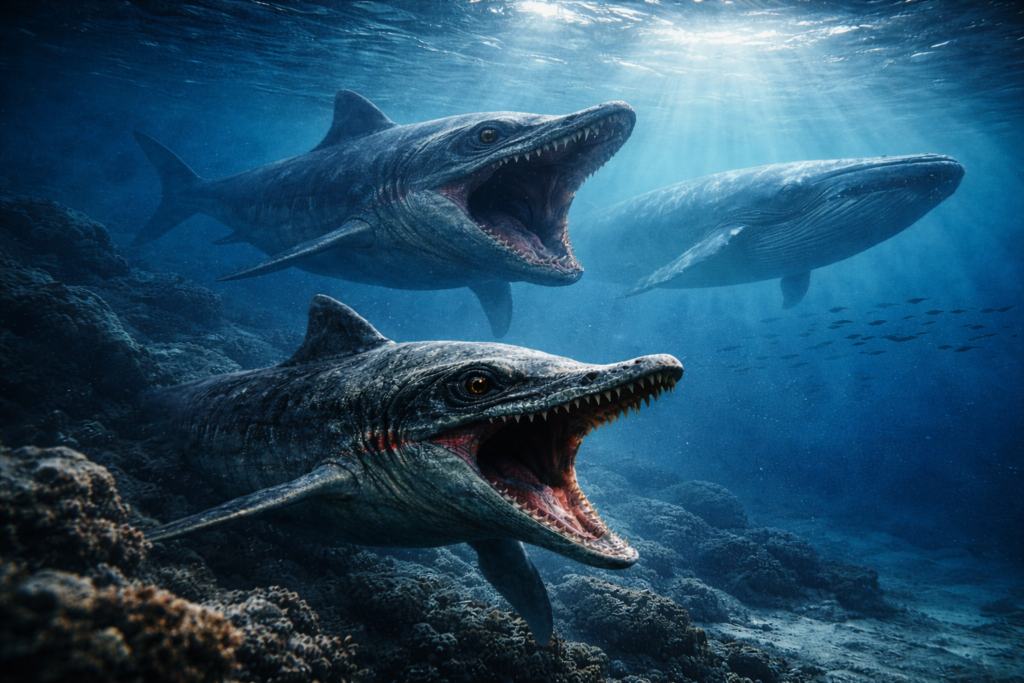
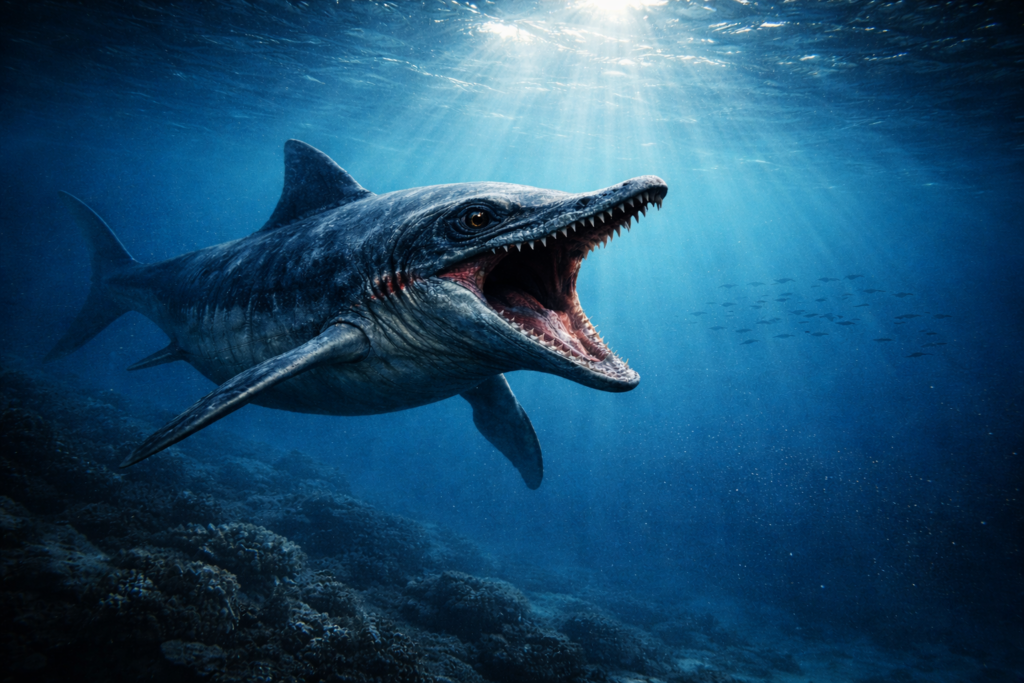
- Triassic ichthyosaurs — fish-like reptiles
- Neogene sharks (like Otodus megalodon)
- Quaternary baleen whales — the largest animals that have ever lived
Each of these giants arose in different eras, under different climates, and with different ecologies. Yet they share a common ecological narrative: each emerged when opportunities allowed — often in landscapes or seascapes newly opened by evolution, extinction, or environmental change.
Ecological Opportunity: The Spark of Gigantism
The evolution of giants is not random. It largely hinges on ecological opportunity — situations where new resources, niches, or reduced competition enable organisms to exploit environments in novel ways.
For example:
- When major extinction events occur, the disappearance of dominant species can open space for others to diversify.
- Changes in productivity — such as increased availability of nutrients — can support larger body sizes.
- Shifts in prey composition, often tied to evolution of feeding adaptations, allow predators to grow larger by accessing abundant food resources.
Across time, patterns show that gigantic body size emerges when evolutionary and ecological conditions align. These giants are often innovators — evolving anatomical features that enhance feeding, movement, or energy acquisition.
Adaptations That Made Giants Possible
Adaptive traits appear repeatedly in lineages that evolve large size. Among these are:
1. Feeding Specializations
Large body size demands a lot of energy. Giants that survive are often those that evolve efficient ways to capture and process food. Examples:
- Baleen in whales allows efficient filtering of vast volumes of small prey.
- Gigantic predatory teeth or filtering apparatus in ancient sharks enabled exploitation of abundant prey resources.
These innovations increase intake rate, allowing organisms to sustain a large metabolism.
2. Structural and Physiological Modifications
Giants often show modifications that support their size:
- Streamlined bodies for efficient swimming
- Reinforced skeletal systems
- Enhanced metabolic adaptations to cope with energetically demanding lifestyles
These traits are not universal, but they illustrate how evolution can shape anatomy and physiology to support larger bodies.
The Ecological Impact of Giants
Once giants become established, they don’t exist in isolation — they reshape entire ecosystems. Their influence extends far beyond their own survival needs.
Energy Flow and Food Web Structure
Large predators and filter feeders affect:
- The abundance of prey species
- The distribution of nutrients
- Trophic interactions across multiple levels
For example, the decline or extinction of ocean giants can lead to cascading effects — changes in prey populations, shifts in nutrient distribution, and altered energy pathways in the food web.
Nutrient Cycling
Giants play a role in moving nutrients across space and time:
- Whale migration patterns redistribute nutrients vertically and geographically.
- Large predators indirectly shape nutrient dynamics by regulating prey populations.
Thus, ocean giants help maintain ecosystem stability and function at large scales.
Gigantism and Mass Extinctions
The fossil record also shows that giants are vulnerable. Many extinct giant lineages disappeared during mass extinction events or climate shifts. These losses provide insight into how environmental changes disrupt ecological interdependencies.
For instance:
- The giant ichthyosaurs of the Mesozoic eventually faded as marine ecosystems reorganised.
- Otodus megalodon — one of the largest shark species — disappeared around the end of the Pliocene, likely due to changing ocean temperatures and competition.
These extinctions underscore that being large is not always an evolutionary advantage — especially when environmental conditions change rapidly.
Evolution and Ecology: A Two-Way Relationship
A key contribution of the Annual Review article is the emphasis that ecology and evolution are deeply intertwined — especially in the story of ocean giants.
Evolution sets the stage by producing traits that enable big bodies. Ecology shapes which traits succeed based on environmental conditions, resource availability, and interactions with other organisms.
This two-way feedback means that:
- Evolutionary innovation can influence ecological structure.
- Changes in ecology (e.g., productivity shifts) can drive evolutionary pathways.
The rise of giants is thus a story of coevolution between organisms and their environments.
Modern Ocean Giants: Whales and Their Legacy
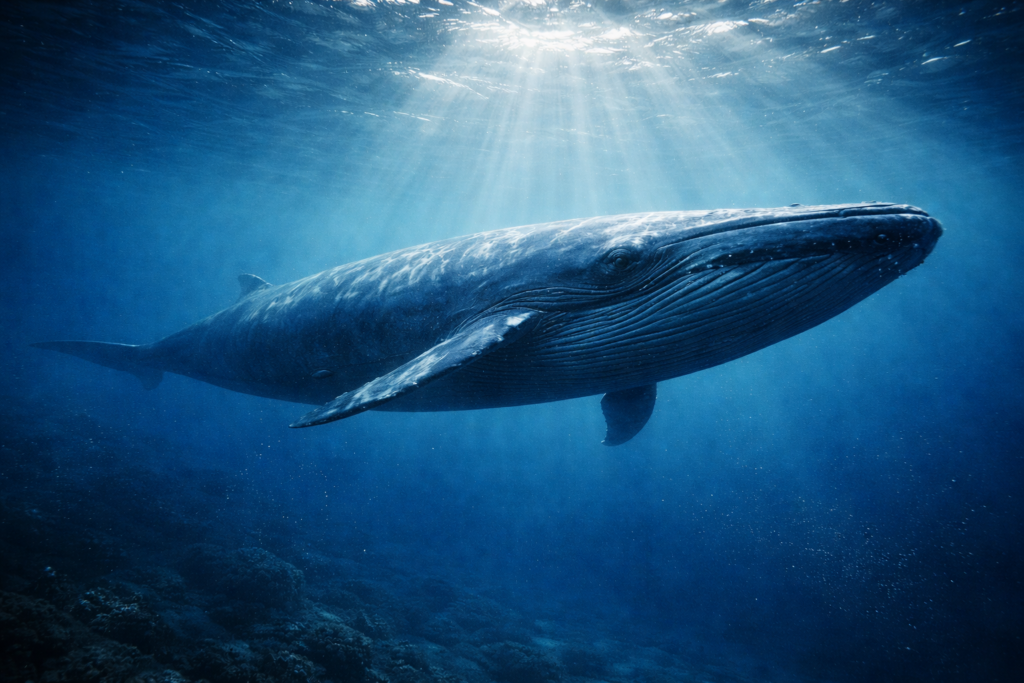
Today, the largest animals on Earth are not dinosaurs or giant fish — they are baleen whales. These mammals evolved unique filtering structures that allow them to consume enormous quantities of small prey such as krill.
Baleen whales exceed 100 tonnes, dwarfing almost every other animal. Their enormous size is supported by:
- High primary productivity in nutrient-rich ocean regions
- Seasonal blooms of prey
- Efficient filtering systems
These giants also demonstrate how modern ecosystems support and are shaped by large organisms.
Why the Study of Ocean Giants Matters Today
Understanding ocean giants is not just an academic exercise — it provides key insights into how ecosystems function and respond to change.
1. Indicators of Ecosystem Health
Population trajectories of large marine species often reflect broader environmental conditions. Declines in giants can signal:
- Overexploitation
- Climate change impacts
- Habitat degradation
For example, whale populations rebounded in some areas after whaling restrictions — a testament to how management policies can influence ecosystem recovery.
2. Models for Predicting Change
Studying how giants evolved in past climates — including times of warming or cooling — helps scientists model how modern ecosystems might respond to ongoing environmental change.
3. Conservation Implications
Conserving large marine species isn’t just about protecting charismatic megafauna; it’s about maintaining ecological function. Giants redistribute nutrients, shape food webs, and support biodiversity at multiple levels.
Looking Ahead: Future Lines of Inquiry
The history of ocean giants poses many intriguing questions for future research:
- How do changes in ocean productivity influence the evolution of size?
- What specific genetic or developmental mechanisms enable gigantism?
- How do interactions between giants and smaller species change over time and space?
These questions link evolutionary biology, paleoecology, conservation science, and climate research — highlighting the interconnectedness of life and environment.
Conclusion: A Deep Time Perspective on Marine Giants
The evolution of ocean giants is one of the most dramatic stories in Earth’s biological history. From early shelled giants to the modern leviathans of the deep, they reveal how life innovates and adapts within ecological frameworks.
Their rise and fall reflect not only biological ingenuity but also the ebb and flow of ecosystems across geological time — reminding us that the largest creatures are both products and architects of their worlds.