
I. The Emerald Mirror
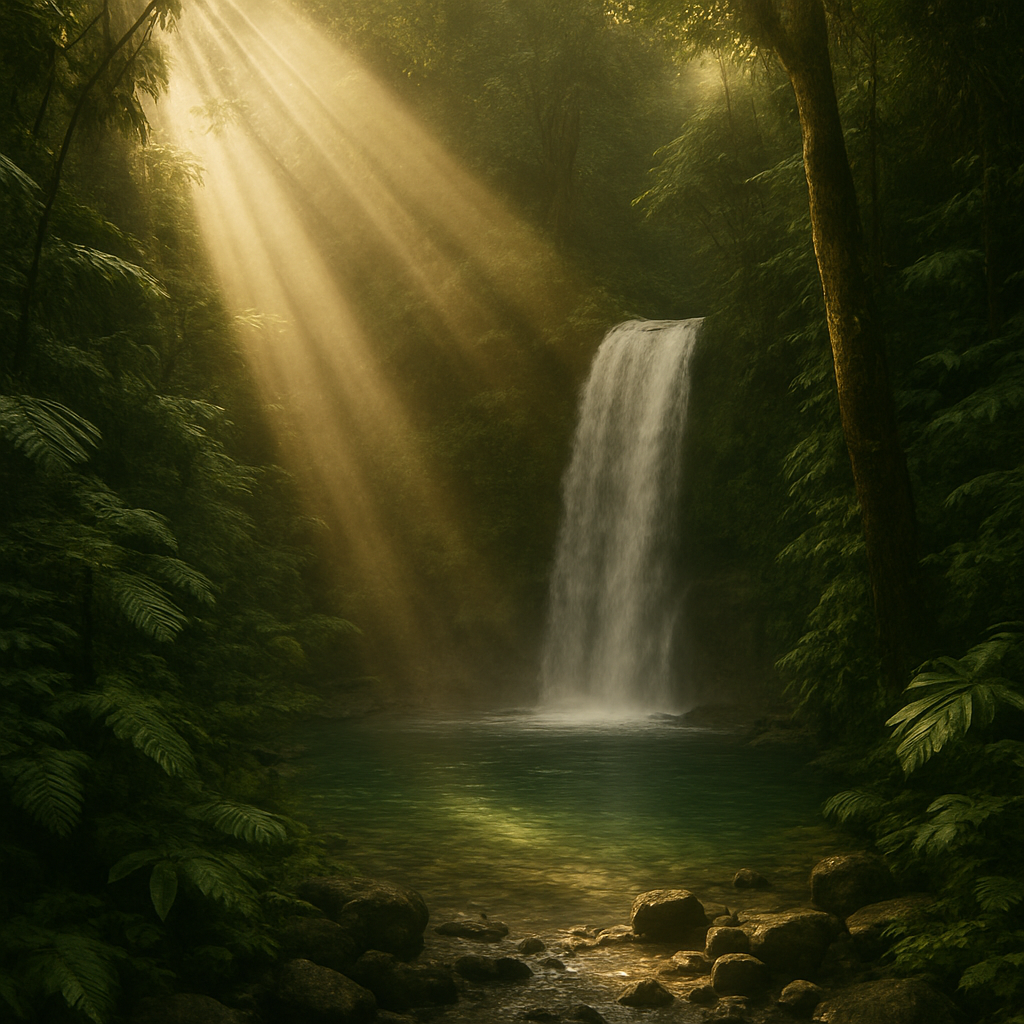
A shaft of sunlight cuts through the dense canopy, scattering into gold and green. Dust motes drift like tiny stars in the humid air, and somewhere deep within the forest, a cicada sings. Before you lies a hidden pool — a circle of emerald glass nestled among moss-covered stones. Water spills gently from a small cascade, its surface broken only by the gliding shadow of a fish. The air smells of rain and earth and life itself.
Here, in the heart of the rainforest, time seems suspended. Every breath feels ancient, borrowed from an unbroken chain of seasons. Around you, trees rise like cathedral pillars — towering dipterocarps, mahogany, kapok, and fig — their roots twisting and folding over one another in a slow, silent struggle for survival.
This place is alive in ways we can barely comprehend. Beneath each leaf, within every drop of water, life hums with purpose and interconnection. To step into a rainforest is to step into Earth’s oldest and most intricate symphony — a living network that sustains not only itself, but the entire planet.
II. A World of Layers — The Architecture of Life
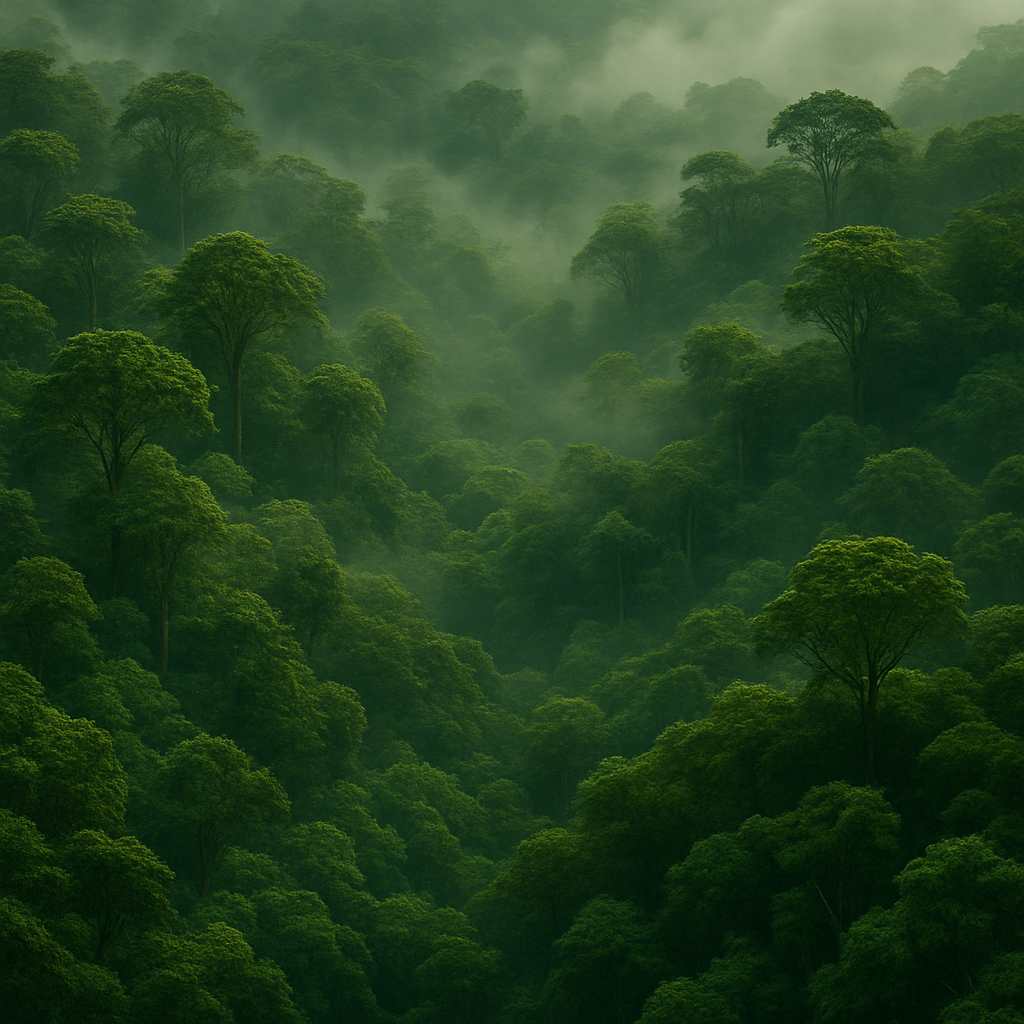
The rainforest is not a single ecosystem; it is a multi-layered universe stacked from forest floor to sky. Each layer — from the dark soil to the sunlit canopy — is a world unto itself, filled with species evolved to thrive in its narrow band of light and shadow.
1. The Forest Floor: Shadows and Secrets
At ground level, little sunlight reaches. It’s cool and damp, a world of decay and renewal. Leaf litter forms a soft carpet underfoot, broken down by fungi, termites, and bacteria into nutrients. This decomposition cycle fuels the forest’s life, recycling matter faster than any other ecosystem on Earth.
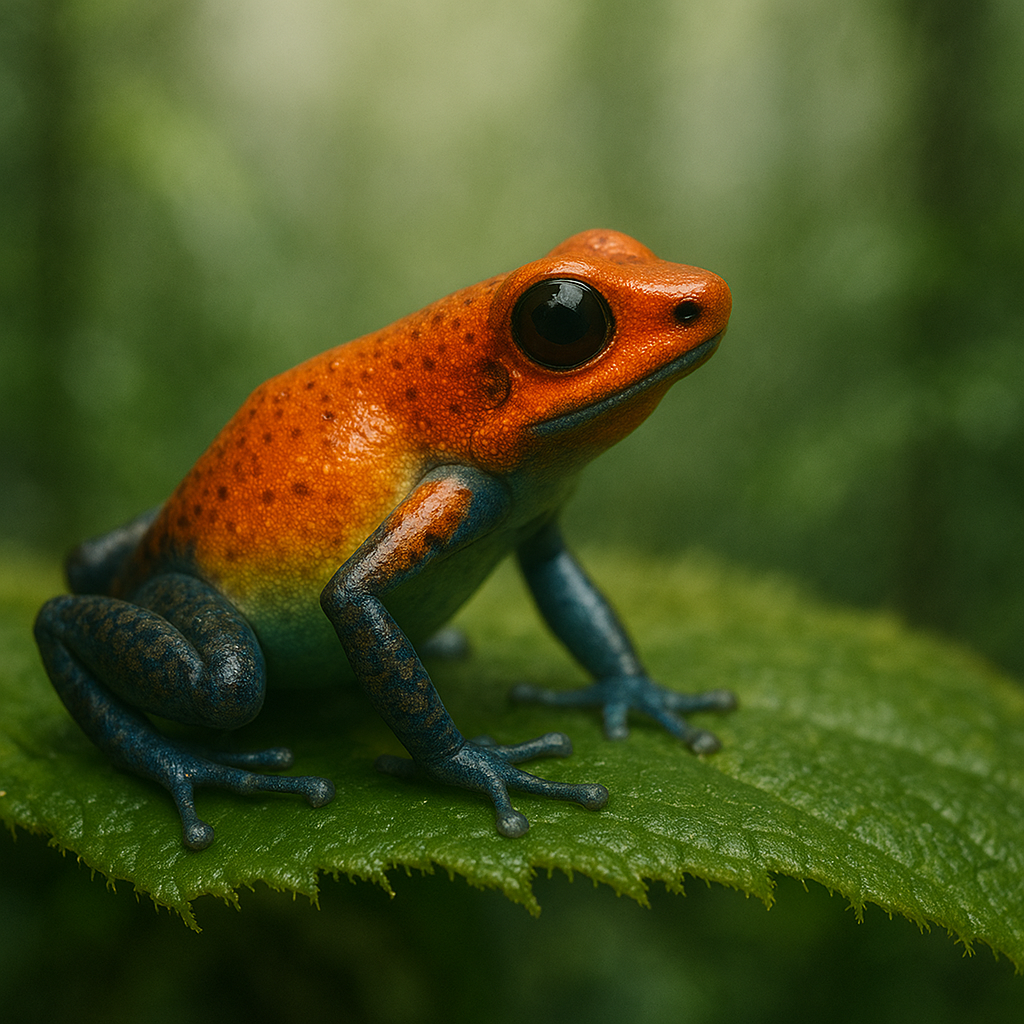
Here move the quiet architects — ants that farm fungi, beetles that bury seeds, and agoutis that scatter fallen nuts, unknowingly planting the next generation of trees. Jaguars pad silently through the understory, their rosetted coats melting into the dappled light. Poison dart frogs flash neon warnings against predators, tiny but potent reminders that beauty and danger coexist.
2. The Understory: A Tangle of Shade and Mystery
A few meters up, filtered light gives rise to a dense tangle of shrubs, young saplings, and vines. Bromeliads collect pools of water in their rosettes, forming miniature ecosystems that host tadpoles, insects, and even small frogs. Orchids bloom like jewels on the trunks of giants, their delicate roots clinging to bark rather than soil.
This layer is home to stealth and survival — snakes that glide from branch to branch, moths camouflaged as dead leaves, and leopards that prowl with eyes like moonlight.
3. The Canopy: The City of Leaves
Above, 30 to 45 meters high, the canopy bursts with life and light. This is the rainforest’s metropolis — a continuous green roof where the majority of its species dwell. Birds flash like living brushstrokes between branches: toucans, hornbills, and macaws, each adapted to the feast of fruits and insects the canopy offers.
Here, epiphytes — plants that live upon other plants — form hanging gardens, their roots gathering moisture from the air. Monkeys leap across the sky-road of branches, while sloths move slowly, cultivating moss and algae on their fur — turning themselves into small mobile ecosystems.
4. The Emergent Layer: The Kingdom of Sunlight
Towering above even the canopy, a few colossal trees break through to the sky. These emergents — sometimes reaching 70 meters — are the titans of the forest. They anchor entire communities of eagles, bats, and insects, and act as lightning rods, drawing energy from both the heavens and the soil. Their crowns are the rainforest’s watchtowers, overseeing an empire of green.
Together, these layers form a vertical city of interdependence — a structure of cooperation, competition, and endless evolution.
III. The Breath of the Earth — Oxygen, Carbon, and Balance
Though rainforests cover less than 6% of Earth’s surface, they are responsible for producing around 20% of its oxygen and store more than 250 billion metric tons of carbon.
Every leaf, through the miracle of photosynthesis, captures sunlight and carbon dioxide, converting them into sugar and oxygen. This process, multiplied across billions of trees, regulates the planet’s atmosphere and helps slow the pace of climate change.
Rainforests also play a central role in the water cycle. As trees transpire — releasing moisture through their leaves — they create clouds that form rain, not just locally but across continents. The Amazon, for example, generates its own weather system: its trees recycle so much water that they seed rainfall thousands of kilometers away, even influencing African monsoons.
When we destroy these forests, we don’t just lose trees — we unravel a global climate regulator, a mechanism millions of years in the making.
IV. The Web of Life — Creatures of the Green Kingdom
The rainforest is home to more than half of all known species on Earth. Some are spectacular; others, invisible yet vital.
The Jaguars and Their Prey
In South America’s jungles, the jaguar reigns as apex predator. Unlike other big cats, it kills not by strangulation but by crushing skulls with a single bite — a brutal efficiency honed by evolution. Its presence shapes the behavior of prey species, maintaining ecological balance. Remove the jaguar, and herbivores overgraze, stripping vegetation and destabilizing the system. This is the essence of a keystone species — one that holds the web together.
The Ants of the Forest Floor
Ants in rainforests are not just numerous; they are engineers. Leafcutter ants cultivate underground fungus farms, feeding them chewed vegetation. These fungal gardens sustain entire colonies and enrich the soil. Their work cycles nutrients, turning decay into fertility — nature’s most efficient recycling program.
The Parrots and the Seeds
Parrots, toucans, and hornbills are among the forest’s gardeners. By eating fruits and dispersing seeds far from the parent trees, they ensure genetic diversity and forest regeneration. Some seeds even require passage through an animal’s digestive system to germinate. Each bird carries the blueprint of tomorrow’s forest within its flight.
The Amphibian Sentinels
Frogs, especially in tropical ecosystems, serve as barometers of environmental health. Sensitive to temperature and water chemistry, they are often the first to vanish when conditions change. Their decline is an alarm — a biological warning system telling us that the balance is shifting.
Every creature, from the largest mammal to the smallest microbe, contributes to the rainforest’s resilience. The loss of even one thread weakens the whole tapestry.
V. Symbiosis — The Art of Living Together
In the rainforest, survival depends not on solitude but on connection. Every organism, from tree to insect, is bound in partnerships — sometimes cooperative, sometimes parasitic, but always dynamic.
The Fig Tree and Its Wasp
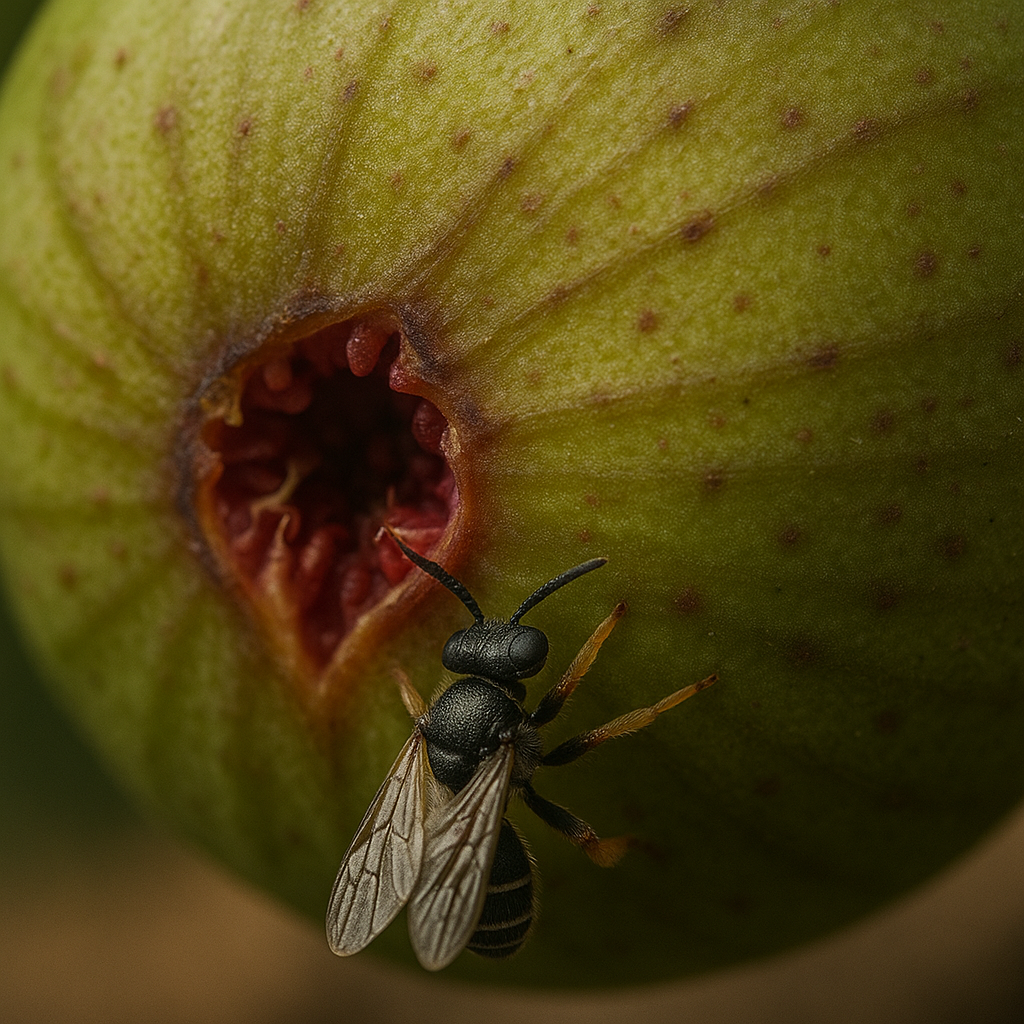
Few relationships are as intricate as that between the fig tree and the tiny fig wasp. The tree’s flowers are hidden inside its fruit, accessible only to these wasps. The female enters through a small opening, lays her eggs, and pollinates the flowers in the process. Her offspring hatch, mature, and carry pollen to new figs — continuing a cycle millions of years old. Without the wasp, the fig cannot reproduce. Without the fig, hundreds of species that feed on its fruit would starve.
Epiphytes and Their Hosts
Epiphytes such as orchids, ferns, and bromeliads depend on trees for elevation and moisture, but they do not harm them. Their relationship exemplifies mutualism — one thrives without taking from the other. These plants collect rainwater in their leaves, creating homes for frogs, insects, and microbes. In the rainforest, even a single tree can host an entire miniature world.
Fungi and the Mycorrhizal Network
Beneath the soil lies an invisible web — fungal threads that connect tree roots in vast communication networks. Through these networks, trees share nutrients, warn neighbors of insect attacks, and even support weaker saplings. In many ways, the forest behaves like a single organism — connected, responsive, and alive with information.
The rainforest’s secret is not competition, but collaboration. Life here has evolved not just to survive, but to coexist.
VI. Forests as Climate Architects
Beyond their ecological beauty, rainforests serve as climate regulators on a global scale. Through carbon sequestration, water recycling, and heat absorption, they maintain atmospheric balance.
In the Amazon, trees collectively release up to 20 billion tons of water vapor daily. This moisture rises, condenses, and falls again as rain — fueling rivers that sustain entire countries. The Congo Basin and Southeast Asian rainforests perform similar roles, influencing rainfall far beyond their borders.
But these systems are fragile. When forests are cleared, their ability to recycle rain diminishes. Drier air means fewer clouds, less rain, and a feedback loop that accelerates further drying — a potential tipping point where rainforest becomes savanna.
To protect the global climate, we must protect these green lungs.
VII. The Crisis Beneath the Canopy
Rainforests are disappearing at an alarming rate — about 10 million hectares every year. Logging, mining, cattle ranching, and palm oil plantations strip away trees faster than they can recover.
Satellite images show scars of deforestation spreading like wounds across continents. The consequences reach far beyond the local:
- Carbon emissions from burning forests accelerate climate change.
- Loss of biodiversity erases species before they are even discovered.
- Disrupted rainfall patterns threaten agriculture and water supplies.
And yet, the greatest tragedy is often invisible — the loss of knowledge. Indigenous communities who have lived within these forests for millennia hold deep ecological wisdom: how to manage resources sustainably, how to heal the land, how to live in rhythm rather than opposition.
VIII. The Wisdom of the First Guardians
Before conservation had a name, indigenous peoples were already practicing it.
In the Amazon, tribes such as the Kayapo and Yanomami treat the forest as kin — each plant and animal seen as part of a living system of reciprocity. In Borneo, the Dayak use shifting cultivation in cycles that allow land to rest and recover. In Australia’s tropical north, Aboriginal fire management has shaped rainforest edges for tens of thousands of years, preventing destructive wildfires and promoting biodiversity.
These practices arise not from technology, but from relationship. Indigenous knowledge recognizes that humans are not separate from nature — we are woven into it. Protecting rainforests, therefore, requires not just legal frameworks but cultural respect. Empowering indigenous stewardship is among the most effective strategies for conservation, ensuring that those who know the forest best can lead its defense.
IX. Seeds of Hope — Restoration and Renewal
Despite the damage, there is reason to hope. Across the world, communities and scientists are replanting what has been lost, one tree at a time.
1. Reforestation and Regeneration
Projects like Brazil’s Araguaia Biodiversity Corridor aim to connect fragmented forests, allowing wildlife to migrate and ecosystems to heal. In Costa Rica, once ravaged by logging, forest cover has doubled through restoration programs and ecotourism incentives.
Natural regeneration — letting forests regrow on their own — often proves remarkably effective. When left undisturbed, soil seed banks and nearby vegetation can repopulate cleared land faster than we expect, showing that the Earth still knows how to heal.
2. Technology and Conservation
Satellite monitoring now helps track illegal logging in real time. Drones assist in tree-planting campaigns, dispersing millions of seeds across inaccessible terrain. Scientists are mapping genetic diversity to identify climate-resilient tree species for future planting.
3. The Role of Ecotourism and Education
Sustainable tourism provides an alternative economy for rainforest nations. When travelers experience the wonder of the jungle firsthand — the flash of a bird-of-paradise, the hum of nocturnal insects — they return with deeper understanding and advocacy. Education transforms curiosity into care.
X. A Call to Action — Protecting Earth’s Green Heart
The rainforest’s song is fading, but it can still be heard if we listen closely. The steps to protect it are both global and personal:

- Support certified sustainable products (like FSC timber or Rainforest Alliance coffee).
- Reduce consumption of palm oil and demand transparency in supply chains.
- Donate to or volunteer with rainforest conservation organizations.
- Advocate for indigenous rights and land protection.
- Educate others — share the stories, images, and facts that ignite awareness.
Even urban dwellers far from the jungle breathe the air it purifies, eat the food it helps grow, and depend on the rain it calls forth. The rainforest is not a distant wilderness — it is the planet’s heartbeat, pulsing in time with our own.
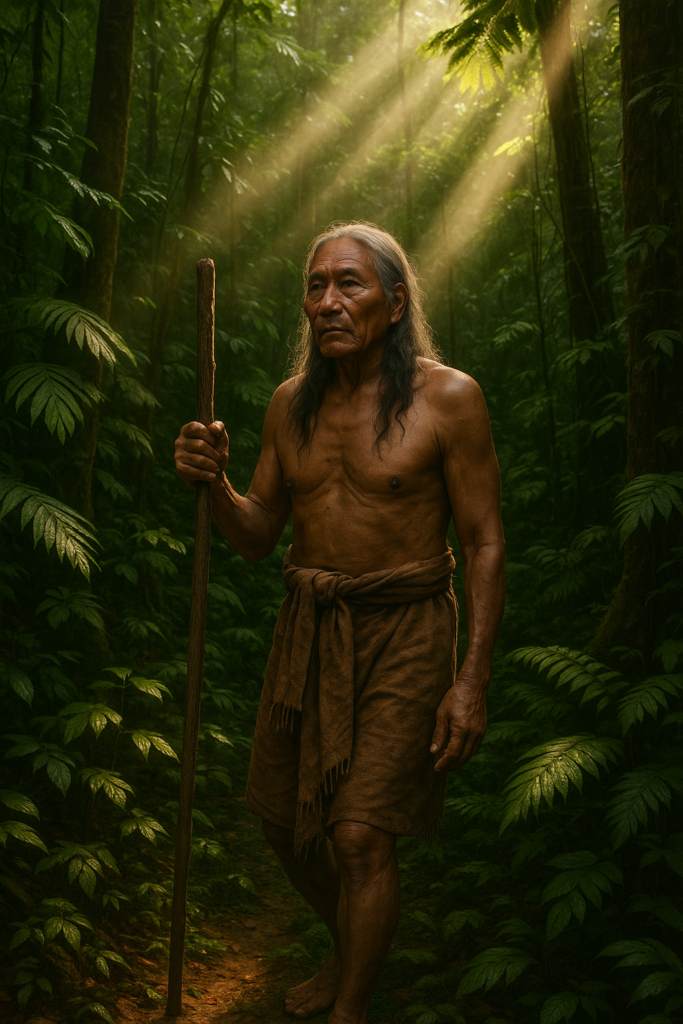
XI. Epilogue — The Living Cathedral
As you stand once more beside that emerald pool, the light shifts and the forest exhales. Mist rises, wrapping the trees in silver. The song of insects grows louder, merging with the murmur of water. It feels less like sound than vibration — the hum of life itself.
Every leaf, every droplet, every breath is part of an unbroken cycle — a rhythm older than humanity and wiser than any machine. The rainforest has been the Earth’s sanctuary for over 70 million years. Within its shadows lie answers to questions we have not yet learned to ask: how to live, how to endure, how to coexist.
To lose it would be to silence one of the planet’s oldest voices.
To protect it is to protect our shared future.
The rainforest is not just a place — it is a presence, a pulse, a promise.
And as long as its heart beats, so too does our own.