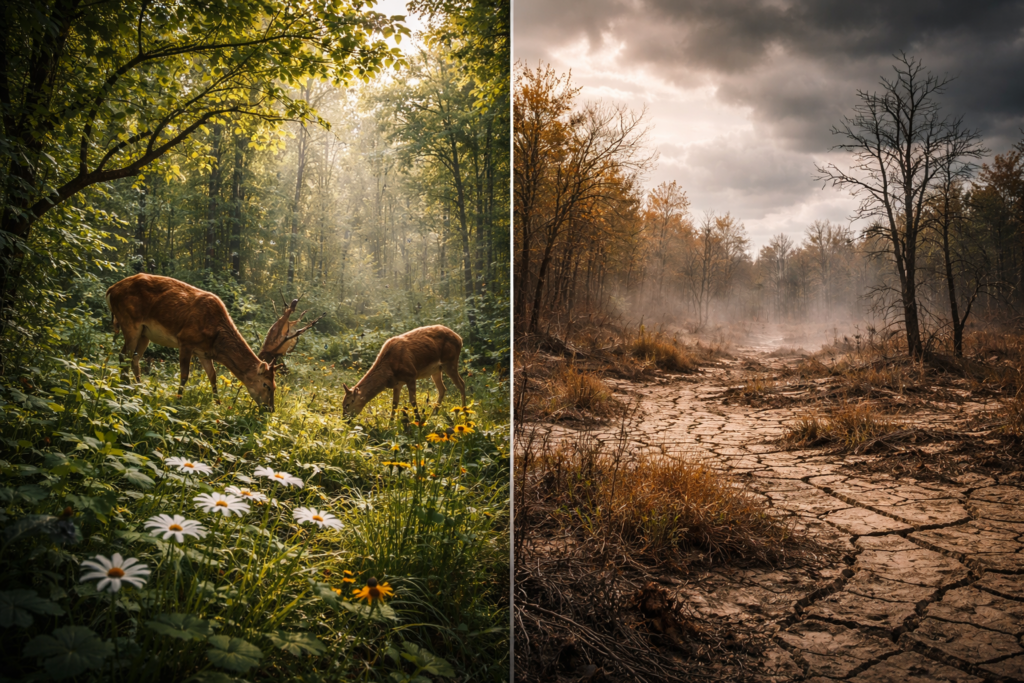
Nature is not just a collection of species living side by side—it is a web of interactions. Every plant, animal, and microbe exists within a complex network of relationships that determine survival, reproduction, and ultimately, evolution itself.
From predators hunting prey to plants competing for sunlight, these interactions form the invisible rules governing ecosystems. Yet, as climate change and human activity reshape the planet, these relationships are being disrupted in ways scientists are only beginning to understand.
The research explored in this article dives deep into the evolutionary ecology of species interactions, revealing how shared mechanisms—like natural selection and population regulation—shape ecosystems across space and time.
Let’s unpack what this means, why it matters, and how it’s redefining our understanding of life on Earth.

What Are Species Interactions?
At the heart of every ecosystem are interactions between organisms. These interactions can take many forms:
- Predation – one organism consumes another
- Competition – species compete for resources like food, water, or light
- Mutualism – both species benefit (e.g., pollination)
- Parasitism – one benefits at the expense of another
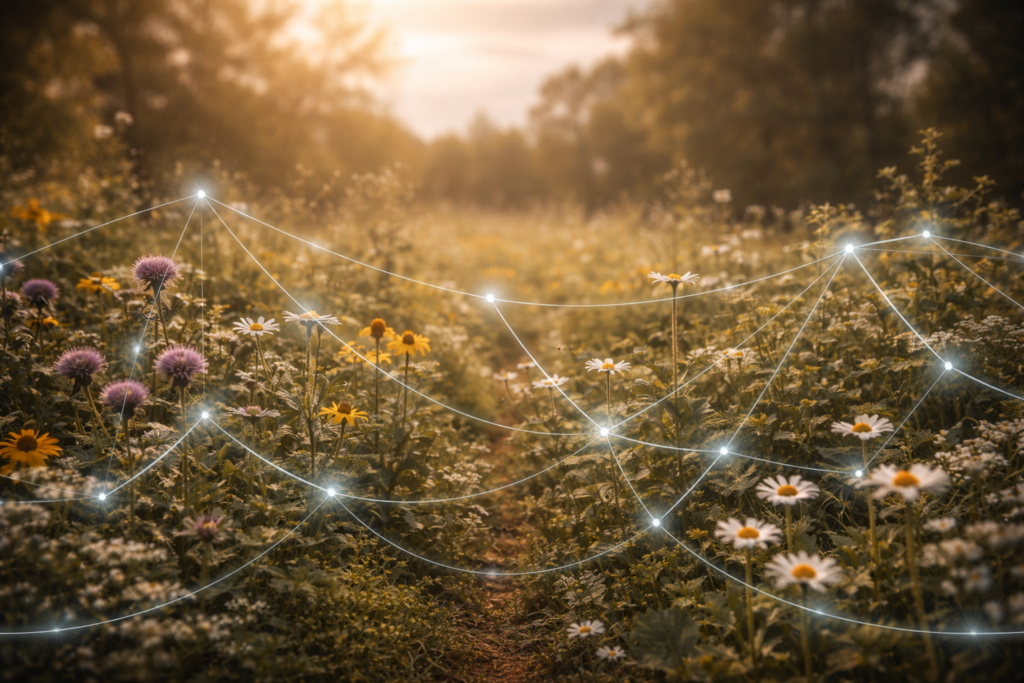
These relationships are not isolated—they form networks that connect entire ecosystems.
For example:
- A predator affects prey populations
- Prey populations influence plant communities
- Plants shape habitat conditions for other species
This interconnectedness means that a change in one species can ripple across the entire ecosystem.
The Core Idea: Shared Mechanisms Across Interactions
One of the most important insights from this research is that different types of species interactions are often governed by the same underlying principles.
Rather than treating predation, competition, and mutualism as completely separate processes, scientists are recognizing that they share common drivers, including:
1. Natural Selection
All interactions are shaped by evolution.
- Predators evolve better hunting strategies
- Prey evolve defenses
- Plants evolve traits to attract pollinators
Over time, these adaptations create feedback loops that shape how species interact.
2. Population Regulation
Interactions determine how populations grow or decline.
For example:
- Predators limit prey populations
- Competition limits resource use
- Mutualisms can enhance population growth
These processes help maintain balance within ecosystems.
3. Resource Availability
Many interactions are driven by access to resources.
- Limited food increases competition
- Abundant resources reduce conflict
- Resource changes can shift interaction types
This means that environmental changes—like climate change—can fundamentally alter species interactions.
From Pairwise Interactions to Ecological Networks
Traditionally, ecology focused on pairwise interactions—studying two species at a time.
But real ecosystems are far more complex.
Modern research emphasizes ecological networks, where:
- Multiple species interact simultaneously
- Effects cascade across trophic levels
- Indirect interactions become important
For example:
- Removing a predator can increase herbivores
- Increased herbivores reduce plant biomass
- Reduced plants affect soil and nutrient cycles
This complexity means ecosystems are dynamic, not static.
The Role of Feedback Loops
One of the most powerful ideas in ecology is the concept of feedback loops.
Feedback loops occur when interactions reinforce or counteract changes.
Positive Feedback Loops
Amplify changes
Example:
- Predator decline → prey increase → overgrazing → habitat degradation
Negative Feedback Loops
Stabilize systems
Example:
- Increased prey → more predators → prey population controlled
These loops are critical for understanding ecosystem stability.
Evolution Happens in Real Time
A key takeaway from this research is that evolution is not a slow, distant process—it can happen rapidly and influence ecological interactions in real time.
For instance:
- Prey species can evolve defenses within a few generations
- Predators can adapt to new prey
- Plants can shift traits in response to herbivory
This means ecology and evolution are deeply intertwined—a concept known as eco-evolutionary dynamics.
How Climate Change Is Disrupting Interactions
Climate change is altering ecosystems at an unprecedented rate.
But its most profound effects may come not from individual species losses—but from disruptions to species interactions.
1. Timing Mismatches
Many interactions depend on timing.
Example:
- Plants flower at specific times
- Pollinators emerge at specific times
Climate change can shift these schedules, causing mismatches that reduce survival.
2. Range Shifts
As temperatures rise, species move to new areas.
This creates:
- New interactions between species that never coexisted
- Loss of historical interactions
These changes can destabilize ecosystems.
3. Altered Interaction Strengths
Climate change can intensify or weaken interactions.
For example:
- Warmer temperatures may increase herbivory rates
- Drought can intensify competition for water
These shifts can cascade through ecosystems.
Indirect Effects: The Hidden Drivers of Change
Not all ecological effects are direct.
In fact, some of the most important changes come from indirect interactions.
Example:
- Predator decline → prey increase → plant decline
Even though the predator never interacts directly with plants, it still influences them.
These indirect effects make ecosystems highly complex and difficult to predict.
Why This Matters for Biodiversity
Understanding species interactions is essential for protecting biodiversity.
Because:
- Losing one species can affect many others
- Interactions determine ecosystem resilience
- Conservation must consider networks, not just species
For example:
- Protecting pollinators supports entire plant communities
- Restoring predators can rebalance ecosystems
This network-based perspective is transforming conservation strategies.
Ecosystem Stability and Tipping Points
Ecosystems can absorb disturbances—up to a point.
But when interactions are disrupted too much, systems can reach tipping points.
At this stage:
- Ecosystems shift to new states
- Changes may be irreversible
Examples include:
- Forest → grassland
- Coral reef → algal-dominated system
These shifts are often driven by changes in species interactions, not just species loss.
The Future of Ecology: A Unified Framework
One of the most exciting aspects of this research is the push toward a unified framework for understanding species interactions.
Instead of studying interactions separately, scientists are:
- Integrating ecology and evolution
- Using network theory
- Applying mathematical models
- Leveraging big data and genomics
This approach allows for more accurate predictions of ecosystem responses.
Real-World Applications
Understanding species interactions has practical implications:
1. Conservation Planning
- Protecting key species that drive interactions
- Maintaining ecological networks
2. Agriculture
- Managing pests through ecological relationships
- Supporting pollinators
3. Climate Adaptation
- Predicting ecosystem responses
- Designing resilient landscapes
A New Way to See Nature
This research challenges us to rethink how we view the natural world.
Instead of seeing ecosystems as collections of species, we must see them as:
👉 Dynamic networks of interactions shaped by evolution, environment, and feedback loops
This perspective reveals that:
- Small changes can have large effects
- Interactions matter as much as species
- Ecosystems are constantly evolving
Final Thoughts
The study of species interactions is revealing a deeper truth about nature:
Life is defined not just by what organisms are—but by how they interact.
As climate change accelerates and ecosystems face increasing pressure, understanding these interactions will be essential for predicting the future of biodiversity.
The challenge ahead is immense—but so is the opportunity.
By uncovering the hidden rules that govern ecosystems, scientists are building the knowledge needed to protect and sustain life on Earth in an uncertain future.