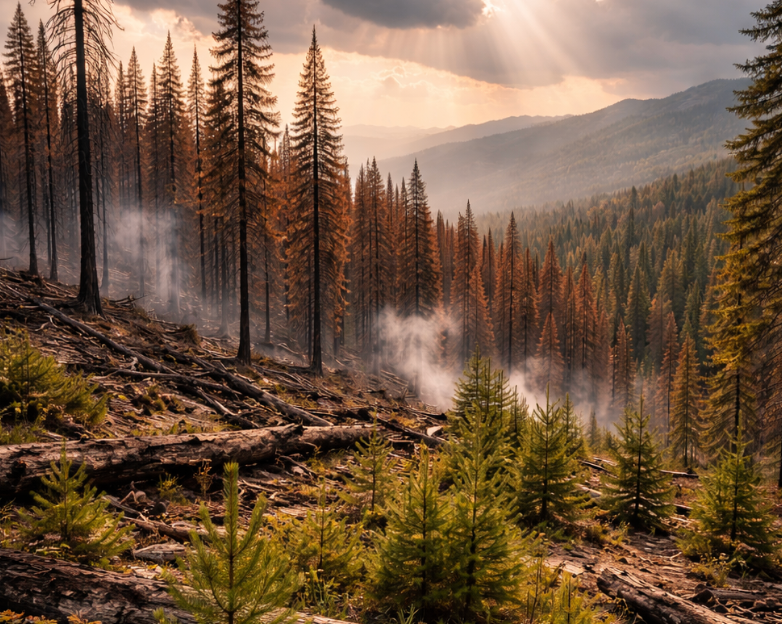
Forests are dynamic systems constantly shaped by disturbances such as wildfires, droughts, storms, insect outbreaks, and disease. For centuries, ecologists studied these disturbances largely as separate events—a wildfire here, a bark beetle outbreak there. But a growing body of research suggests something far more complex is happening in the world’s forests.
A recent review titled “Climate Change Effects on Interacting Disturbances in Forest Ecosystems” explores how different disturbances can interact with one another—and how climate change is intensifying these interactions.
Rather than acting alone, disturbances often form networks of interacting events, creating cascading effects that reshape forest landscapes across decades or even centuries. Understanding these interactions is quickly becoming one of the most important frontiers in ecology.
Let’s explore how climate change is transforming forest disturbances—and what it means for ecosystems and the planet.
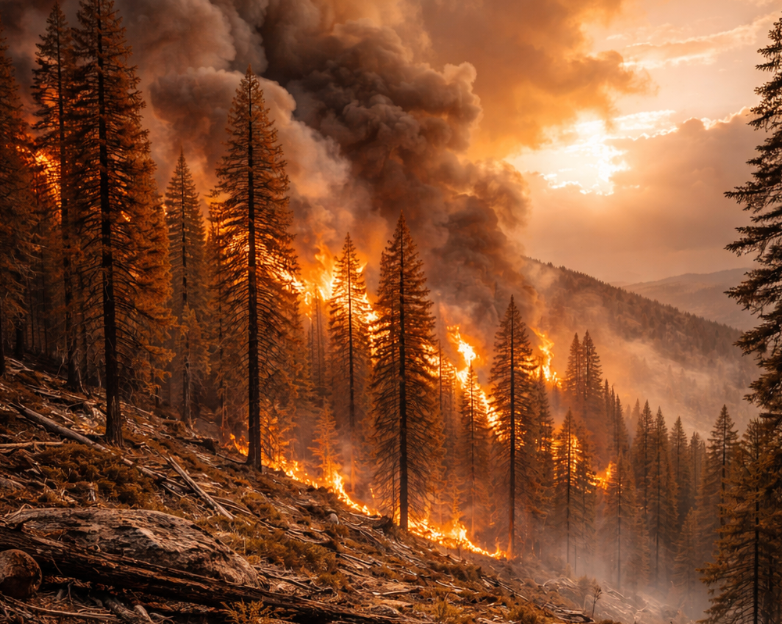
Forest Disturbances: Nature’s Reset Button
Disturbances are natural events that disrupt ecosystems and alter their structure.
Common examples include:
- Wildfires
- Droughts
- Windstorms
- Insect outbreaks
- Plant diseases
These disturbances may sound destructive, but they also play critical ecological roles. They can:
- Create new habitats
- Recycle nutrients
- Regenerate forests
- Increase biodiversity
In fact, many ecosystems evolved with disturbance as a normal part of their life cycle.
However, climate change is altering how often disturbances occur, how intense they become, and how they interact with each other.
The Missing Piece: Interacting Disturbances
Historically, scientists studied disturbances individually—examining wildfire patterns, drought effects, or pest outbreaks separately.
But forests rarely experience disturbances in isolation.
Instead, disturbances can interact across space and time, producing combined effects that are often larger than the sum of their parts.
For example:
- A severe drought weakens trees
- Insects attack stressed trees
- Dead trees increase wildfire risk
- Fire reshapes the forest structure
This sequence of events demonstrates how one disturbance can trigger or amplify another.
Understanding these interactions is crucial for predicting how forests will respond to climate change.
Seven Types of Disturbance Interactions
Researchers have identified several major categories of disturbance interactions.
These interactions determine whether disturbances amplify or weaken each other.
1. Additive Effects
Two disturbances simply combine their impacts.
Example:
- Drought causes tree stress
- Fire burns weakened trees
The combined effect increases forest mortality.
2. Synergistic Effects
Sometimes disturbances amplify each other dramatically.
Example:
- Bark beetle outbreaks kill trees
- Dead trees fuel intense wildfires
This can lead to extreme ecosystem change.
3. Antagonistic Effects
Not all interactions increase damage.
Sometimes one disturbance reduces the impact of another.
Example:
- A wildfire removes infected trees
- This reduces the spread of disease
These interactions can sometimes buffer forests from damage.
4. Linked Disturbances
One disturbance alters the conditions that determine the next disturbance.
Example:
- A wildfire changes vegetation structure
- New forest growth alters future fire behavior
Climate change can modify these relationships in unpredictable ways.
5. Feedback Loops
Some disturbances create self-reinforcing cycles.
For example:
- Drought weakens forests
- Dead trees increase fire intensity
- Fires release carbon and alter ecosystems
- Changed ecosystems become more drought-prone
This feedback loop can accelerate ecosystem transformation.
6. Disturbance Networks
Disturbances can also form complex networks, where multiple factors interact simultaneously.
For example:
- Climate warming
- Drought
- Insects
- Fire
- Disease
Together, these factors create a web of ecological change.
7. Critical Transitions
In some cases, interacting disturbances push ecosystems past tipping points.
When this happens, forests may shift into entirely different states, such as:
- Forest → grassland
- Forest → shrubland
- Dense forest → open woodland
These transitions can be difficult or impossible to reverse.
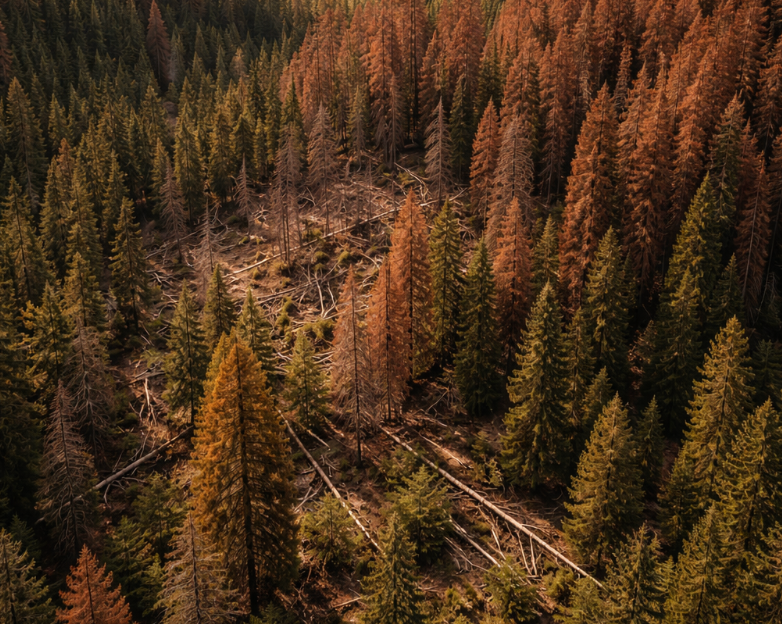
Climate Change Is Intensifying Disturbances
Climate change is influencing forest disturbances in two main ways.
1. Changing Disturbance Characteristics
Climate change affects how disturbances behave.
Examples include:
- Hotter temperatures increasing wildfire intensity
- Drought increasing tree stress
- Warmer winters allowing insect populations to expand
These changes alter the frequency and severity of disturbances.
2. Changing Disturbance Interactions
Climate change also alters how disturbances interact with each other.
For example:
- Drought can make forests more vulnerable to pests
- Pest outbreaks increase fuel for wildfires
- Wildfires alter vegetation and future fire risk
This creates cascading ecological effects.
The Power of Positive Feedbacks
One of the most concerning aspects of disturbance interactions is the presence of positive feedback loops.
Positive feedbacks occur when disturbances reinforce each other.
For example:
- Climate change increases drought
- Drought kills trees
- Dead trees fuel wildfires
- Fires release carbon dioxide
- Carbon dioxide intensifies climate change
This feedback cycle can accelerate ecosystem change and amplify global warming.
Why These Interactions Matter
Understanding disturbance interactions is critical for several reasons.
1. Ecosystem Stability
Forests support biodiversity, regulate water cycles, and store carbon.
Large disturbance interactions can destabilize these ecosystems.
2. Carbon Storage
Forests are one of the planet’s largest carbon sinks.
Disturbances such as wildfire and insect outbreaks release stored carbon into the atmosphere.
This can accelerate climate change.
3. Human Communities
Forest disturbances also affect human society.
Impacts include:
- Wildfire risk to homes
- Air pollution from smoke
- Timber loss
- Changes to water supply
Understanding disturbance interactions helps improve land management and disaster planning.
A New Framework for Studying Disturbances
To better understand interacting disturbances, scientists have developed new frameworks that classify and analyze disturbance interactions across ecosystems.
This approach helps researchers identify:
- how disturbances influence one another
- when interactions amplify ecosystem damage
- where climate change may push ecosystems toward tipping points
The goal is to move beyond studying disturbances in isolation and instead understand the entire network of ecological interactions.
What the Future Holds for Forests
Climate change is expected to increase the frequency of ecosystem transitions worldwide by amplifying disturbance interactions and feedbacks.
This means forests may experience:
- more frequent wildfires
- larger insect outbreaks
- stronger drought impacts
- faster ecological transitions
However, the outcomes will vary across regions and ecosystems.
In some cases, disturbance interactions may actually reduce impacts, depending on the ecological context.
The Next Frontier in Ecology
The study of interacting disturbances represents a rapidly growing field in ecological research.
Future research will focus on:
- mapping disturbance networks across ecosystems
- predicting disturbance cascades under climate change
- identifying resilience mechanisms in forests
- improving ecosystem management strategies
These insights will be essential for protecting forests in a rapidly changing world.
Final Thoughts
Forests have always been shaped by disturbances. Fire, storms, pests, and droughts are natural parts of forest ecosystems.
But climate change is altering the rules of the game.
Disturbances are no longer isolated events—they are interconnected forces that interact, amplify, and cascade across landscapes.
Understanding these interactions is essential for predicting how forests will respond to global change and for developing strategies to protect the ecosystems we depend on.
In the coming decades, one thing is clear: the future of forests will depend not just on individual disturbances, but on the complex web of interactions between them.