
Most people think of plants as passive organisms—rooted in place, reacting to the world around them. But beneath the surface, long before a plant becomes visible, one of the most critical decisions in its life has already been made.
That decision is when to germinate.
It happens quietly, often unnoticed, in the soil beneath our feet. Yet this moment determines not just whether a plant survives, but where it can live, how it competes, and how entire ecosystems are structured.
Modern ecological research reveals that germination is far more than a biological starting point—it is a filter that shapes biodiversity, species distributions, and responses to climate change. Understanding this process unlocks a deeper view of how life adapts to a constantly changing world.
Want more scenes like this?
Download a curated pack of ultra-realistic images, perfect for wallpapers and inspiration.
What Is Seed Germination? (And Why It’s More Complex Than It Looks)
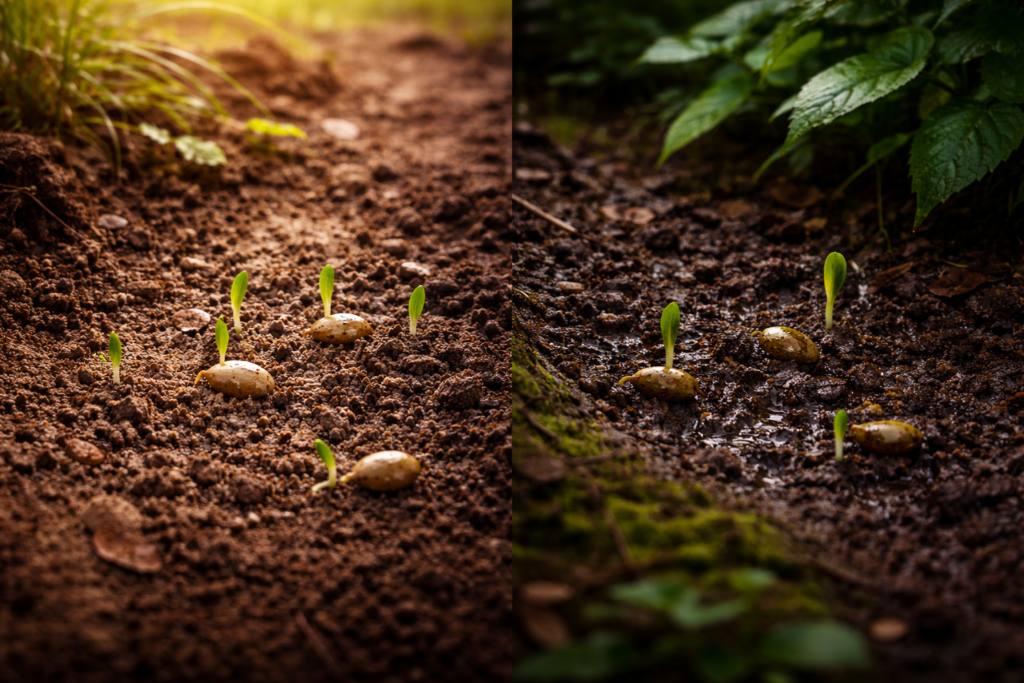
At its simplest, germination is the process by which a seed begins to grow. When environmental conditions are right—typically involving water, temperature, and sometimes light—the seed activates, absorbs moisture, and begins metabolic activity.
But this simple definition hides a much more complex reality.
Seeds are not just waiting for conditions to be “good.” They are responding to specific environmental signals, often fine-tuned through evolution. These signals tell the seed not just that it can grow, but that it should grow now.
This distinction matters.
Because the environment a plant experiences during its early growth stage will influence its access to light, competition with other plants, water availability, and survival chances.
In other words, germination is not just about starting life—it’s about choosing the right moment to enter the world.
The Germination Niche: A Hidden Layer of Ecology
In ecology, a niche refers to the set of environmental conditions that allow a species to survive and reproduce. Traditionally, this has been applied to adult organisms—but research shows that plants operate across multiple niches throughout their life cycle.
One of the most important is the germination niche.
This refers to the specific conditions required for a seed to successfully sprout. These conditions can include soil moisture levels, temperature ranges, light exposure, and seasonal timing.
What makes this fascinating is that the germination niche is often completely different from the conditions required for adult growth.
For example, a seed may require cool, moist soil to germinate, but the mature plant may thrive in warm, dry environments.
This creates a two-stage system: access stage (germination) and performance stage (growth and reproduction). If a species cannot successfully navigate the first stage, it never reaches the second.
Environmental Triggers: How Seeds “Decide” When to Grow
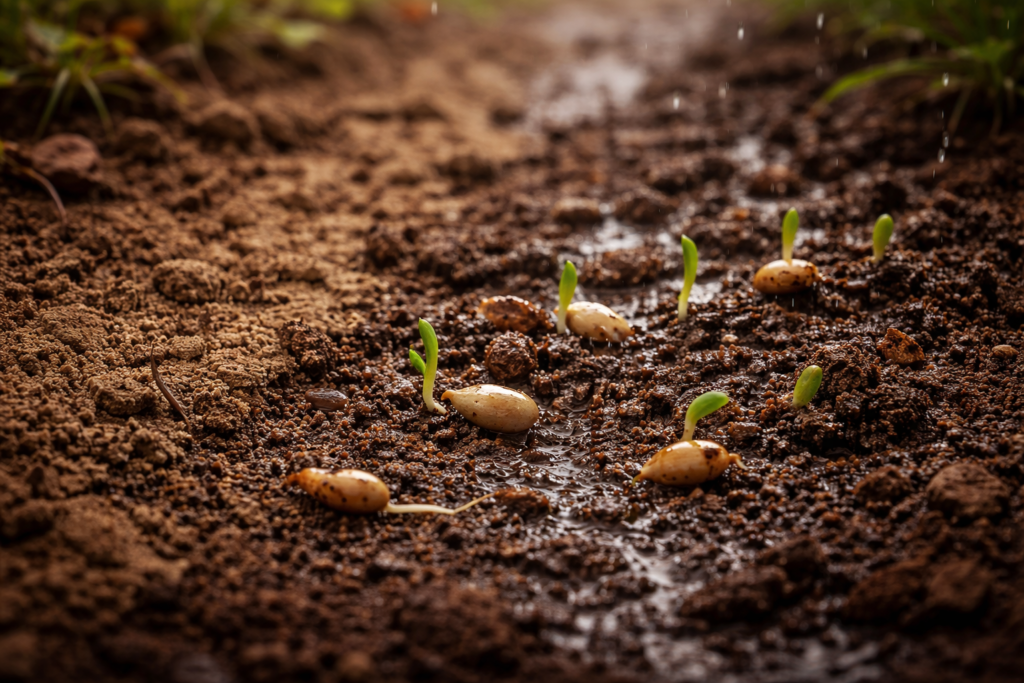
Seeds rely on environmental cues to determine when to germinate. These cues act like a biological information system, guiding the timing of growth.
Moisture
Water is the primary trigger for germination. When a seed absorbs water, it activates enzymes that begin the growth process.
Even small differences in soil moisture can dramatically affect success rates. This is why understanding moisture levels—even in controlled environments—can reveal a lot about plant behaviour.
A simple tool like the XLUX Soil Moisture Meter is often used by growers to monitor these conditions. While designed for houseplants, it reflects the same principle seen in natural ecosystems: water availability controls life timing.
Temperature
Temperature signals seasonal timing. Some seeds require cold periods before germinating, while others depend on warming conditions to activate growth. This prevents seeds from sprouting during the wrong season.
Light
Light can either trigger or inhibit germination. Some seeds only germinate when exposed to light, while others require darkness.
This ensures that seeds respond to their position in the soil—whether they are buried or near the surface. In more controlled environments, setups using a LBW Full Spectrum LED Grow Light with Stand can replicate these natural light cues, demonstrating just how sensitive seeds are to changes in light exposure.
Dormancy: The Strategy of Waiting
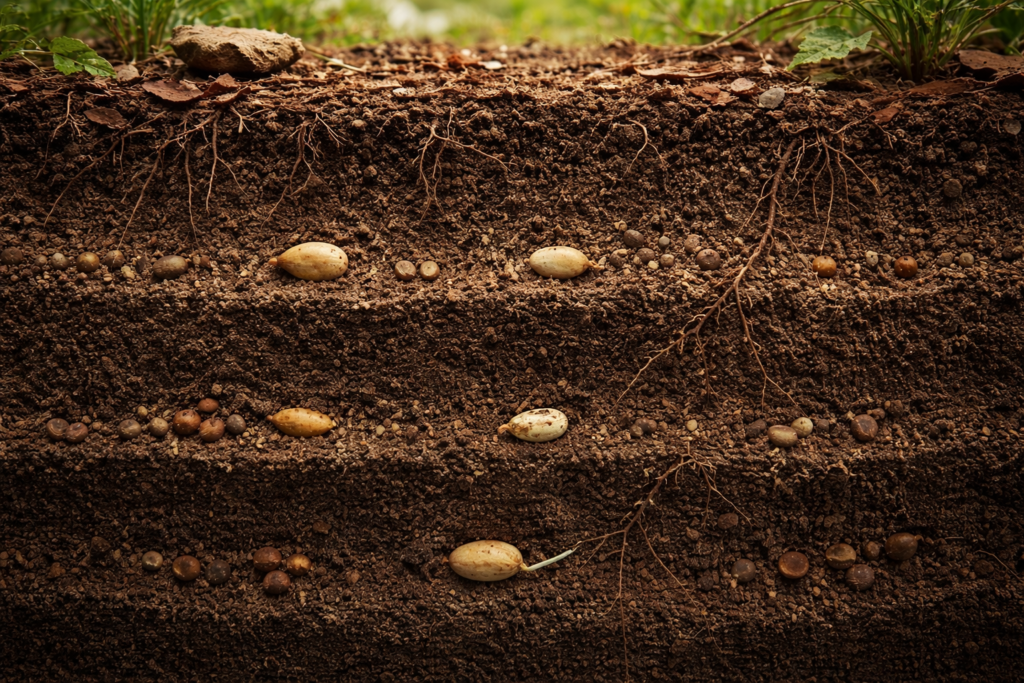
Not all seeds germinate immediately. Many enter a state known as dormancy, where growth is delayed until conditions improve.
Dormancy is one of the most powerful survival strategies in plant ecology. It allows seeds to avoid unfavourable conditions, spread risk across time, and survive environmental unpredictability.
Instead of putting all their chances into one moment, plants distribute their offspring across multiple seasons. This creates what ecologists call a seed bank—a reservoir of viable seeds stored in the soil.
Bet-Hedging: Nature’s Risk Management Strategy
Dormancy leads to a concept known as bet-hedging.
Rather than germinating all at once, a population of seeds may germinate in stages—some sprout immediately, while others wait. This ensures that even if one generation fails, others may succeed later.
It’s a strategy built on uncertainty, and it becomes increasingly important as environmental conditions become less predictable.
Want more scenes like this?
Download a curated pack of ultra-realistic images, perfect for wallpapers and inspiration.
Early Growth: Why Timing Beats Strength
Once a seed germinates, the race begins.
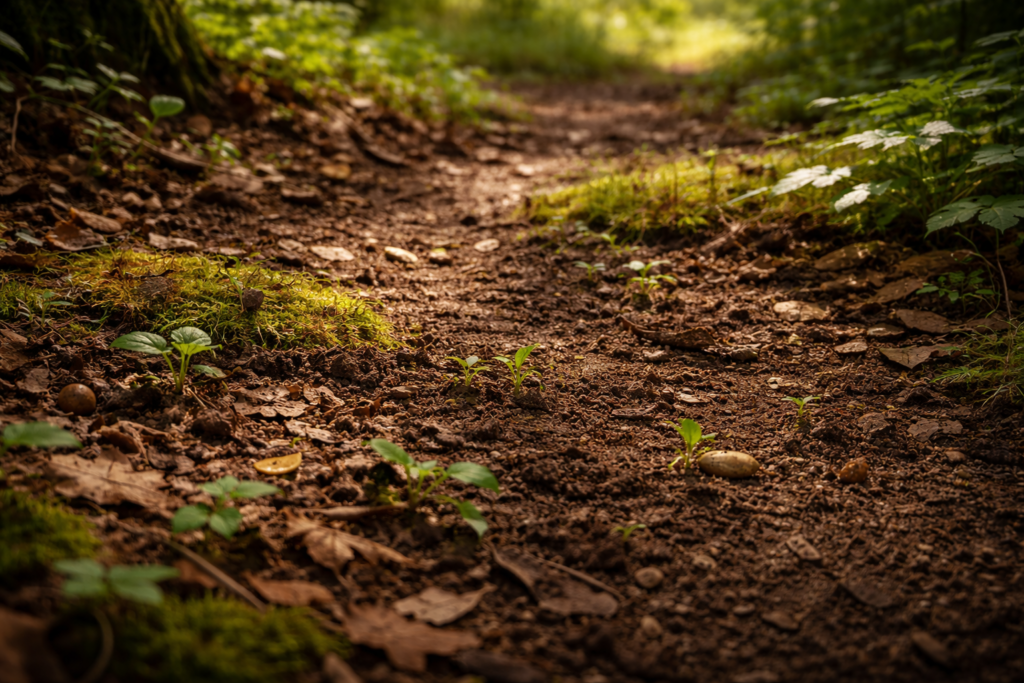
In many ecosystems, success isn’t determined by which plant is strongest—but by which one starts first. Early germination provides access to sunlight before competitors, establishes root systems sooner, and allows plants to control space and resources.
This creates what is known as a priority effect.
From Seeds to Species Distribution
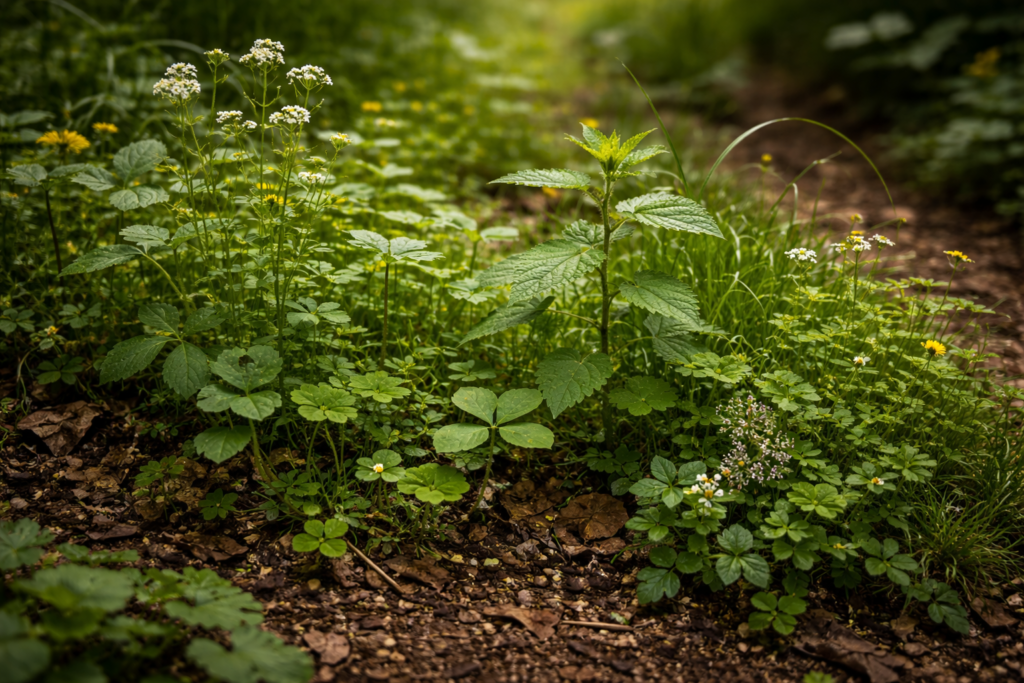
One of the most important insights from ecological research is that germination influences where species can live.
If a plant requires very specific conditions to germinate, its distribution will be limited. But if it can germinate across a wide range of conditions, it can spread more easily.
This means that a species’ geographic range is shaped not just by adult survival, but by where seeds can successfully begin life.
Climate Change and Germination
As global temperatures shift, so do the environmental cues that seeds rely on.
This can lead to earlier or delayed germination, seasonal mismatches, and failure to establish in previously suitable environments. Plants that depend on precise signals are particularly vulnerable, while those with flexible strategies may adapt more easily.
Bringing Ecology Into Everyday Spaces
What’s interesting is that these ecological principles don’t just apply to large-scale ecosystems—they also appear in our daily environments.
The idea of structure, balance, and organisation is central to both. Introducing natural materials into a workspace—like the Simple Houseware Bamboo Desk Organizer—can create a sense of order while reflecting the same principle seen in ecosystems: structure supports function.
Want more scenes like this?
Download a curated pack of ultra-realistic images, perfect for wallpapers and inspiration.
Creating Micro-Environments at Home
Just as natural environments contain microhabitats, indoor spaces can replicate small-scale ecological variation.
Even simple setups can create differences in light, airflow, and humidity. Using something like the AIMALL 2 Tier Bamboo Plant Stand allows plants to occupy different vertical positions, mimicking the layered structure of natural ecosystems.
To observe early plant development more closely, a setup such as the MIXC Seed Starter Tray Kit with Humidity Dome can also help recreate controlled germination conditions, similar to protected micro-environments found in nature.
Why Germination Matters More Than We Think
Germination is often overlooked because it happens out of sight. But it is one of the most influential processes in ecology.
It determines which species establish, how ecosystems form, and how plants respond to environmental change.
Without germination, there is no growth. Without growth, there is no ecosystem.
This article may contain affiliate links. If you purchase through these links, I may earn a small commission at no additional cost to you. I only recommend products that are relevant and applicable.