
Introduction
Climate change is not simply altering temperatures or shifting weather patterns—it is fundamentally reshaping life on Earth. Across ecosystems, species are being forced to respond to rapidly changing environments, often at rates unprecedented in evolutionary history. Understanding these responses requires more than traditional ecological thinking. It demands a synthesis of ecology and evolution—two disciplines that, when combined, provide a far more powerful lens through which to view biodiversity in a changing world.
The scientific community increasingly recognises that predicting the future of biodiversity cannot rely solely on static models of species distributions. Instead, we must consider how organisms adapt, interact, and evolve in real time. The integration of evolutionary and ecological processes—often referred to as eco-evolutionary dynamics—has become central to understanding how species and communities respond to climate change.
This article explores how biodiversity is shaped by both ecological processes, such as species interactions and environmental constraints, and evolutionary processes, such as adaptation and natural selection. More importantly, it examines how these processes interact under climate change, creating complex feedbacks that influence the survival, distribution, and composition of life on Earth.
Want more scenes like this?
Download a curated pack of ultra-realistic images, perfect for wallpapers and inspiration.
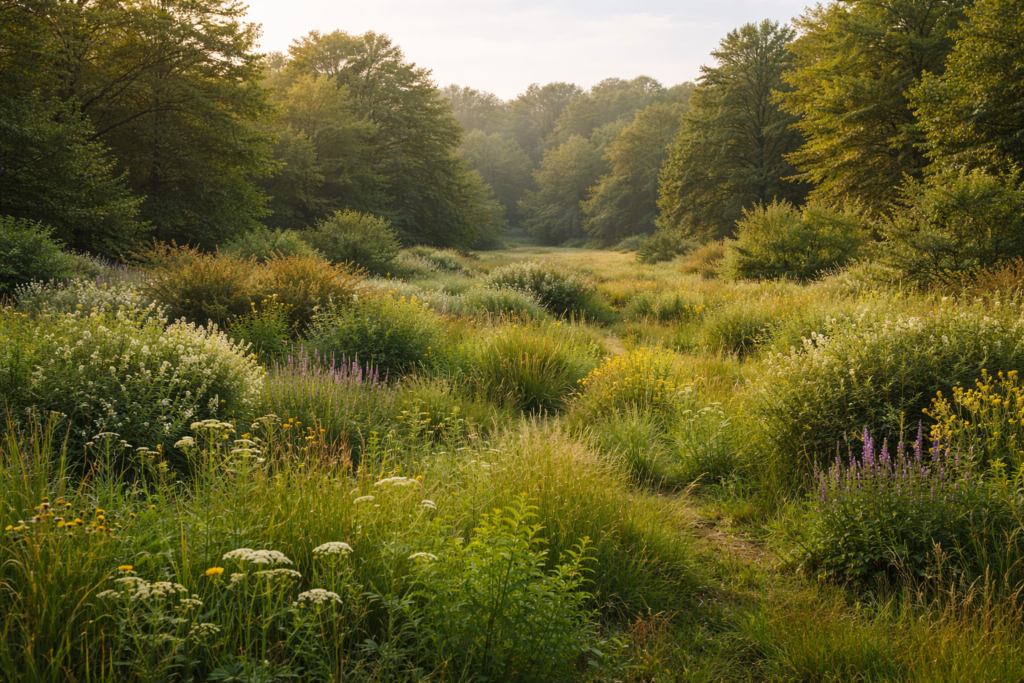
Modern ecosystems may span vast landscapes, but the same principles of structure and balance can be reflected on a much smaller scale. Bringing elements of nature into your own environment—such as a simple indoor plant display—can subtly mirror these ecological layers. A compact 2-tier bamboo plant stand, commonly available on Amazon, allows you to arrange small plants vertically, creating depth and variation similar to natural ecosystems. When paired with low-maintenance plants like pothos or snake plants, it becomes an easy way to introduce both structure and calm into your workspace while maintaining a clean, minimal aesthetic.
The Challenge of Predicting Biodiversity Under Climate Change
One of the greatest challenges in ecology today is predicting how biodiversity will respond to future environmental conditions. Traditionally, scientists have relied on models based on the concept of the ecological niche—the range of environmental conditions within which a species can survive and reproduce. While useful, these models often assume that species remain static in their traits and interactions.
However, this assumption is increasingly recognised as a limitation. Species are not fixed entities; they evolve. They adapt to new conditions, shift their behaviours, and alter their interactions with other species. Ignoring these dynamics can lead to inaccurate predictions about how biodiversity will respond to climate change.
Climate change introduces multiple simultaneous pressures: rising temperatures, altered precipitation patterns, increased frequency of extreme events, and shifting resource availability. These changes affect not only individual species but also the relationships between them. As a result, biodiversity responses are rarely simple or linear. Instead, they emerge from the interaction of ecological and evolutionary processes operating across multiple scales.
Ecology and Evolution: Two Sides of the Same System
Ecology and evolution have traditionally been studied as separate disciplines. Ecology focuses on interactions between organisms and their environment, while evolution examines how species change over time through processes like natural selection and genetic variation.
In reality, these processes are deeply interconnected. Ecological interactions—such as competition, predation, and mutualism—create selective pressures that drive evolution. In turn, evolutionary changes can alter ecological dynamics by modifying species traits, behaviours, and interactions.
This reciprocal relationship is known as eco-evolutionary feedback. For example, if a prey species evolves better defence mechanisms, predator populations may decline or adapt in response. These changes can cascade through the ecosystem, altering community structure and ecosystem function.
Under climate change, these feedbacks become even more important. Rapid environmental shifts can accelerate both ecological and evolutionary processes, leading to outcomes that are difficult to predict without considering both simultaneously.
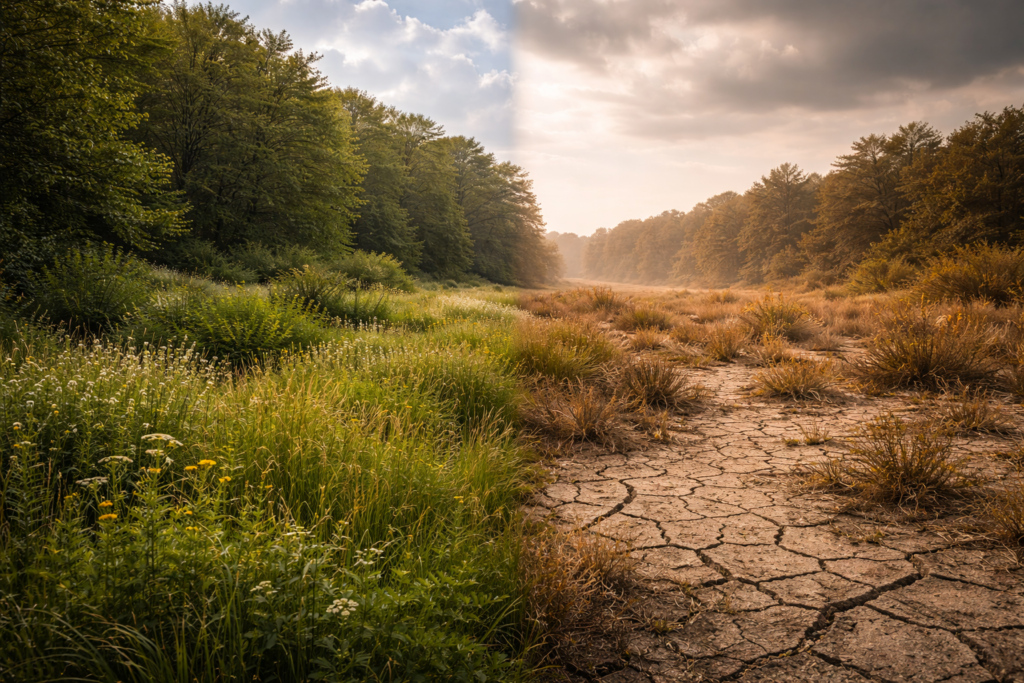
Just as ecosystems depend on balance between interacting components, our environments benefit from thoughtful organisation and simplicity. Introducing natural materials—like a wooden desk organiser—can help create a more grounded and intentional space. These organisers, widely available on Amazon in bamboo or light wood finishes, reduce visual clutter while adding organic texture. Much like ecological systems where structure supports function, a well-organised workspace can enhance focus, clarity, and overall mental well-being.
Niche Evolution and Shifting Species Distributions
One of the most visible effects of climate change is the shifting distribution of species. As temperatures rise, many species move toward cooler regions—often poleward or to higher elevations. However, not all species can move fast enough or far enough to keep pace with changing conditions.
This is where evolutionary processes come into play. Instead of moving, some species may adapt to new environmental conditions through changes in their physiological tolerances, behaviours, or life-history traits. This process, known as niche evolution, allows species to persist in environments that would otherwise become unsuitable.
However, the capacity for adaptation varies widely among species. Factors such as genetic diversity, population size, and generation time all influence how quickly a species can evolve. Species with short generation times and high genetic variability may adapt relatively quickly, while others may face increased risk of extinction.
Importantly, niche evolution does not occur in isolation. As species adapt or shift their ranges, they encounter new communities and new interactions. These changes can disrupt existing ecosystems and create entirely new ecological configurations.
Species Interactions in a Changing Climate
Species do not exist independently; they are embedded in complex networks of interactions. Climate change can disrupt these interactions in profound ways.
For example, consider pollination systems. Many plants rely on specific pollinators, and these relationships are often finely tuned to environmental conditions. If climate change causes pollinators to emerge earlier in the season while plants maintain their original flowering times, a mismatch can occur. This disruption can reduce reproductive success for plants and food availability for pollinators.
Similarly, predator-prey relationships can be altered by changes in temperature, habitat, or species distribution. If predators and prey respond differently to climate change, their interactions may weaken or intensify, leading to cascading effects throughout the ecosystem.
These changes highlight the importance of considering not just individual species, but the entire network of interactions that sustain biodiversity. As research has shown, strong species interactions can significantly influence evolutionary outcomes, either accelerating or constraining adaptation.
Want more scenes like this?
Download a curated pack of ultra-realistic images, perfect for wallpapers and inspiration.
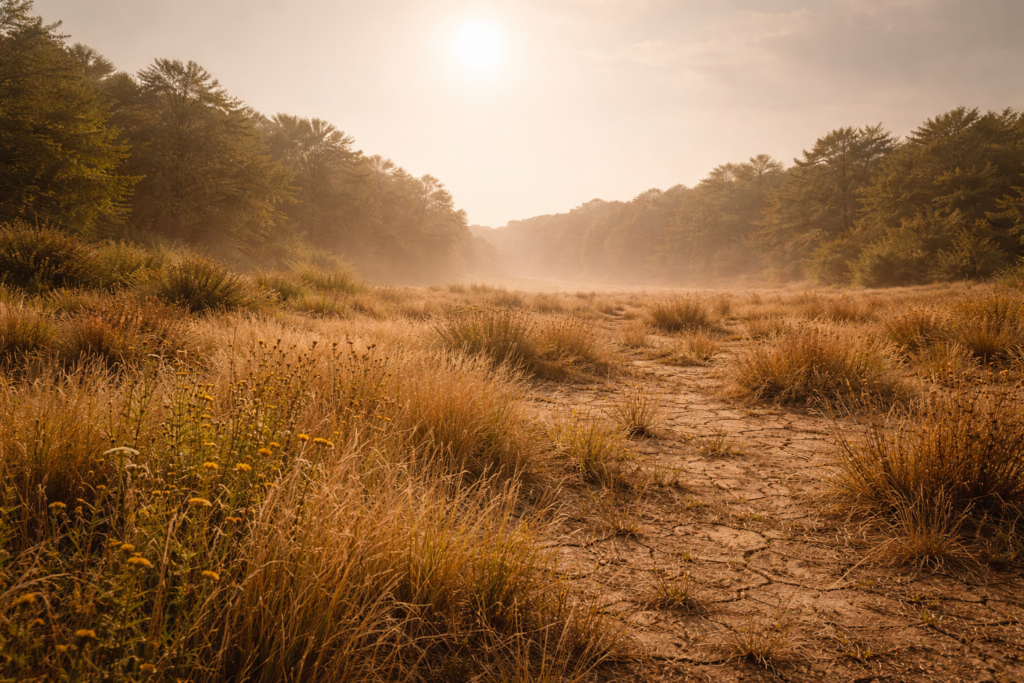
Interactions in nature are often delicate and interdependent, and even small disruptions can have cascading effects. In a more personal context, recreating small elements of these interactions—such as combining plants with thoughtfully chosen containers—can bring a sense of harmony into everyday life. Simple ceramic plant pots in neutral tones, commonly found on Amazon, allow plants to stand out while maintaining a calm and cohesive aesthetic. When paired with natural light and greenery, they create a balanced visual environment that reflects the interconnectedness seen in natural ecosystems.
Eco-Evolutionary Feedbacks: A Dynamic System
The integration of ecological and evolutionary processes gives rise to eco-evolutionary feedbacks—dynamic loops in which ecological changes influence evolution, and evolutionary changes influence ecology.
Under climate change, these feedbacks can occur rapidly. For instance, a change in temperature may alter the availability of resources, leading to shifts in population dynamics. These changes can create new selective pressures, driving rapid evolution in traits such as thermal tolerance or resource use. The resulting evolutionary changes can then reshape ecological interactions, completing the feedback loop.
These processes operate across multiple levels of biological organisation, from genes and populations to communities and ecosystems. They also occur across different timescales, from short-term ecological responses to long-term evolutionary changes.
Understanding these feedbacks is critical for predicting how ecosystems will respond to climate change. Without this integration, models risk oversimplifying the complexity of natural systems.
Community Assembly and Novel Ecosystems
As species shift their ranges and adapt to new conditions, ecological communities are being reorganised. This process, known as community assembly, is increasingly influenced by climate change.
In many cases, new combinations of species are forming—combinations that have never existed before in evolutionary history. These “novel ecosystems” can exhibit unique structures, interactions, and functions.
The assembly of these communities is shaped by both ecological filters (such as environmental conditions and species interactions) and evolutionary processes (such as adaptation and genetic variation). The interplay between these factors determines which species can coexist and how ecosystems function.
However, predicting community assembly under climate change remains challenging. The complexity of interactions, combined with the potential for rapid evolutionary change, creates a high degree of uncertainty.

Evolutionary Rescue and the Limits of Adaptation
One of the most hopeful concepts in eco-evolutionary theory is evolutionary rescue—the idea that populations facing environmental change can avoid extinction through rapid adaptation.
In this scenario, natural selection favours individuals with traits better suited to the new environment, allowing the population to persist despite changing conditions.
While evolutionary rescue offers a potential buffer against biodiversity loss, it is not guaranteed. Its success depends on several factors, including the rate of environmental change, the availability of genetic variation, and the size of the population.
If environmental change occurs too quickly, or if populations are too small or genetically constrained, adaptation may not keep pace. In such cases, extinction becomes more likely.
Ecosystem Function and Biodiversity Loss
Biodiversity is not just a measure of the number of species in an ecosystem; it is also a key driver of ecosystem function. Diverse ecosystems tend to be more productive, more stable, and more resilient to disturbances.
Climate change threatens this diversity, with species extinctions occurring at rates far above historical levels. As biodiversity declines, ecosystems may lose critical functions, such as nutrient cycling, carbon storage, and pollination.
The loss of these functions can have far-reaching consequences, not only for ecosystems but also for human societies that depend on them.

Want more scenes like this?
Download a curated pack of ultra-realistic images, perfect for wallpapers and inspiration.
Integrating Ecology and Evolution in Forecasting
To improve predictions of biodiversity responses to climate change, scientists are increasingly developing models that integrate ecological and evolutionary processes.
These models aim to capture the complexity of real-world systems by incorporating factors such as species interactions, adaptive potential, and feedback mechanisms. While still in development, they represent a significant step forward in our ability to understand and anticipate ecological change.
However, challenges remain. Data limitations, computational complexity, and uncertainty in future climate scenarios all complicate efforts to build accurate models.
Despite these challenges, the integration of ecology and evolution offers a more realistic and comprehensive framework for understanding biodiversity in a changing world.
Future Directions and Research Challenges
The study of biodiversity under climate change is still evolving, and many questions remain unanswered.
Key challenges include:
- Understanding the limits of adaptation across different species
- Predicting how complex interaction networks will respond to change
- Integrating genetic, ecological, and environmental data into unified models
- Assessing the long-term consequences of novel ecosystems
Addressing these challenges will require interdisciplinary approaches, combining insights from ecology, evolutionary biology, genetics, and climate science.
Conclusion
Biodiversity and climate change are deeply interconnected challenges that demand a holistic understanding of life on Earth. By integrating ecological and evolutionary perspectives, scientists can better capture the dynamic nature of ecosystems and improve predictions of how they will respond to future change.
The emerging field of eco-evolutionary dynamics highlights the importance of feedbacks, adaptation, and interaction networks in shaping biodiversity. As climate change continues to accelerate, these insights will be essential for guiding conservation efforts and preserving the resilience of natural systems.
Ultimately, understanding biodiversity in a changing world is not just a scientific challenge—it is a critical step toward safeguarding the future of life on Earth.
* Product images and prices may vary slightly from the actual item on Amazon
This article may contain affiliate links. If you purchase through these links, I may earn a small commission at no additional cost to you. I only recommend products that are relevant and applicable.