
Imagine walking through Australian heathland and noticing a tiny plant growing close to the ground. It doesn’t look particularly dangerous. There are no teeth, claws or obvious signs that it is hunting anything. Its small leaves form a low rosette among the surrounding vegetation, and at first glance it looks like just another small plant competing for sunlight. But if a tiny insect happens to walk across the wrong part of one of those leaves, something remarkably strange happens. The plant responds to the insect’s touch by rapidly bending one of its specialised tentacles and launching the insect towards the sticky centre of the leaf. The plant doesn’t simply wait for its prey to become stuck. It actively throws the insect into its own trap.
This extraordinary plant is Drosera glanduligera, commonly known as the Scarlet Sundew or Pimpernel Sundew. It is a small carnivorous plant native to Australia, occurring across parts of southern and southeastern Australia, including New South Wales, Victoria, Tasmania, South Australia and Western Australia. Like other sundews, D. glanduligera has evolved the ability to capture and digest small animals, but its method of doing so is particularly unusual. Instead of relying solely on sticky surfaces, it has developed specialised structures called snap-tentacles that can rapidly move when touched. Researchers have described this unusual system as a “catapult-flypaper” trap, because the plant first launches its prey and then captures it with sticky tentacles.
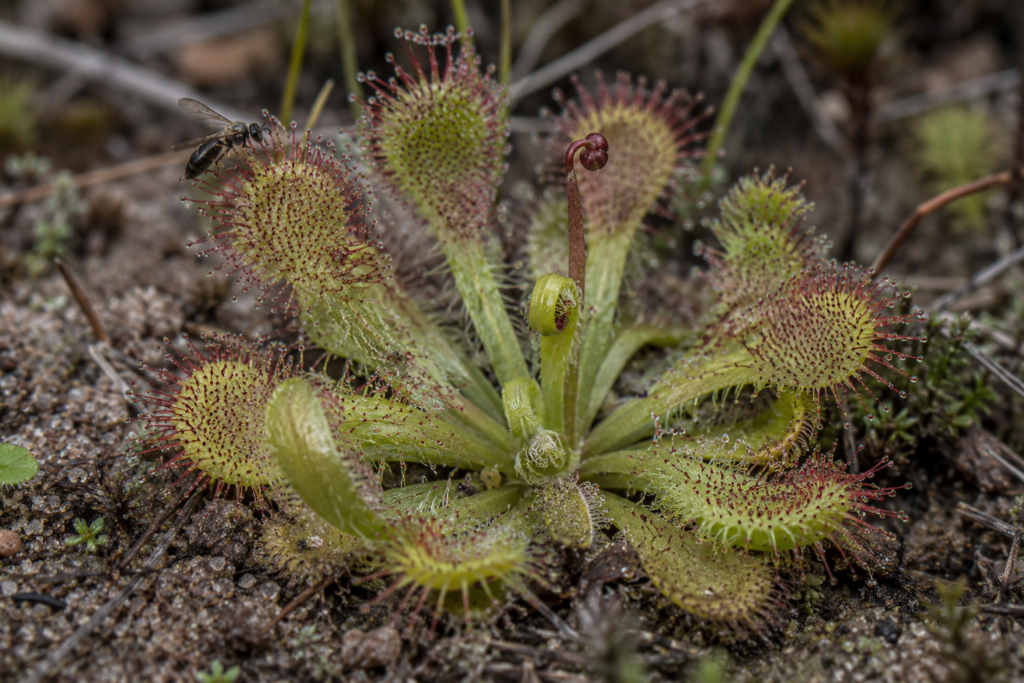
Meet Drosera glanduligera
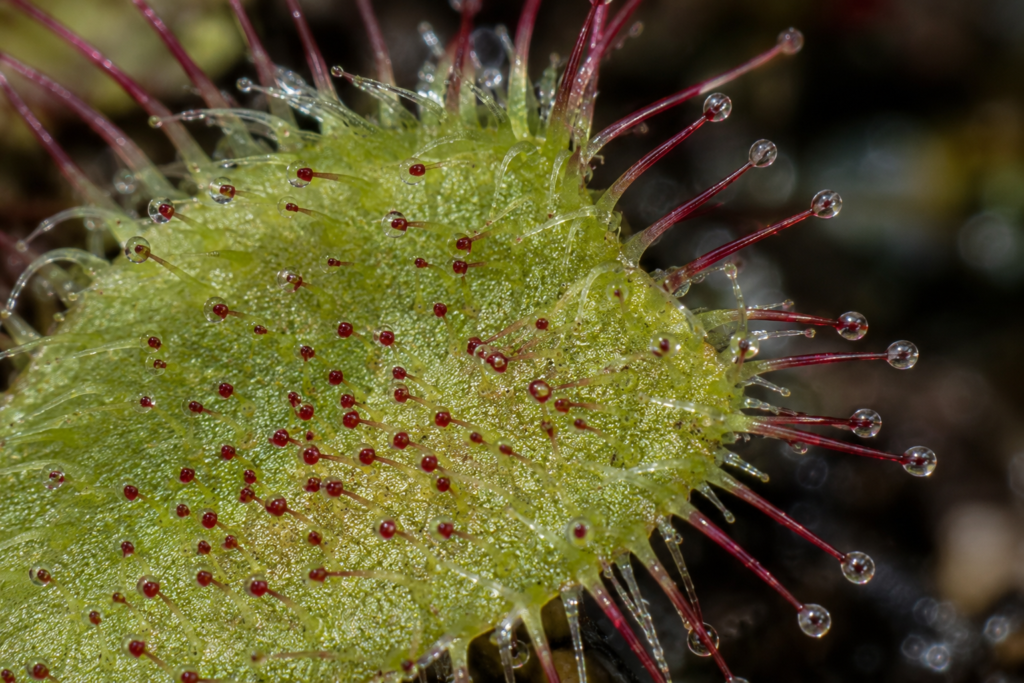
Drosera glanduligera belongs to the genus Drosera, a group of carnivorous plants commonly known as sundews. Sundews are named for the glistening droplets that cover their leaves, which can look like morning dew when they catch the light. Those droplets are not ordinary water, however. They are produced by specialised glands and contain sticky mucilage that helps the plant capture small animals. When an insect becomes trapped, the sundew can gradually move its tentacles around the prey and use digestive enzymes to break down the animal’s tissues, allowing nutrients to be absorbed by the plant.
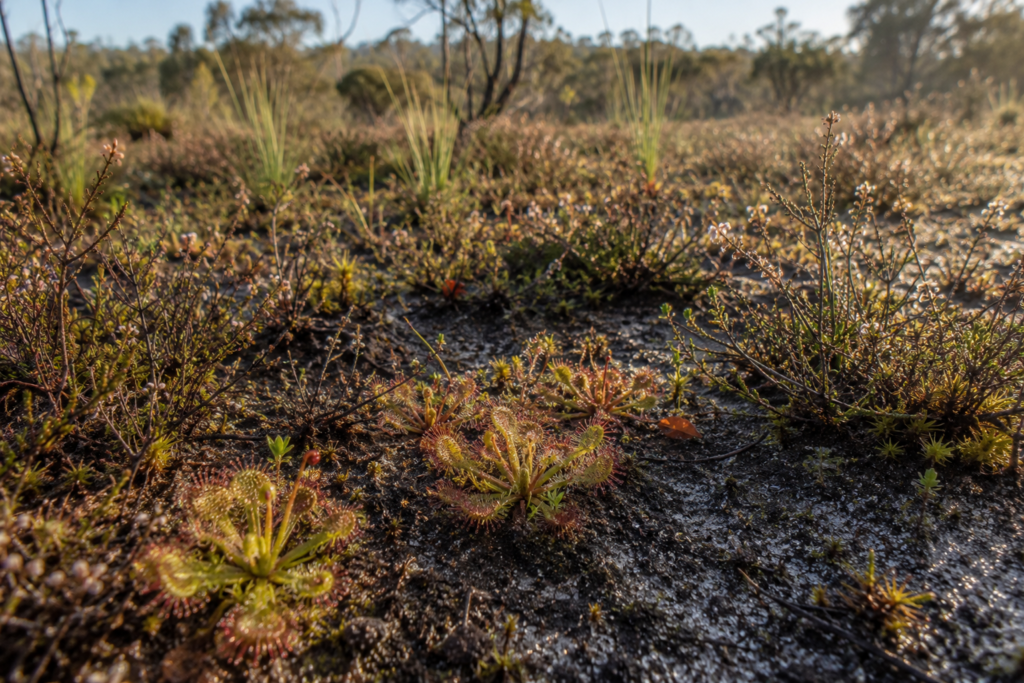
The Scarlet Sundew is relatively small, which makes its unusual hunting mechanism even more impressive. Rather than towering above its surroundings, it grows as a compact rosette close to the ground. Its leaves contain numerous specialised tentacles, and the plant produces distinctive orange to reddish flowers. It occurs in a range of habitats across southern Australia, including heathland, mallee and open woodland environments. The plant’s small size means it can easily disappear into the surrounding vegetation, but at the scale of a tiny insect, its leaves become something very different: a sophisticated hunting surface covered with sensitive structures, adhesive glands and moving tentacles.
Why Would a Plant Eat an Insect?
At first, carnivory seems like a strange choice for a plant. Plants already have access to sunlight, carbon dioxide and water, so why would they need to catch animals? The answer is that carnivorous plants generally don’t eat prey because they need an alternative source of energy to photosynthesis. Instead, capturing animals provides access to nutrients that can be difficult for the plant to obtain from the soil. In environments where particular nutrients are limited, being able to obtain them from animal prey can provide an important advantage.
This means that carnivory is really an ecological adaptation. The plant is still fundamentally a photosynthetic organism, using sunlight to produce the energy-rich compounds it needs to grow. The insects provide something different: nutrients that can supplement what the plant obtains through its roots and surrounding environment. Over evolutionary time, natural selection can favour plants that are particularly effective at capturing prey when those additional nutrients improve growth or reproduction. In Drosera glanduligera, this has resulted in an extraordinarily specialised trapping system.
The Sticky Trap
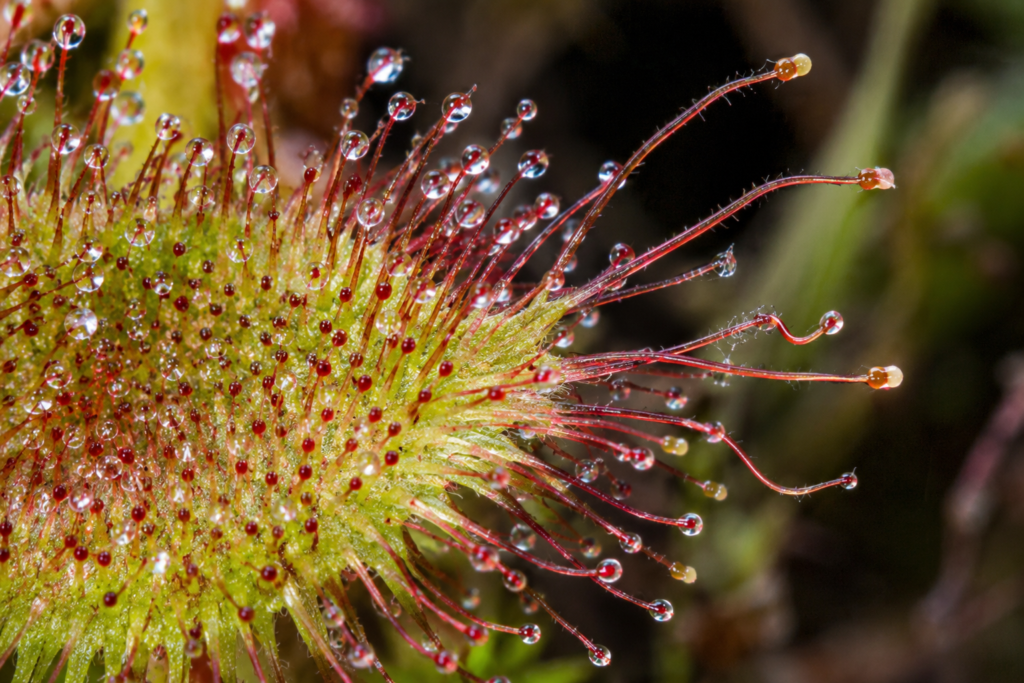
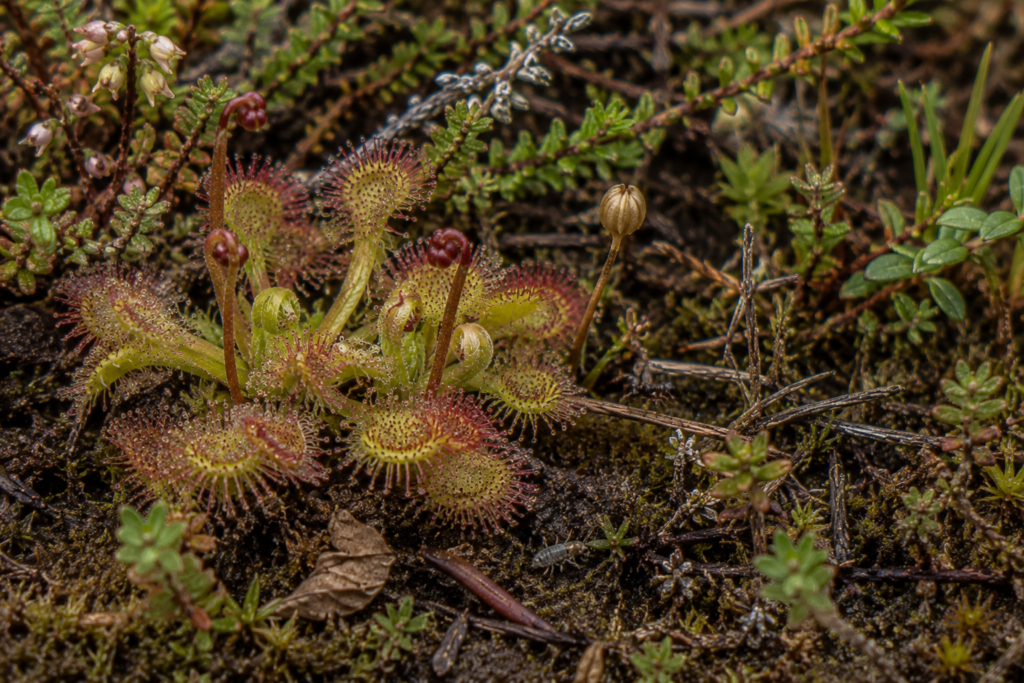
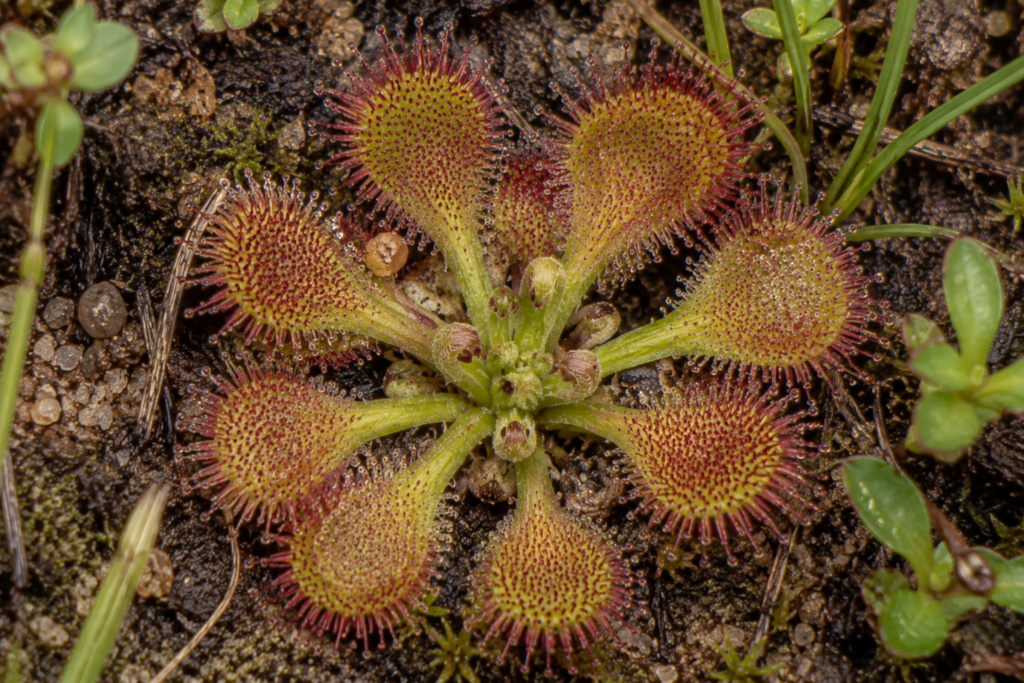
The first part of understanding Drosera glanduligera is understanding the basic sundew trap. If you look closely at the leaves, you’ll see that they are covered with tiny hair-like structures called tentacles. Many of these tentacles have glands at their tips that produce droplets of sticky mucilage. To a small insect, these droplets can be extremely difficult to escape from. An insect that walks across the leaf can become attached to the mucilage, and the plant can then gradually move its tentacles towards the centre of the leaf.
This is already an impressive example of plant-animal interaction, but D. glanduligera has an additional layer to its strategy. The plant doesn’t rely entirely on the insect accidentally stepping directly onto its sticky surface. Around the outside of its leaves are specialised snap-tentacles that can detect mechanical contact and rapidly move towards the centre of the leaf. Instead of being primarily adhesive, these structures function more like tiny mechanical arms that redirect prey into the plant’s main trapping area.
The Plant With a Biological Catapult
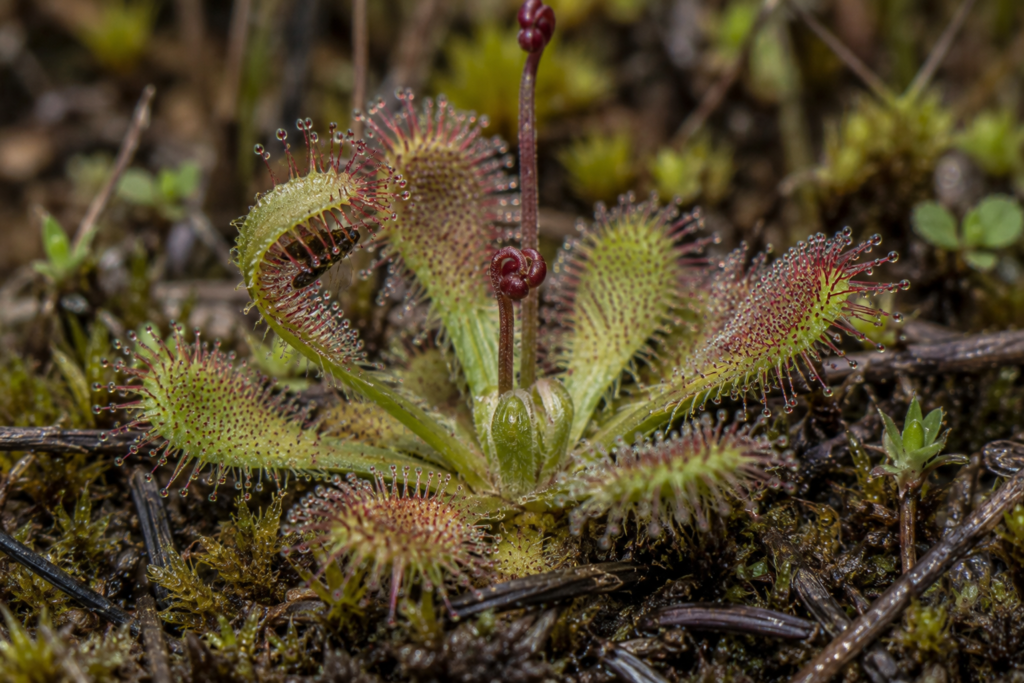
This is where Drosera glanduligera becomes truly strange. When a small arthropod touches one of the specialised snap-tentacles, the tentacle can rapidly bend inward. Research has measured this movement occurring in roughly 75 milliseconds, meaning the response is far faster than the slow movements most people associate with plants. The movement launches the prey towards the centre of the leaf, where it encounters the sticky tentacles. Scientists have described this mechanism as a catapult-flypaper trap because it combines a rapid mechanical movement with the slower adhesive trapping mechanism found in other sundews.
The whole process can therefore be thought of as a two-stage ambush. First, the snap-tentacle acts as a catapult, increasing the effective reach of the plant’s trap and rapidly redirecting the insect towards the centre. Once the insect reaches the sticky region, the second stage begins. The adhesive tentacles hold onto the prey and gradually move it deeper into the leaf, where the plant can digest it and absorb nutrients. What looks like one simple carnivorous plant is actually using several different specialised structures, each performing a different part of the capture process.
How Can a Plant Move That Fast?
One of the strangest things about this entire process is that Drosera glanduligera doesn’t have muscles. It doesn’t have a nervous system or brain coordinating its movements, and there isn’t a miniature animal inside the leaf pulling the tentacle inward. Yet the plant can detect physical contact and respond with an extremely rapid movement. This is a fascinating example of how different plants and animals can arrive at very different solutions to similar problems.
Plants are capable of detecting mechanical stimuli and responding to them through changes in cells and tissues. In D. glanduligera, touching the specialised part of the snap-tentacle triggers the rapid bending response. Researchers have proposed mechanisms involving changes in water pressure and mechanical properties of the plant tissue, although the complete physiological process is more complicated than simply describing the tentacle as a spring. The important point is that the plant has evolved tissue capable of storing and releasing mechanical energy extremely quickly.
A One-Shot Trap
The snap-tentacles become even more interesting when you look at what happens after they fire. Unlike a mechanical trap that can simply reset itself, an individual snap-tentacle cannot repeatedly return to its original position and fire again indefinitely. The rapid movement involves structural changes in the tentacle, making the mechanism effectively a one-use system. That might sound like a disadvantage, but evolution doesn’t necessarily favour structures that last forever. It favours structures that work well enough to improve the organism’s overall chances of surviving and reproducing.
Drosera glanduligera produces new leaves during its growing period, meaning the plant can continually replace its trapping structures. In ecological terms, this is a fascinating trade-off. Rather than investing heavily in a reusable mechanical trap, the plant can produce new specialised leaves and tentacles as it grows. A single tentacle may be expendable, but the plant as a whole continues producing new opportunities to capture prey.
Why Throw the Insect?
The obvious question is why the plant needs a catapult in the first place. If the sticky tentacles can already capture insects, wouldn’t it be simpler just to let the insect walk onto them? One likely advantage is that the snap-tentacles effectively increase the area from which the plant can capture prey. Instead of requiring an insect to step directly onto the sticky centre of the leaf, the plant can detect prey around the outer margins and rapidly redirect it towards the central trapping surface.
The system may also help prevent prey from escaping. Small arthropods can be surprisingly difficult to hold onto, particularly if they are large relative to the plant. Rapidly moving prey towards the centre of the leaf places it among a greater concentration of sticky tentacles and potentially makes escape more difficult. Research into the species’ trapping mechanism suggests that the catapult system is particularly suited to the plant’s low-growing rosette and its capture of small, walking arthropods.
A Tiny Predator Living at Ground Level
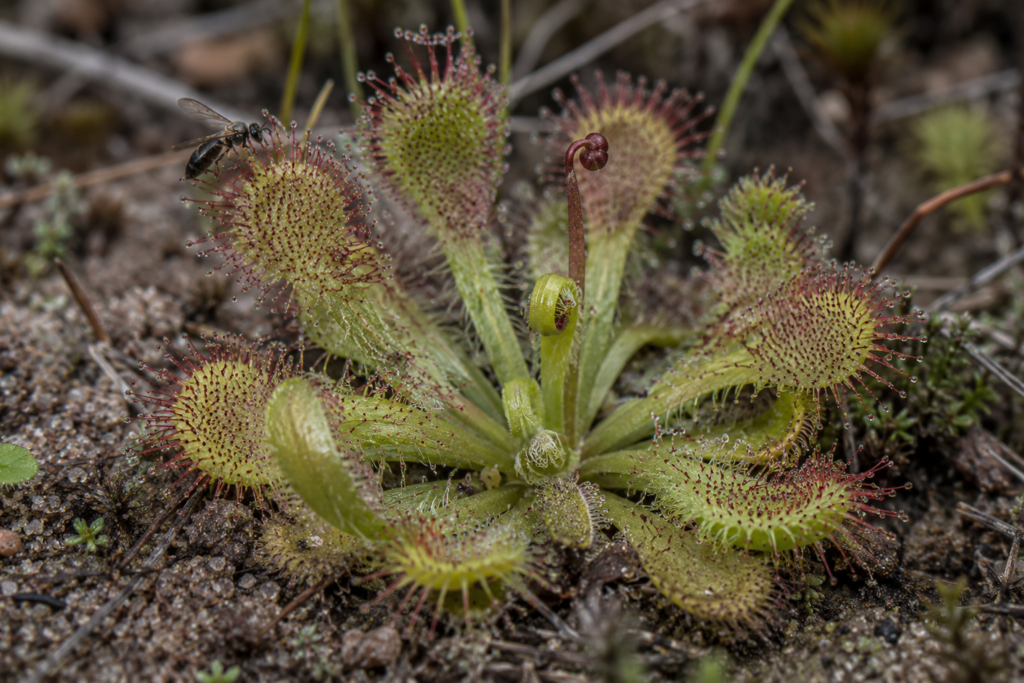
The physical shape of Drosera glanduligera makes more sense when you consider the environment in which it lives. Its leaves form a low rosette close to the ground, placing the trapping structures directly in the path of tiny arthropods moving through leaf litter, mosses and low vegetation. Rather than waiting for flying insects to land from above, the plant’s trap is positioned to interact with organisms travelling horizontally across the ground.
This is an excellent example of why ecology cannot be separated from anatomy. The shape of an organism is connected to what it needs to do and the environment in which it does it. The snap-tentacles aren’t simply an interesting feature that happens to exist on the plant. They form part of a larger system involving the plant’s size, leaf arrangement, habitat, prey and nutrient requirements. The strange structure makes much more sense when viewed as a solution to a particular ecological problem.
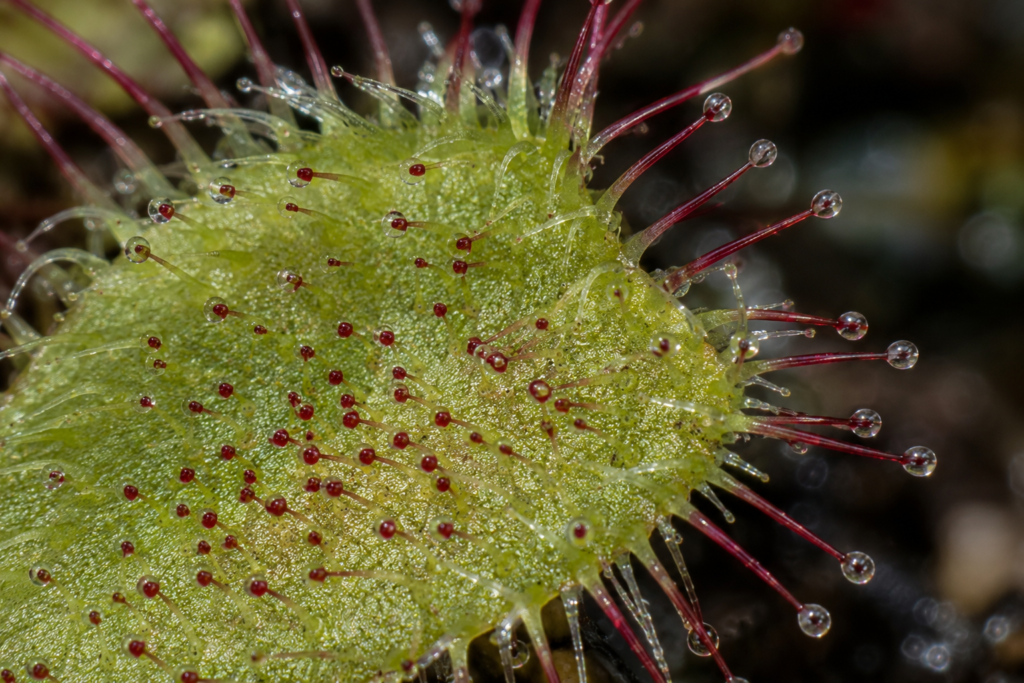
There Is an Entire Ecosystem on One Leaf
At first glance, a sundew leaf might seem like a simple structure designed to catch insects. Look closer, however, and it becomes part of an entire miniature ecosystem. Arthropods move through the vegetation around the plant, some becoming prey while others avoid the trap. Microorganisms interact with organic material, dead organisms are broken down and nutrients are released and recycled. When D. glanduligera captures prey, material that originated in another organism is ultimately incorporated into the plant’s nutrient economy.
This is why the plant is more than just a bizarre biological curiosity. Its behaviour illustrates the interconnectedness of an ecosystem at a very small scale. A tiny insect, a tiny plant, the surrounding soil, microorganisms and environmental conditions are all connected through the movement of nutrients and energy. The entire process is happening beneath our feet, often without us noticing it.
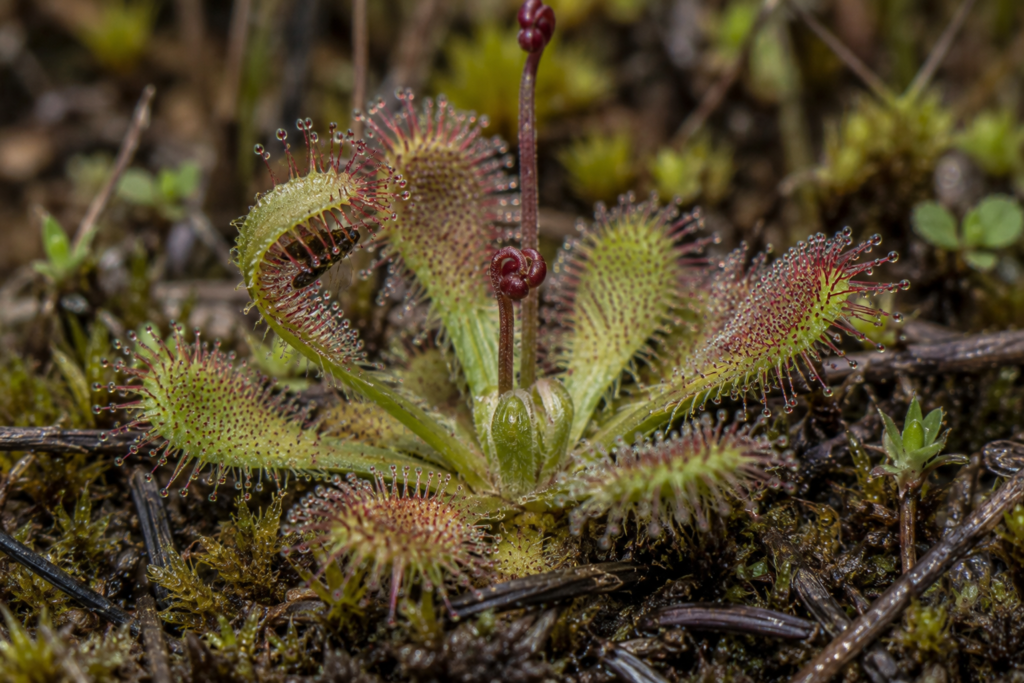
Australia’s Other Carnivorous Plants
Drosera glanduligera is only one member of Australia’s remarkable carnivorous plant flora. The country contains many species of Drosera, as well as other carnivorous plant groups with completely different trapping mechanisms. Utricularia, for example, uses tiny suction traps that can rapidly draw microscopic aquatic or soil-dwelling organisms into specialised bladder-like structures. Cephalotus follicularis, the Australian pitcher plant, uses modified leaves that form pitcher-shaped traps in which prey can become trapped and digested.
These plants demonstrate that carnivory doesn’t have a single evolutionary solution. Different plants have developed different ways of capturing animals depending on their morphology, habitat and ecological circumstances. Sticky surfaces, suction traps, pitfall traps and rapid mechanical movements are all examples of different strategies for solving a similar problem: obtaining nutrients from animal prey.
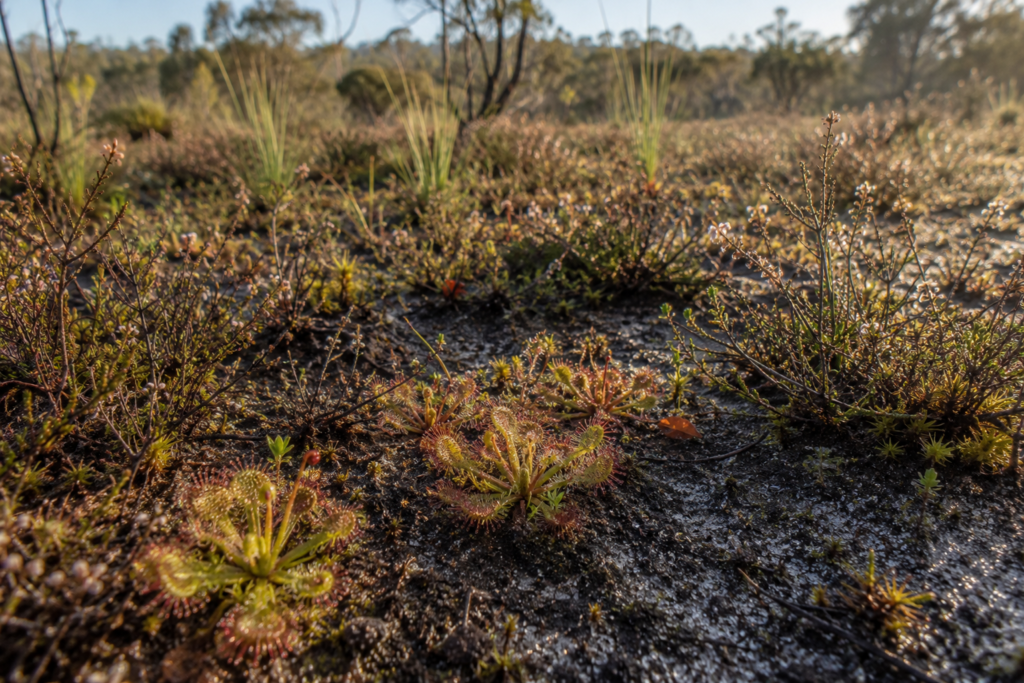
What Drosera glanduligera Can Teach Us About Evolution
The strangest thing about Drosera glanduligera isn’t really that it can throw an insect. The deeper story is how such a bizarre ability can evolve in the first place. Evolution doesn’t set out to create strange organisms. Instead, small variations that improve an organism’s ability to survive and reproduce can become more common over many generations. When those changes accumulate, the result can be an organism with adaptations that look almost engineered.
In D. glanduligera, the snap-tentacles, sticky glands, leaf shape and low-growing habit all work together as part of the plant’s prey-capture system. Each feature makes more sense when considered alongside the others. The plant isn’t simply “weird”; it is highly specialised. Its strange biology reflects the environmental pressures that shaped it and the ecological interactions that continue to influence its survival.
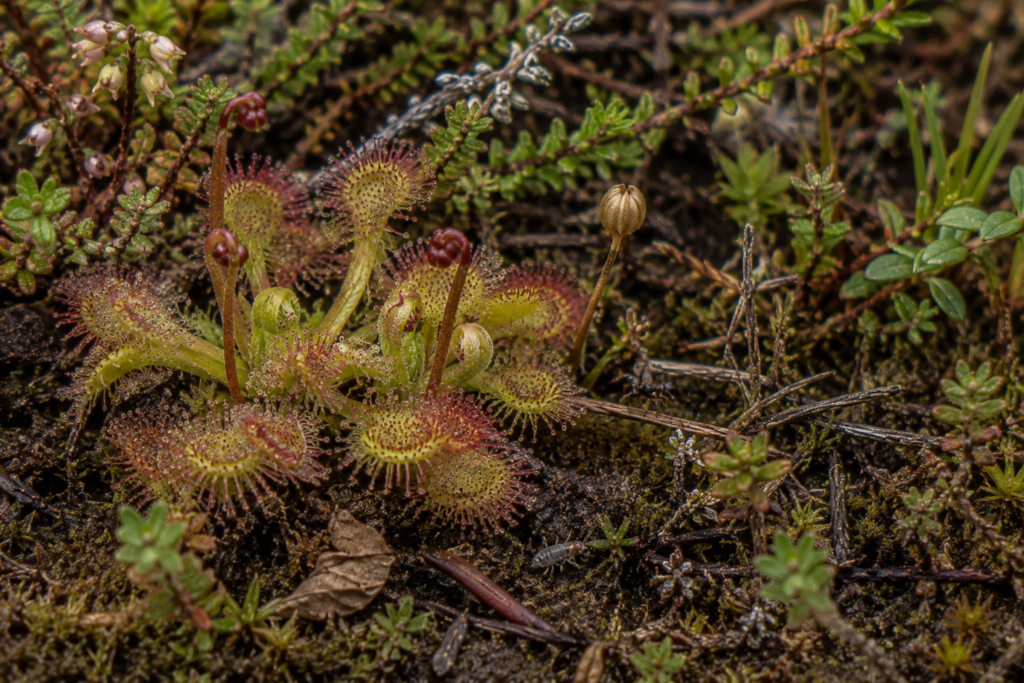
The Bigger Lesson
It is easy to look at Drosera glanduligera as a strange fact to memorise: there’s a plant that catapults insects. But the story becomes much more interesting when you ask why. Why does it eat insects? Why does it need specialised nutrients? Why does it have sticky tentacles? Why does it need snap-tentacles as well? Why does it grow close to the ground? Why does the mechanism move so quickly? Each question leads into another part of ecology, evolution or plant biology.
And that is what makes organisms like Drosera glanduligera so useful for understanding the natural world. Something that initially looks bizarre turns out to be an incredibly detailed example of adaptation, competition, nutrient cycling and plant-animal interaction. The tiny sundew is not an isolated oddity. It is the product of millions of years of evolutionary history interacting with Australian environments.
Drosera glanduligera may be small enough to overlook, but its biology is anything but insignificant. Hidden among Australia’s heathlands and woodlands is a plant that can detect a tiny animal, rapidly move part of its leaf, redirect its prey into a sticky trap and eventually absorb nutrients from the captured animal. It has no muscles, no brain and no nervous system, yet it has evolved one of the strangest prey-capture mechanisms in the plant kingdom.