
For most people, the sight of a huntsman spider racing across a wall is enough to make them jump. These large, long-legged spiders have become legendary throughout Australia for appearing unexpectedly inside homes, sheds, garages, and even cars. They seem impossibly quick, often disappearing before anyone has a chance to react. For years, people joked that huntsman spiders could outrun almost anything.
As it turns out, those jokes may not have been far from the truth.
A new scientific study suggests that an Australian huntsman spider may actually be the fastest-running spider ever measured. Researchers tested hundreds of spider species from around the world and discovered that a Queensland huntsman reached an astonishing top speed of 3.59 metres per second—equivalent to almost 13 kilometres per hour (8 mph). That is considerably faster than many people jog and more than twice the speed of the spider that previously held the record.
The discovery is fascinating not simply because of the impressive number attached to the spider’s speed. It changes the way scientists think about spider evolution, locomotion, and the remarkable engineering hidden within one of nature’s most misunderstood animals.
The Search for the Fastest Spider
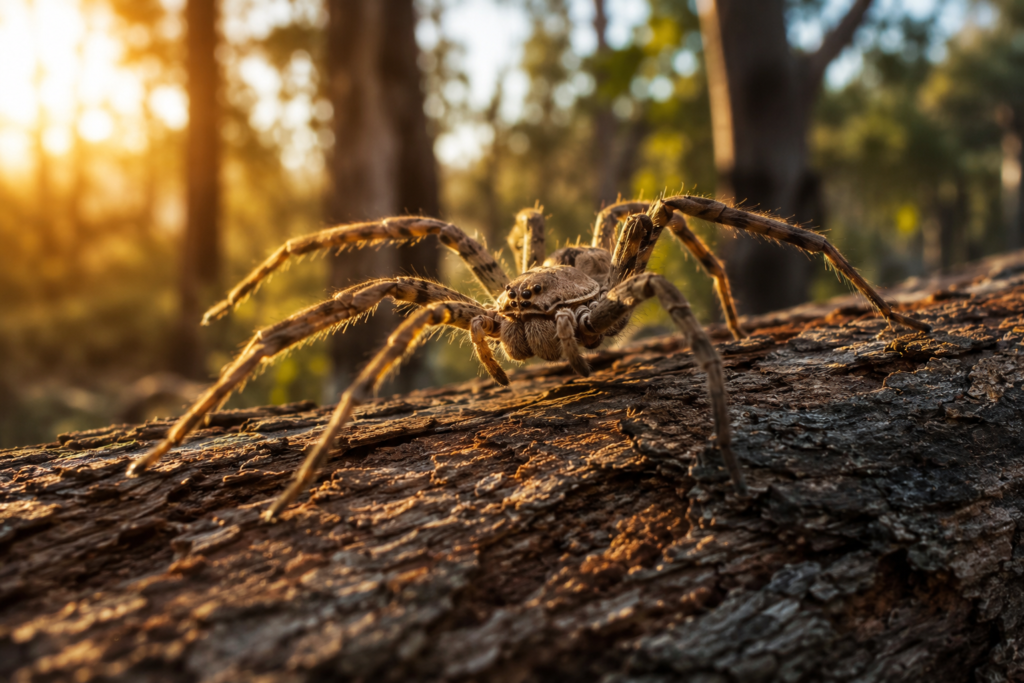
Until recently, identifying the world’s fastest spider was surprisingly difficult.
Different species move in different ways. Some ambush prey by waiting patiently inside burrows. Others build elaborate webs and rarely need to run at all. Jumping spiders rely on explosive leaps, while orb-weaving spiders spend much of their lives suspended within silk. Comparing such different lifestyles makes measuring “speed” far more complicated than timing a race between two animals.
The spider officially recognised for many years as the world’s fastest was the Moroccan flic-flac spider. It can move at remarkable speeds by performing rapid cartwheels down sand dunes when escaping predators. While spectacular, many arachnologists argued that rolling downhill is fundamentally different from sustained running across level ground.
To answer the question properly, researchers designed one of the largest studies ever conducted on spider locomotion.
Scientists from Imperial College London and the University of Greifswald gathered data representing 258 spider species from 64 different spider families, creating the most comprehensive comparison of spider running speeds yet assembled. Live spiders were encouraged to sprint across specially prepared test surfaces while high-speed cameras precisely measured their movement. Researchers then compared those results with additional published data to build an extensive database of spider performance.
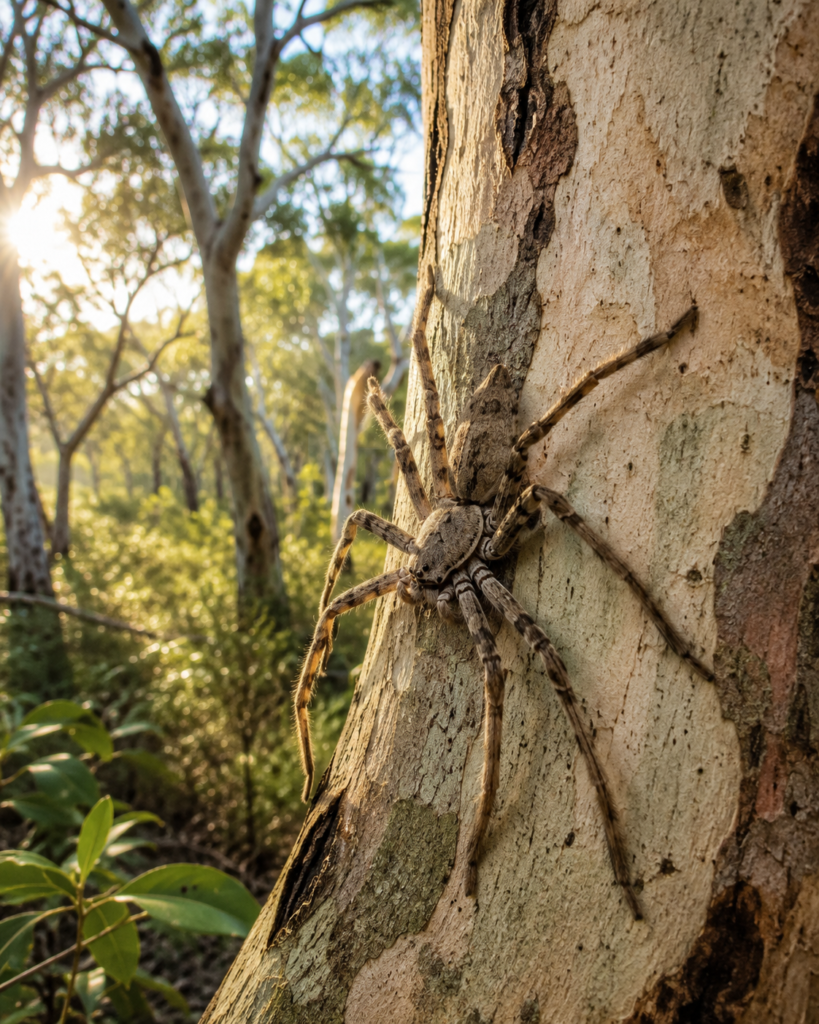
The outcome surprised almost everyone.
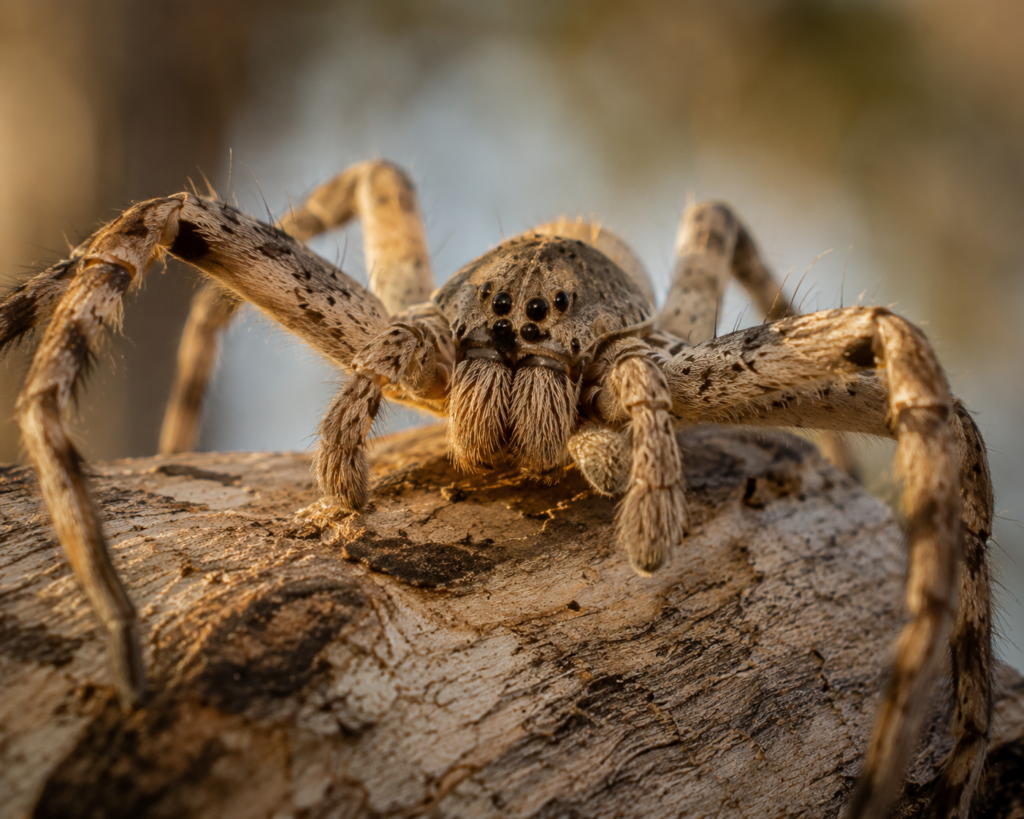
Rather than a specialised desert species or an unusually lightweight hunter claiming first place, the fastest runner turned out to be an Australian huntsman spider belonging to the genus Heteropoda. Native to Queensland, this spider achieved a peak sprint of 3.59 metres per second, making it the fastest-running spider recorded in the study.
An Important Scientific Note
Although headlines around the world quickly declared the huntsman “the world’s fastest spider,” scientists have been careful to explain that the research has so far been released as a preprint.
A preprint is a scientific paper made publicly available before completing formal peer review. This allows researchers to share important findings quickly while other experts independently examine the methods, analyses, and conclusions. Peer review often strengthens studies through additional feedback and sometimes leads to revisions before final publication.

That does not mean the findings are incorrect. It simply means the research should be viewed as very strong preliminary evidence rather than a completely settled scientific conclusion.
Why Huntsman Spiders Are Already Famous
Long before this study, huntsman spiders had earned a unique reputation throughout Australia.
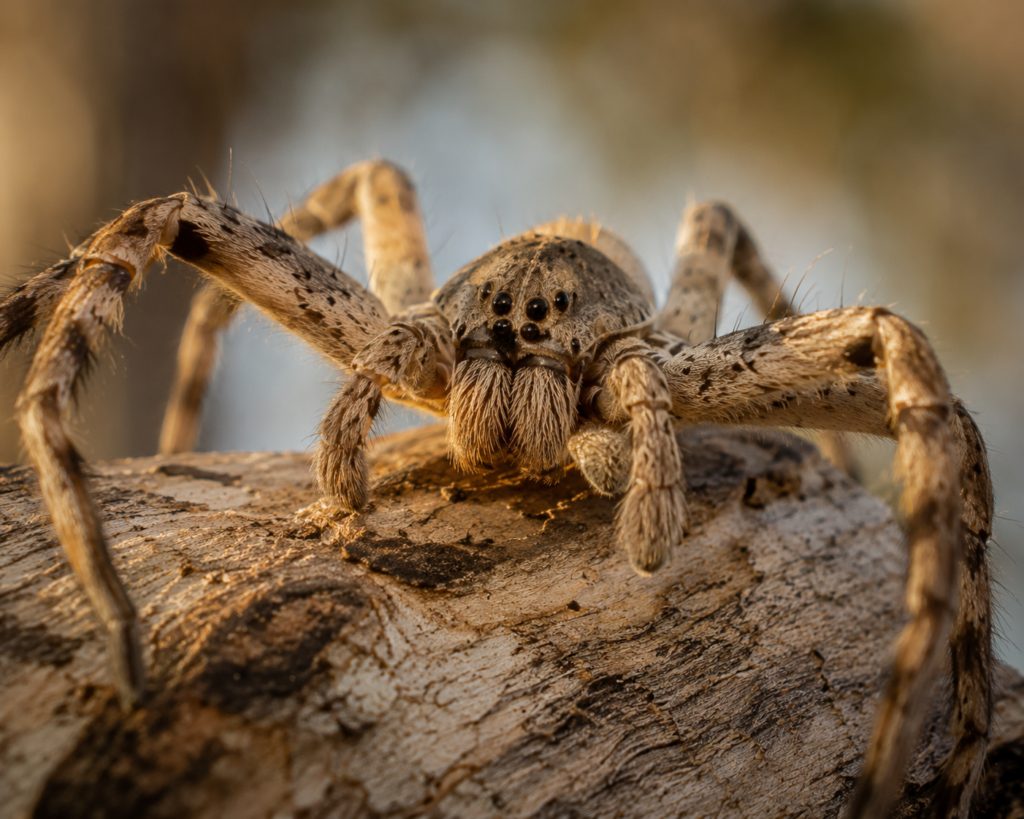
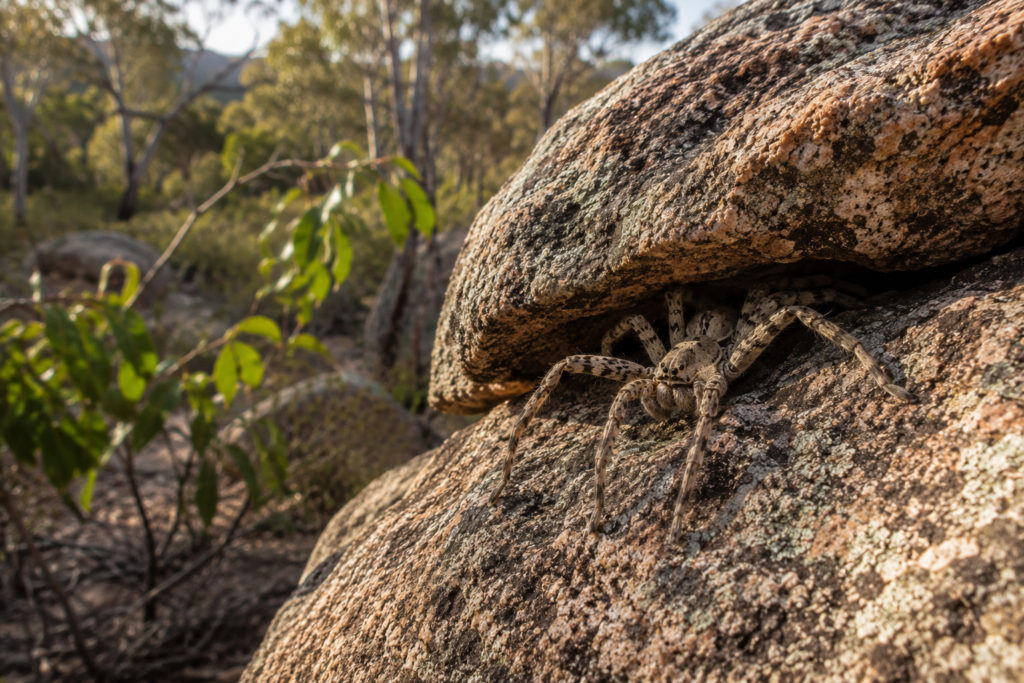
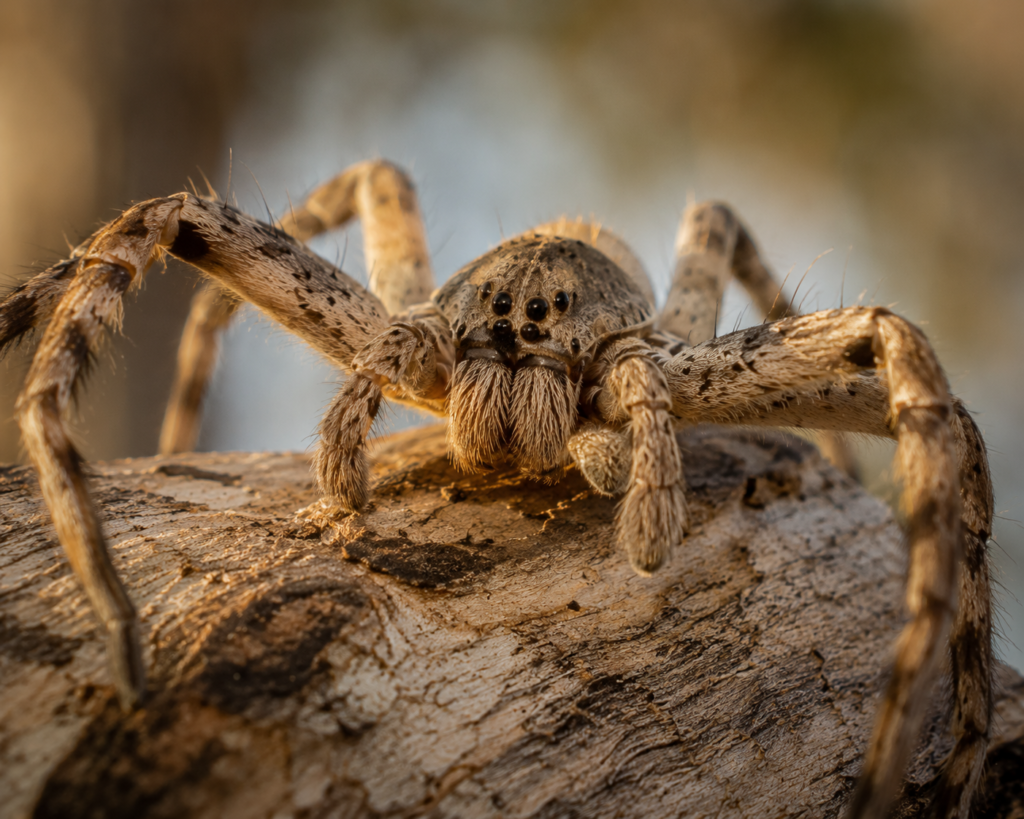
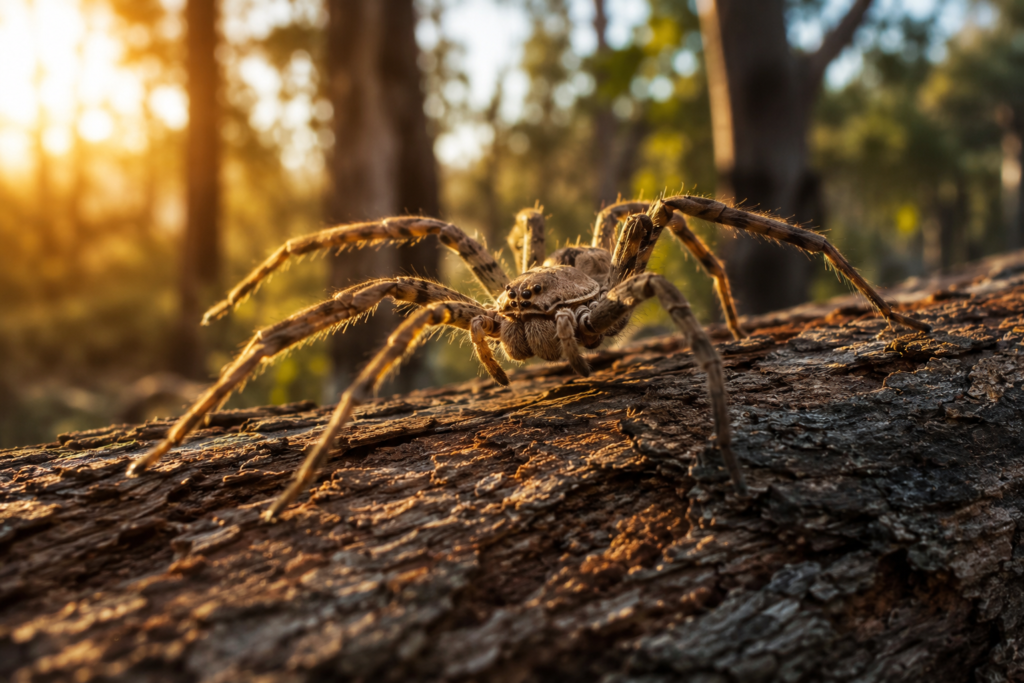
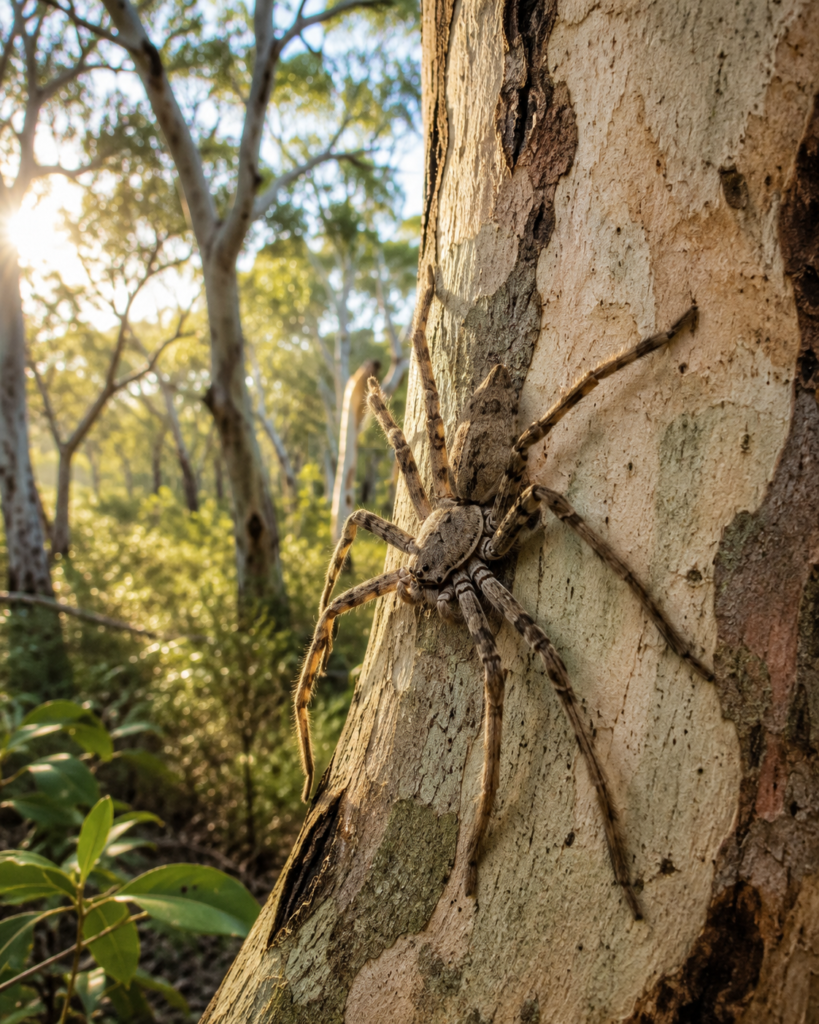
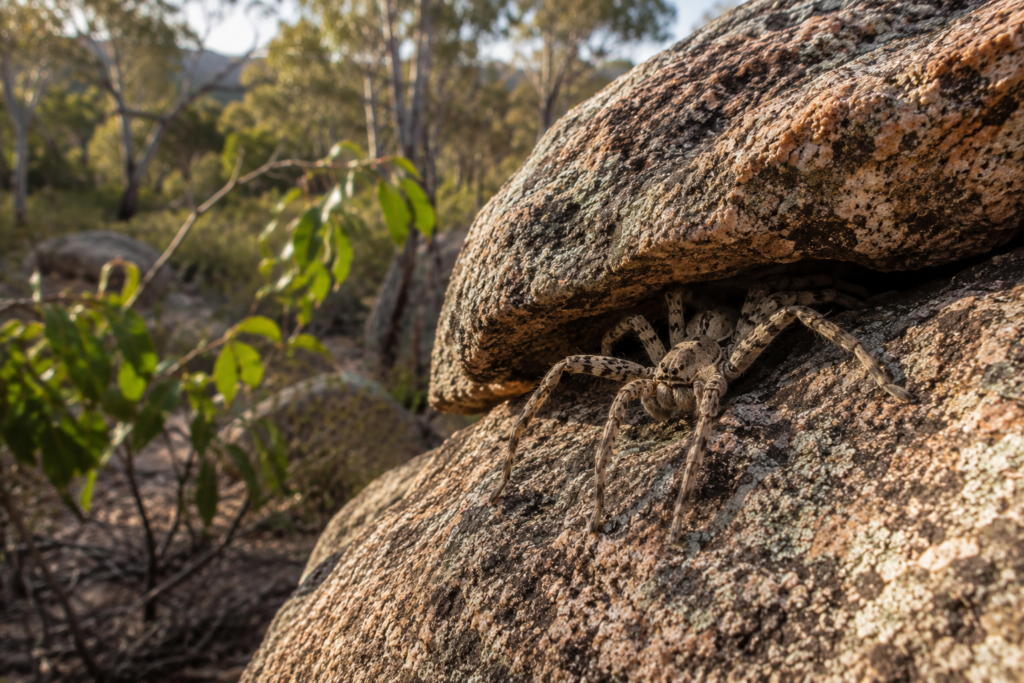
Unlike web-building spiders, huntsmen actively hunt their prey. Their bodies are flattened, allowing them to squeeze beneath loose bark, inside rock crevices, and occasionally into homes where insects are abundant. Their enormous legs spread sideways in a crab-like posture, enabling rapid changes of direction and exceptional agility.
Most Australians have encountered one at some point.
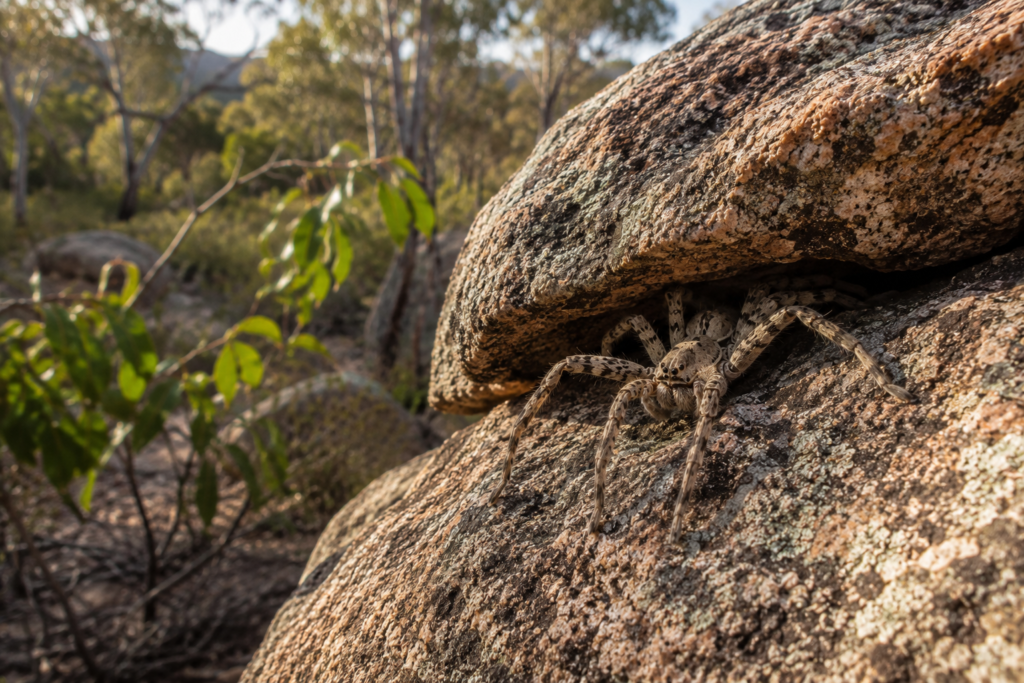
They may appear on tree trunks during warm evenings, rest beneath outdoor lights waiting for insects, or occasionally emerge from behind curtains or furniture indoors. Despite their intimidating size, huntsman spiders are generally shy animals that prefer escaping rather than confronting people.
Their speed is one reason they seem so startling.
When disturbed, a huntsman often accelerates almost instantly, disappearing behind furniture or into nearby vegetation before most people have time to react.
This latest research finally provides numbers explaining why they appear so unbelievably fast.
Measuring Spider Speed Isn’t Easy
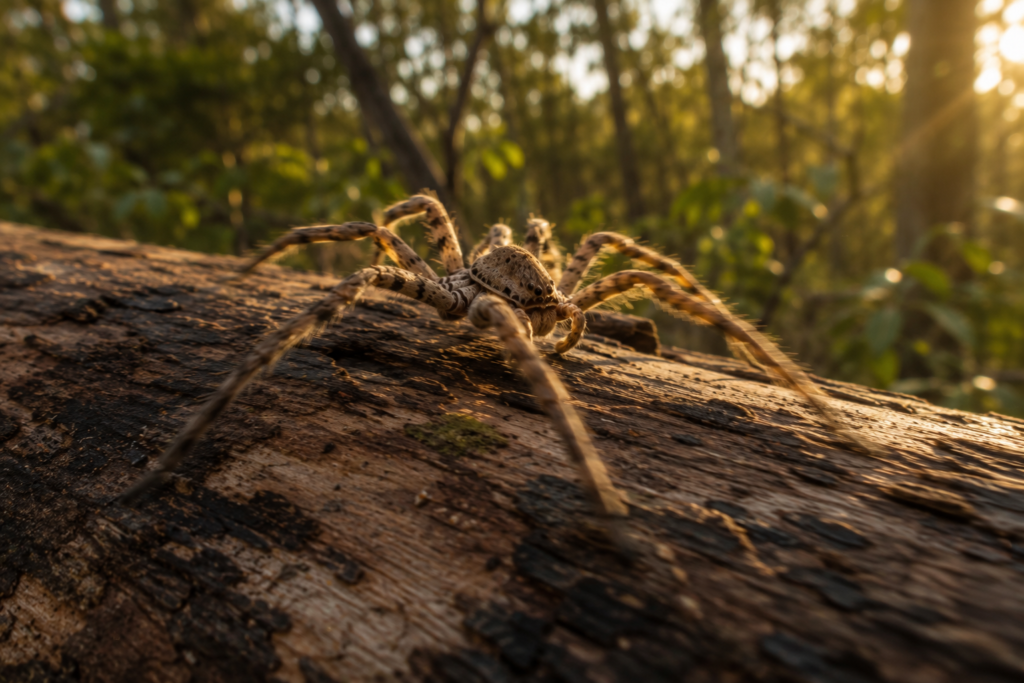
Timing a spider sounds simple until researchers actually attempt it.
Unlike racehorses or sprinters, spiders cannot be instructed to run in a straight line whenever scientists want. Some stop suddenly. Others freeze completely. Many change direction unpredictably or climb vertical surfaces instead of continuing forward.
To overcome these challenges, researchers designed controlled testing arenas with clearly marked grids while using high-speed cameras capable of recording rapid movements frame by frame. Gentle stimuli encouraged escape responses without harming the animals, allowing scientists to calculate maximum sustained running speeds with remarkable precision.
This approach produced far more reliable measurements than anecdotal observations or informal comparisons.
It also allowed researchers to investigate an even more interesting question.

What actually makes some spiders faster than others?
Scientists initially expected that smaller spiders with thinner legs might achieve the greatest speeds because they carried less body weight.
Instead, the data revealed something quite different.
After accounting for body size and evolutionary relationships, the strongest predictor of speed was relative leg length. Spiders with proportionally longer legs consistently performed better than those with shorter limbs, while leg slenderness had surprisingly little influence.
This finding suggests that evolution has favoured longer legs as an effective strategy for rapid movement in certain hunting spiders.
Built for Speed
Every feature of a huntsman spider appears designed for efficient movement.
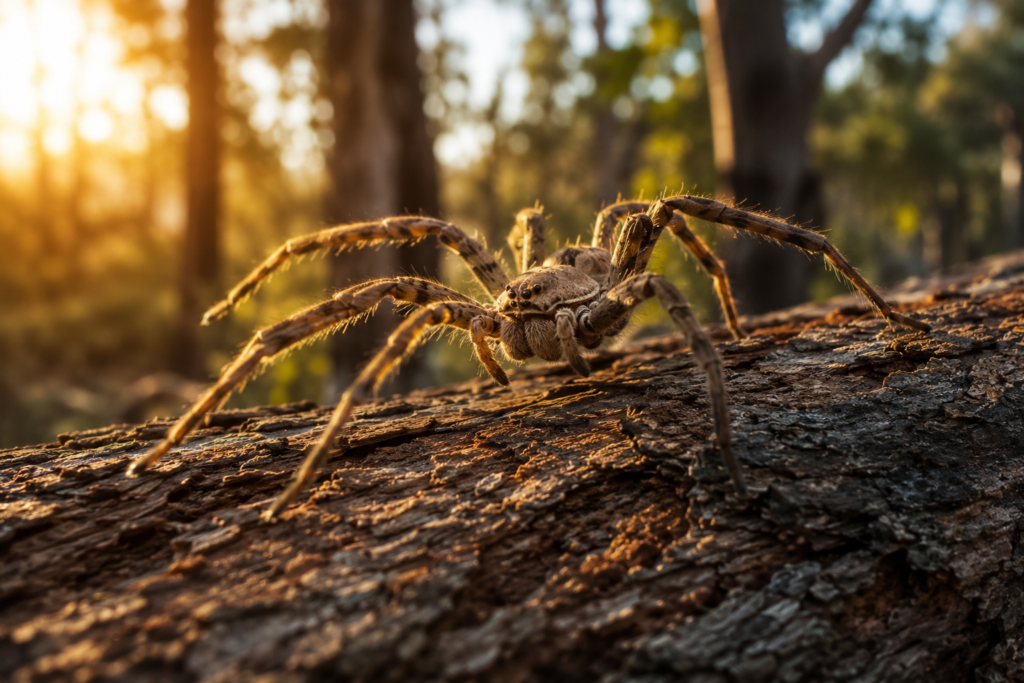
Its legs extend sideways from the body, creating an exceptionally wide stance that provides stability while changing direction. Flexible joints allow remarkable manoeuvrability across rough surfaces, tree bark, rocks, walls, and ceilings.
Unlike many animals that rely entirely on muscles, spiders also use a remarkable hydraulic system to move.
Specialised internal fluid pressure helps extend their legs, working alongside muscles to produce rapid, coordinated movement. This combination allows spiders to generate impressive bursts of acceleration while maintaining balance across uneven terrain.
It is one of the reasons spiders have fascinated biomechanical researchers for decades.
Their movement is fundamentally different from that of mammals, birds, or reptiles, yet it achieves extraordinary efficiency.
Scientists now believe studying huntsman locomotion may even inspire future designs for agile walking robots capable of moving across challenging environments.
The world’s fastest spider may therefore teach engineers almost as much as it teaches biologists.
More Than Just a Fast Spider
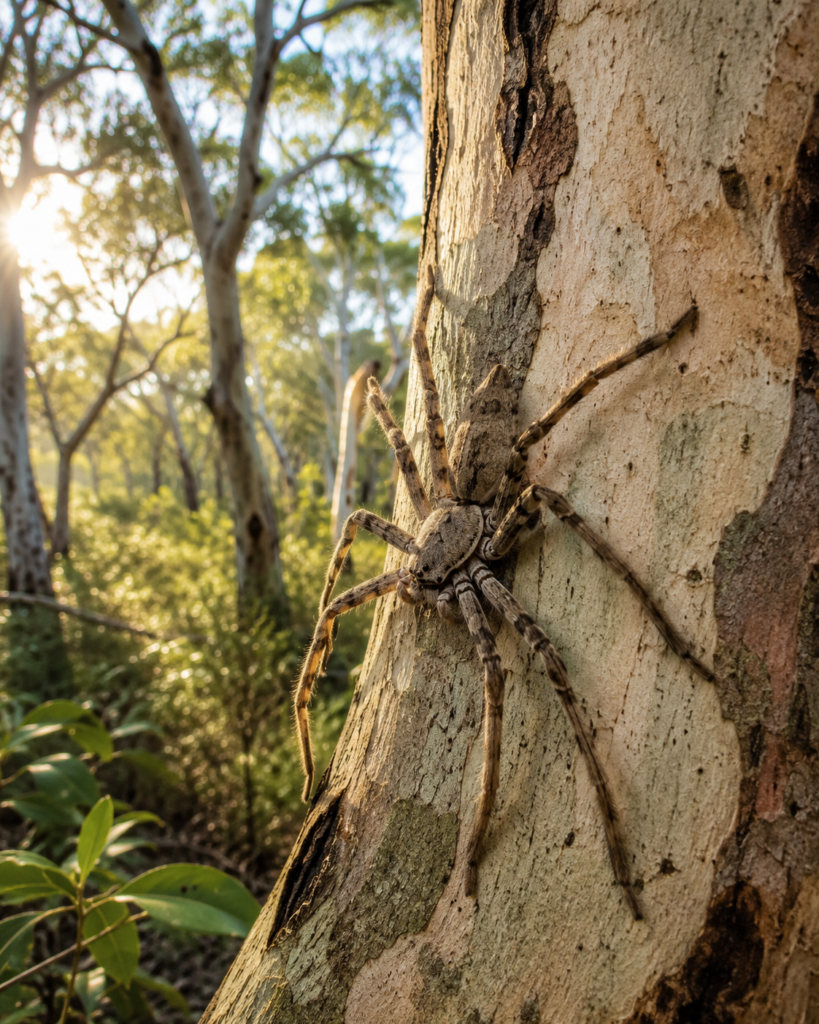
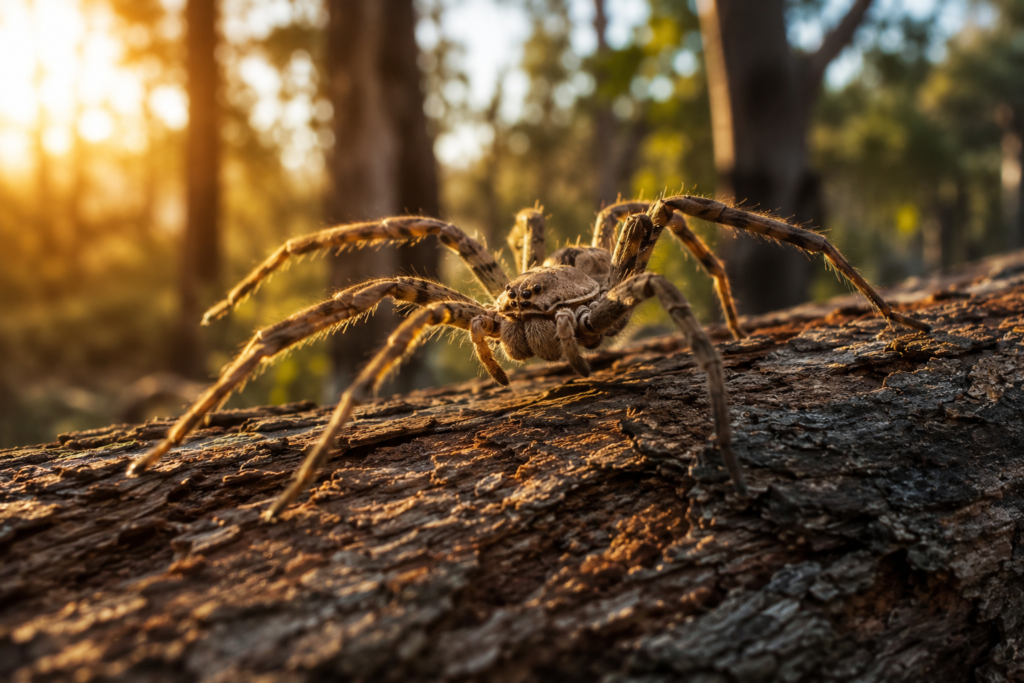
Speed is only one reason huntsman spiders have become such successful predators. Unlike orb-weaving spiders that rely on sticky webs to catch unsuspecting insects, huntsman spiders are active hunters. They spend much of their lives searching for prey across tree trunks, rocky outcrops, fallen logs, fences, and even the walls of houses. Their strategy depends on excellent vision, rapid reactions, and the ability to cover surprisingly large distances in only a few seconds.
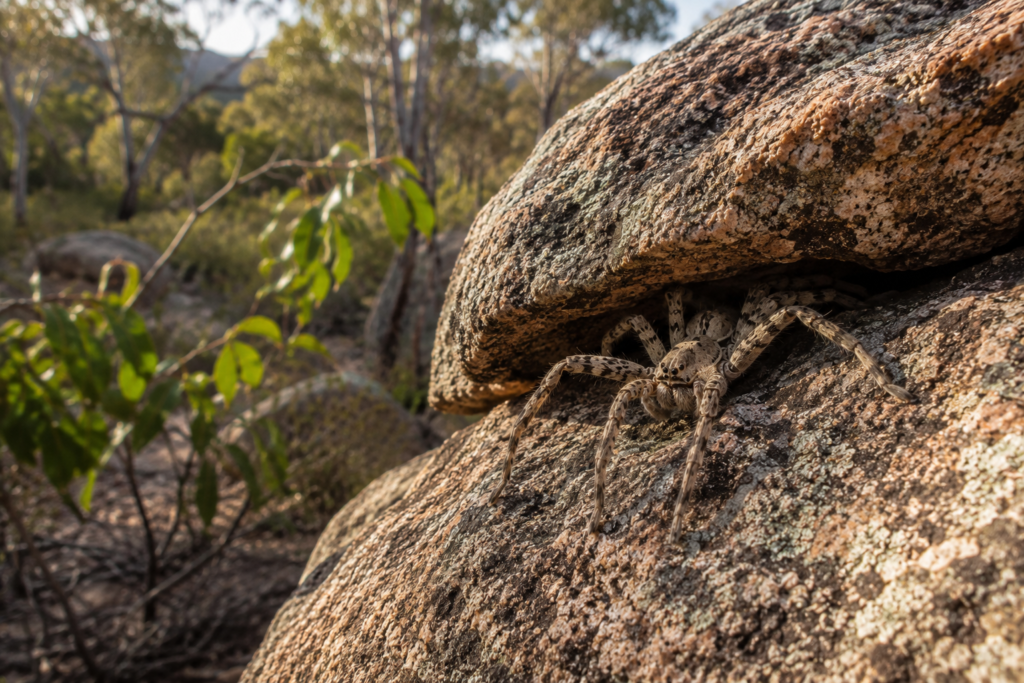
This hunting lifestyle has shaped almost every aspect of their anatomy. Their flattened bodies allow them to squeeze beneath loose bark, inside narrow rock crevices, and under branches where insects often hide. Long legs help them stride efficiently over uneven surfaces while providing stability when changing direction at high speed. Unlike web-building spiders that invest large amounts of energy constructing silk traps, huntsman spiders invest that energy into movement, awareness, and precision.
Researchers believe these evolutionary pressures explain why huntsman spiders consistently rank among the fastest spider families ever measured. Speed isn’t simply an impressive ability—it is central to how they survive.
Nature’s Hydraulic Engineering
One of the most fascinating discoveries about spiders has nothing to do with venom or silk. Instead, it involves the way they move.

Humans extend and bend their limbs almost entirely using muscles. Spiders operate differently.
While muscles pull their legs inward, extending the legs relies heavily on hydraulic pressure generated inside the spider’s body. A specialised fluid called haemolymph is pumped into the legs, increasing internal pressure and causing the joints to straighten. Muscles then contract to pull the legs back again.
Every stride involves a remarkably coordinated balance between hydraulics and muscular control.
This unusual system explains one observation many people have noticed without understanding the reason. When spiders die, hydraulic pressure disappears, causing their legs to curl underneath the body as the flexor muscles contract without opposing pressure.
Scientists studying biomechanics find this system particularly interesting because it represents a completely different engineering solution to movement than the systems found in vertebrates.
The new huntsman speed research provides another opportunity to understand how this hydraulic mechanism performs during rapid locomotion. By analysing high-speed video frame by frame, researchers can observe how spiders coordinate eight independently moving legs while maintaining remarkable stability across uneven terrain.
Long Legs Really Do Make a Difference
The latest study produced one finding that surprised many arachnologists.
Researchers originally expected that thinner, lighter legs might contribute most strongly to speed. Instead, after accounting for body size and evolutionary relationships, they found that relative leg length was the strongest predictor of running performance.
Longer legs allow spiders to cover more ground with each stride while maintaining balance during rapid acceleration.
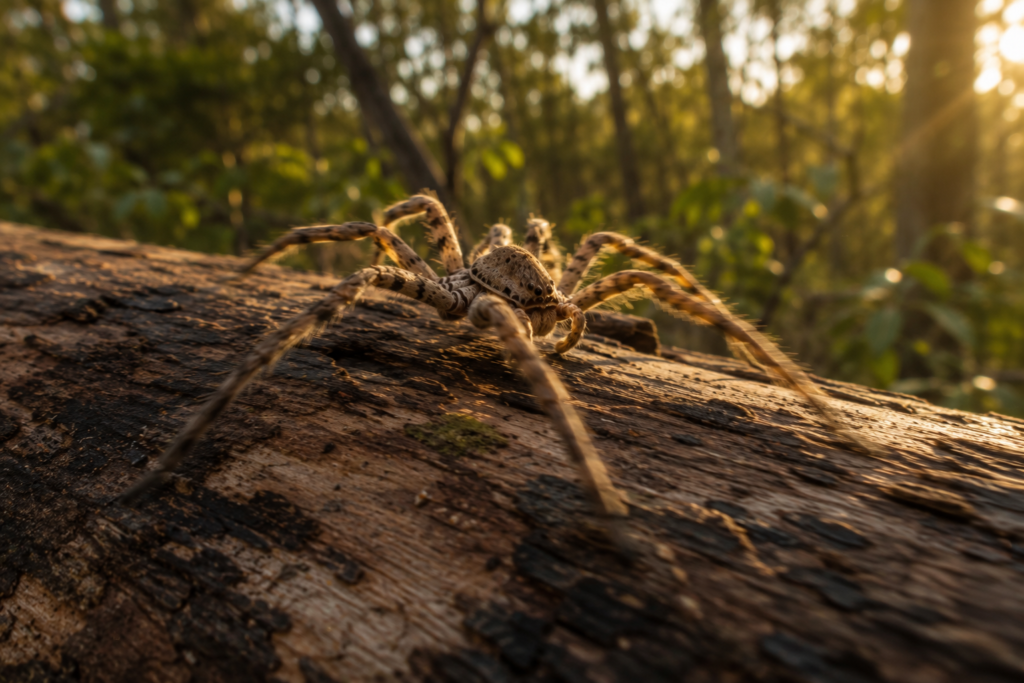
This is similar to many running animals throughout the natural world. Gazelles, horses, ostriches, and cheetahs all possess relatively long limbs that increase stride length and improve efficiency. Although spiders evolved entirely independently from vertebrates, natural selection appears to have reached a comparable solution.
Evolution often discovers similar answers to similar problems.
The huntsman demonstrates this beautifully.
Its exceptionally long, laterally spreading legs provide both speed and agility, allowing it to chase insects through complex environments where rapid turning is just as important as outright velocity.
The Perfect Predator for Australian Woodlands
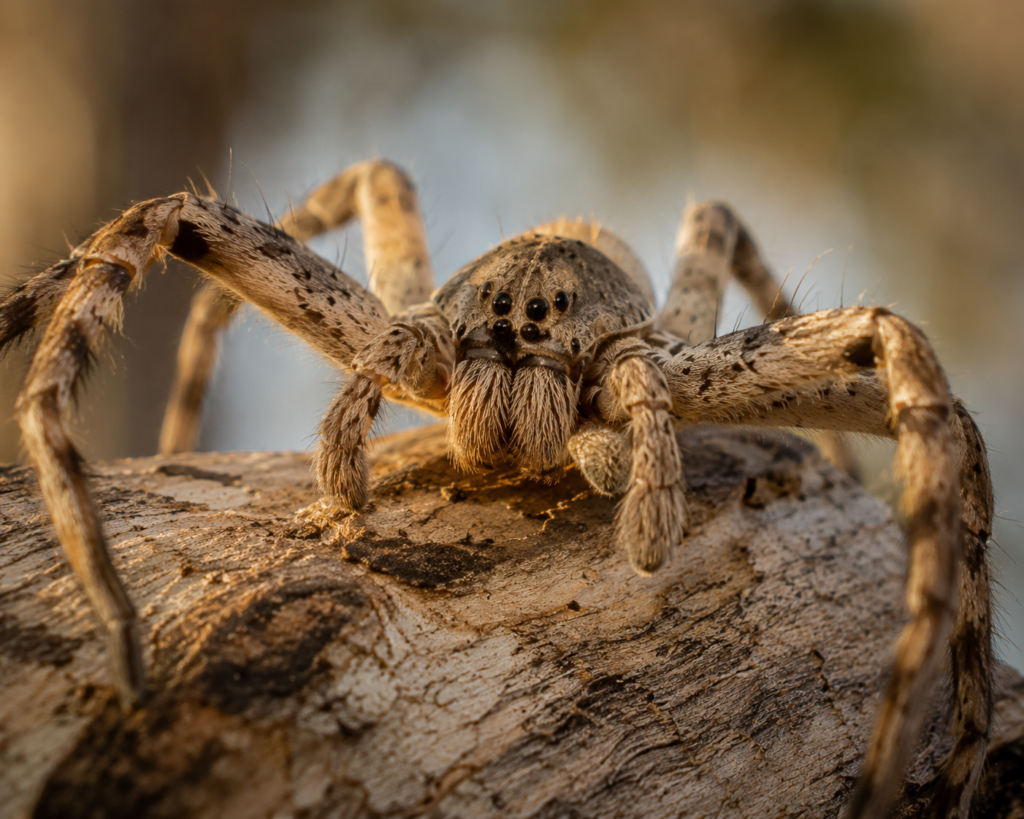
Although huntsman spiders occasionally enter homes, they spend most of their lives outdoors.
Across Australia they inhabit forests, open eucalyptus woodlands, rocky escarpments, rainforest edges, gardens, and even arid environments. Their adaptability has allowed different species to occupy an enormous range of habitats.
Northern Queensland’s open woodlands provide particularly suitable conditions.
Tree trunks, fallen timber, loose bark, and granite boulders create countless hiding places during the day. As temperatures cool in the evening, insects become more active, providing abundant hunting opportunities.
Unlike predators that rely on ambush, huntsman spiders constantly patrol these environments.

Their speed allows them to pursue cockroaches, moths, crickets, grasshoppers, beetles, and numerous other invertebrates that would easily escape slower predators.
This makes huntsman spiders valuable components of natural ecosystems.
Rather than being pests, they help regulate insect populations while themselves becoming prey for birds, reptiles, mammals, frogs, and larger invertebrates.
Every huntsman forms part of a much larger ecological network.
Are Huntsman Spiders Dangerous?
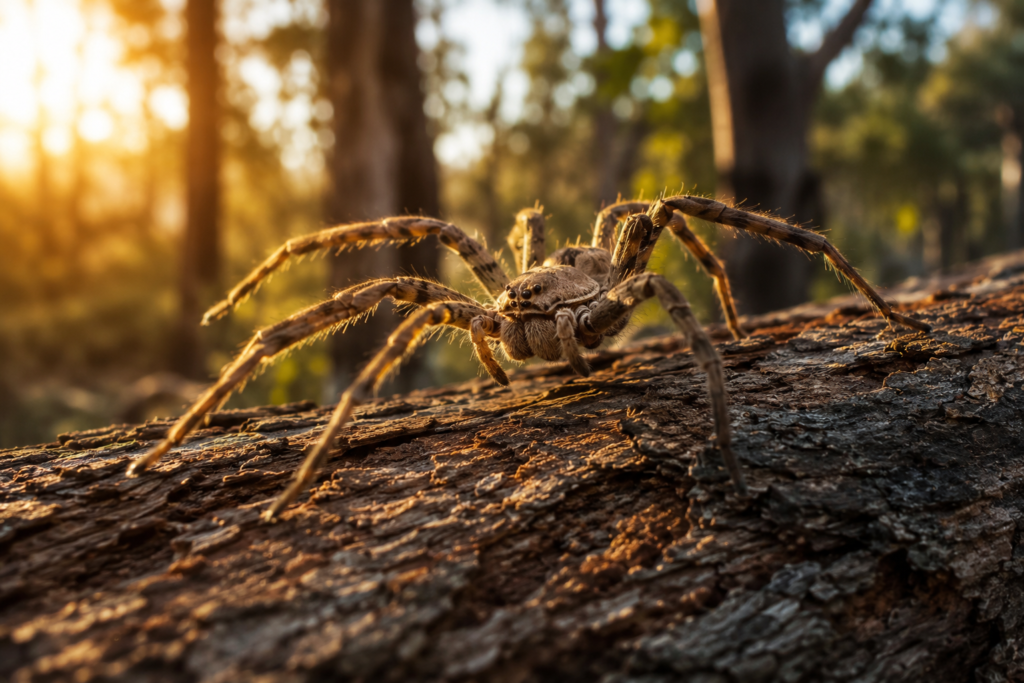
Perhaps no Australian spider generates more unnecessary fear than the huntsman.
Their large size certainly attracts attention. Some species can reach leg spans exceeding fifteen centimetres, making them among Australia’s largest spiders.
Despite their appearance, huntsman spiders are generally considered shy and reluctant to bite.
When disturbed, their first response is almost always escape. Their famous speed exists largely because fleeing is far safer than confronting a much larger animal.
Bites do occasionally occur if spiders become trapped against skin or accidentally handled, but available evidence indicates that their venom is not regarded as medically significant for healthy adults. Typical symptoms usually involve temporary local pain, swelling, and redness rather than life-threatening reactions.
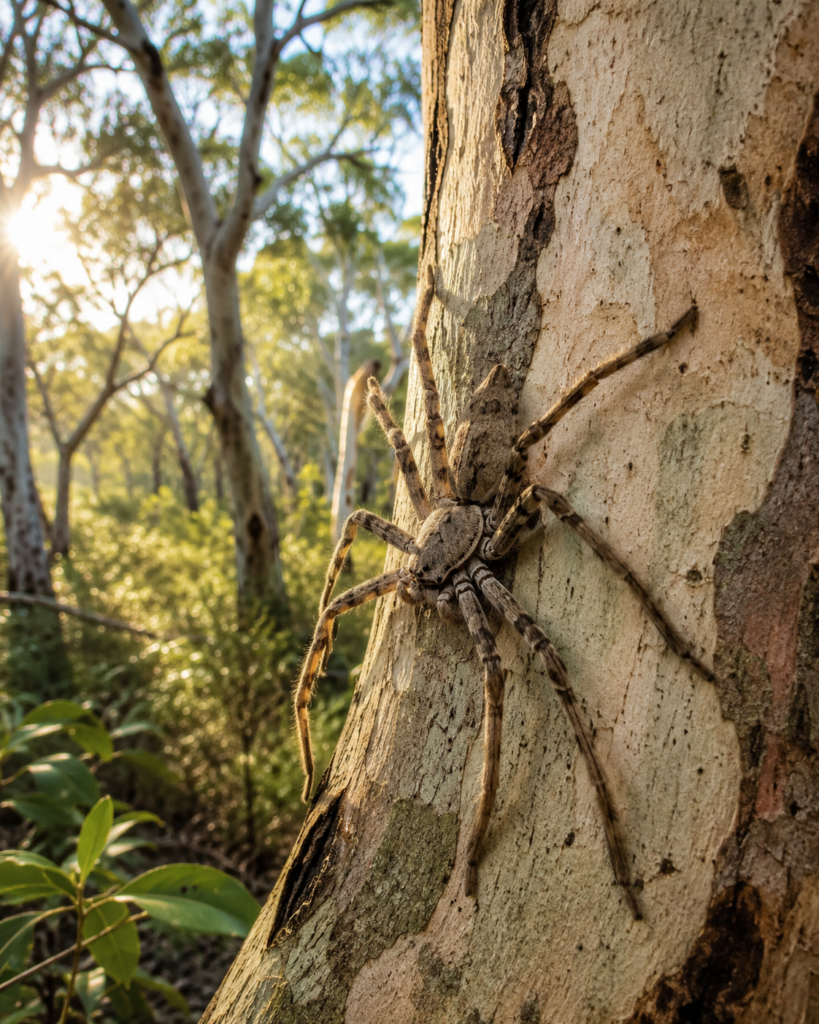
For this reason, many wildlife educators encourage relocating huntsman spiders outdoors rather than killing them.
Not only do they pose little danger, they also provide free pest control by consuming insects that people generally prefer not to have inside their homes.
Why Australians Seem to See Them Everywhere
Every summer, social media fills with photographs of enormous huntsman spiders appearing inside bathrooms, garages, cars, and bedrooms.
This visibility creates the impression that huntsman spiders are becoming increasingly common.

In reality, several factors contribute to these encounters.
Warm weather increases spider activity, while heavy rainfall or extreme heat sometimes encourages spiders to seek temporary shelter inside buildings. Artificial lights also attract insects, which in turn attract predators like huntsman spiders.
Most sightings therefore reflect normal spider behaviour rather than population explosions.
Interestingly, the very characteristic that made huntsman spiders famous long before this scientific study—their astonishing speed—is also what makes indoor encounters seem so dramatic.
A spider capable of sprinting across a room in seconds naturally appears much faster than one moving slowly through vegetation outdoors.
The latest research confirms that these observations were not simply human exaggeration.
Huntsman spiders really are exceptionally fast.
Inspiration Beyond Biology
The implications of this research extend well beyond arachnology.
Engineers increasingly study animal movement when designing robots capable of navigating difficult terrain. Spiders are particularly attractive models because they maintain stability using multiple independently controlled legs while crossing rocks, branches, rubble, and other irregular surfaces.
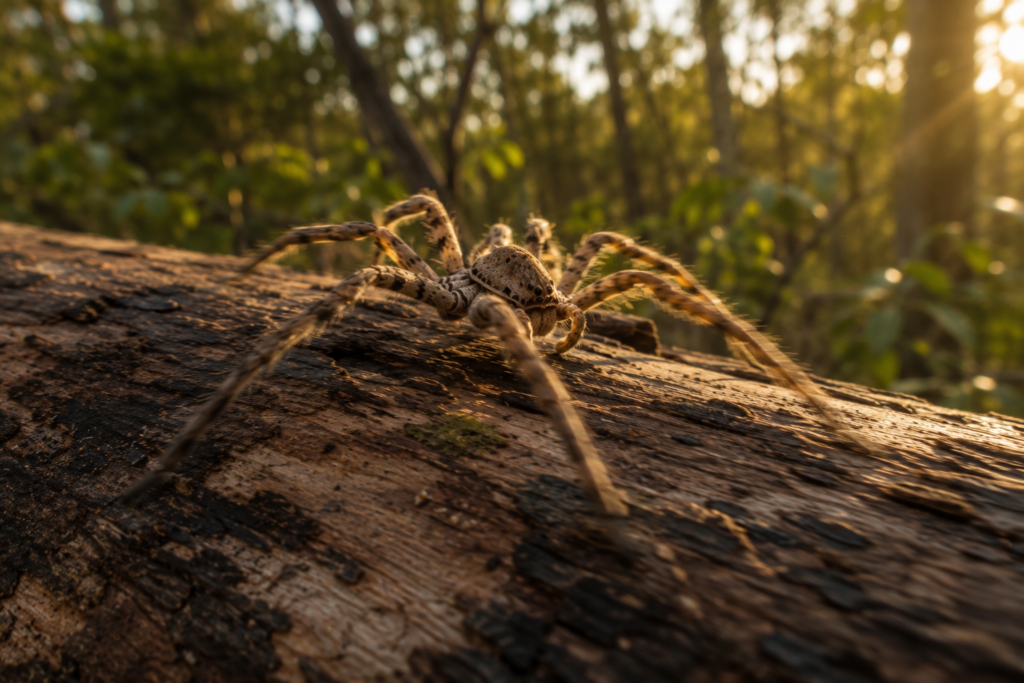
Understanding exactly how huntsman spiders coordinate their hydraulic systems during rapid running may help engineers develop more agile search-and-rescue robots capable of moving through collapsed buildings or other hazardous environments.
Nature has spent hundreds of millions of years refining efficient movement.
Modern robotics is only beginning to catch up.
This growing partnership between biology and engineering demonstrates why seemingly unusual research often produces benefits extending far beyond its original purpose.
Learning More About Australia’s Remarkable Spiders
For readers fascinated by Australia’s incredible invertebrates, books such as A Field Guide to Spiders of Australia provide an accessible introduction to identifying many of the country’s most common species while explaining their ecology and behaviour.
Photographing spiders safely can also become a rewarding hobby. The Canon EOS R50 Mirrorless Camera is popular among wildlife photographers because its fast autofocus performs well when capturing small, fast-moving animals in natural environments.
Anyone interested in observing spiders, birds, reptiles, or insects during bushwalks may also appreciate the Nikon PROSTAFF P7 8×42 Binoculars, which allow close observation of wildlife without disturbing it.
Far from being creatures to fear, huntsman spiders remind us that even the most familiar Australian animals continue surprising scientists.
The world’s fastest spider has spent countless generations quietly hunting beneath bark and across woodland trees.
Only now are researchers beginning to understand just how extraordinary it really is.
Australia’s Incredible Spider Diversity
Australia is home to an astonishing diversity of spiders. Scientists have described more than 2,400 species across the continent, and many experts believe hundreds—perhaps even thousands—remain undiscovered or unnamed. From colourful peacock spiders that perform elaborate courtship dances to trapdoor spiders capable of living for decades in the same burrow, Australia’s arachnids represent one of the richest spider faunas anywhere on Earth.
Huntsman spiders belong to the family Sparassidae, a group distributed across tropical and temperate regions around the world. Although Australia is famous for them, huntsman spiders also occur throughout Asia, Africa, Europe, and the Americas. What makes the Australian species particularly fascinating is how well they have adapted to the country’s forests, woodlands, rocky escarpments, and even suburban environments.
The Queensland huntsman identified in the recent speed study is only one member of a much larger evolutionary family that has diversified over millions of years. Each species occupies its own ecological niche, hunting different prey and adapting to slightly different environments. This diversity helps explain why scientists remain so interested in studying them—every species tells part of a much larger evolutionary story.
Why Studies Like This Matter
At first glance, discovering the world’s fastest spider might seem like little more than an interesting piece of trivia. In reality, studies like this contribute to several important areas of science.
Understanding how animals move helps biologists better understand evolution. Every adaptation found in nature represents a solution to an environmental challenge. In the huntsman’s case, long legs, a flattened body, rapid acceleration, and an efficient hydraulic system all evolved because they increased the spider’s chances of catching prey and avoiding predators.
Biomechanics is another field benefiting from this research. Engineers frequently study animal movement to improve robotic systems capable of navigating environments that remain difficult for machines. Multi-legged robots inspired by spiders are already being developed for applications ranging from search-and-rescue missions to planetary exploration. Understanding exactly how a huntsman coordinates eight legs at remarkable speeds could influence future robotic designs.
The study also demonstrates the importance of basic scientific research. Many discoveries begin simply because researchers ask seemingly straightforward questions. In this case, one question—“Which spider is actually the fastest?”—led to one of the largest comparative studies ever conducted on spider locomotion. Along the way, scientists uncovered entirely new insights into spider evolution and biomechanics.
There Is Still So Much We Don’t Know
One of the most exciting aspects of this discovery is how many new questions it raises.
Could another, yet-to-be-studied spider species prove even faster?
How exactly do huntsman spiders coordinate their hydraulic movement at top speed?
Do younger spiders run faster relative to their body size than adults?

How does running speed vary across different surfaces such as bark, rock, sand, or leaves?
Researchers hope future studies using even higher-speed cameras, motion capture technology, and computer modelling will answer many of these questions. Advances in imaging now allow scientists to analyse individual leg movements in extraordinary detail, revealing subtle mechanics that were impossible to observe only a few decades ago.
The current research also highlights the importance of continued biodiversity studies. New species continue being discovered every year, particularly in remote tropical forests where many invertebrates remain poorly documented. Every newly described species provides another opportunity to understand how evolution has shaped life on Earth.
Changing the Way We See Spiders
Perhaps the greatest outcome of this study is not simply identifying a new speed record. It is encouraging people to view spiders differently.
For many people, spiders evoke fear before curiosity. Yet when scientists look closely, they see remarkable engineering, sophisticated behaviour, and millions of years of evolutionary innovation. Huntsman spiders are not simply “large spiders.” They are highly specialised predators with hydraulic limbs, exceptional agility, impressive sensory systems, and ecological roles that help maintain healthy ecosystems.
They remind us that even familiar backyard animals possess extraordinary abilities waiting to be discovered.
This change in perspective is one of the most valuable contributions science can make. The more we understand wildlife, the easier it becomes to appreciate its complexity and importance.
Bringing Science Into Everyday Life
You don’t need to be an arachnologist to appreciate discoveries like this.
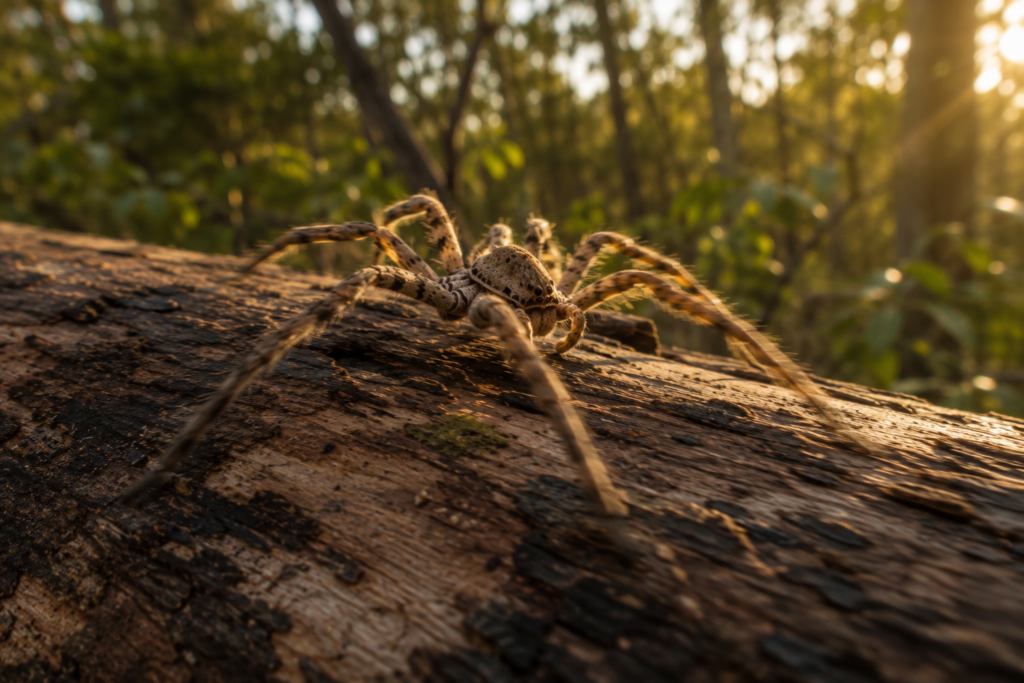
The next time you notice a huntsman quietly resting beneath bark or moving across a garden fence, you’ll know you’re looking at one of nature’s fastest eight-legged athletes. Instead of seeing only a spider, you’ll see millions of years of evolution producing one of the most efficient hunting machines in the natural world.
For anyone interested in learning more about Australia’s incredible wildlife, The Australian Geographic Nature Guide offers an excellent introduction to the country’s plants, animals, and ecosystems. It’s a fantastic resource for understanding the diversity that exists beyond the headlines.
If reading about the biomechanics of spiders sparks an interest in observing nature more closely, a National Geographic Dual LED Student Microscope opens up an entirely new world. Examining insect wings, spider silk, leaves, feathers, and other natural materials reveals intricate structures invisible to the naked eye, making it an engaging tool for both adults and children.
Outdoor exploration also helps bring these discoveries to life. Whether you’re walking through a local woodland or exploring a national park, carrying a LifeStraw Personal Water Filter can make longer hikes more practical while encouraging people to spend more time experiencing the environments where remarkable creatures like huntsman spiders live.
More Than Just a Speed Record
Ultimately, this research is about far more than identifying the world’s fastest spider.
It highlights how much remains undiscovered within the natural world, even among animals many people encounter regularly. Huntsman spiders have lived alongside Australians for thousands of years, quietly hunting insects across forests, woodlands, and suburban gardens. Yet only now are scientists beginning to measure and fully understand one of their most remarkable abilities.
It is a reminder that nature continues to surprise us.
Every year researchers uncover new species, unexpected behaviours, and extraordinary adaptations that challenge what we thought we knew about the living world. Some discoveries happen in the deepest oceans or the most remote rainforests. Others occur much closer to home, hiding in plain sight on tree trunks, beneath loose bark, or occasionally on the walls of our own houses.
The story of the huntsman spider perfectly captures why biodiversity research remains so important. Every organism, no matter how common it appears, has evolved unique solutions to life’s challenges. By studying those solutions, scientists gain insights into evolution, engineering, ecology, and even technologies that may shape our future.
So, is the Australian huntsman officially the world’s fastest spider?
Current evidence strongly suggests it is—but until the study completes peer review, scientists will continue examining the findings with the careful scrutiny that good science demands.
Regardless of the final outcome, one thing is already clear.
The next time a huntsman disappears across a wall before you can blink, you may have witnessed one of the fastest bursts of spider locomotion ever recorded. And rather than simply being startled, you’ll know you’re watching one of evolution’s most remarkable engineering achievements in action.