
When most people think of Tropical North Queensland, they picture dense rainforests, towering waterfalls, and the colourful coral reefs of the Great Barrier Reef. While these iconic landscapes certainly deserve their reputation, they tell only part of the story. Drive just an hour inland from Cairns and the scenery changes dramatically. The lush green rainforest gives way to open eucalyptus woodlands, wide golden grasslands, granite hills, seasonal creeks, and vast blue skies stretching across the horizon. This is the Mareeba region—a landscape that, although quieter and less famous than the Wet Tropics, represents one of Australia’s most remarkable ecological transitions.
The woodlands surrounding Mareeba are more than simply “bush.” They are highly diverse ecosystems shaped by millions of years of geological change, seasonal rainfall, fire, and evolution. Every tree, grass, rock formation, and creek contributes to a landscape that supports hundreds of native plant and animal species specially adapted to life in Australia’s tropical savannas. These ecosystems appear deceptively simple at first glance, yet beneath their open canopy lies a complex web of ecological relationships that scientists continue to study today.
Understanding these landscapes changes the way you experience them. Instead of seeing scattered eucalyptus trees across dry grassland, you begin noticing subtle differences in soil colour, changes in vegetation along creek lines, the influence of granite outcrops, and how every feature of the landscape influences the plants and wildlife that call it home. Mareeba’s woodlands become less of a backdrop and more of a living ecosystem where geology, climate, and biodiversity work together to create one of northern Australia’s most distinctive environments.
A Landscape Shaped Over Hundreds of Millions of Years
The story of Mareeba begins long before eucalyptus trees evolved or Australia’s unique wildlife existed. To understand why this region looks the way it does today, it helps to look beneath the surface.
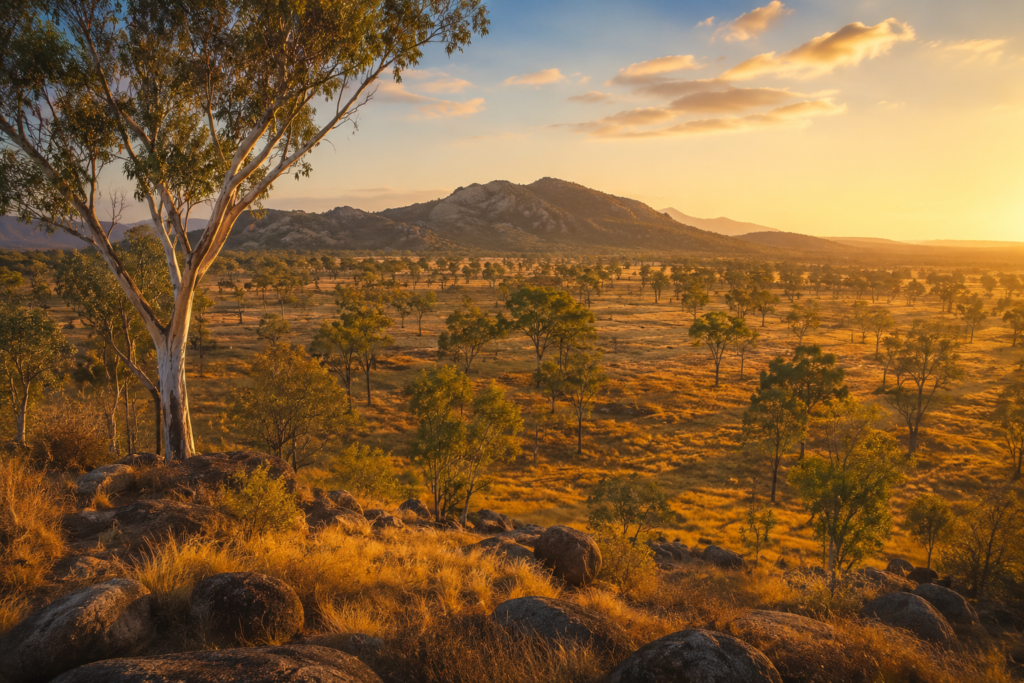
Much of the Mareeba district sits upon some of the oldest rocks in Queensland. Ancient granites and metamorphic rocks formed hundreds of millions of years ago during periods of intense mountain building when enormous geological forces pushed and folded the Earth’s crust. Over vast stretches of time, wind, rain, rivers, and temperature changes slowly wore these mountains away, exposing the resistant granite that now dominates much of the landscape.
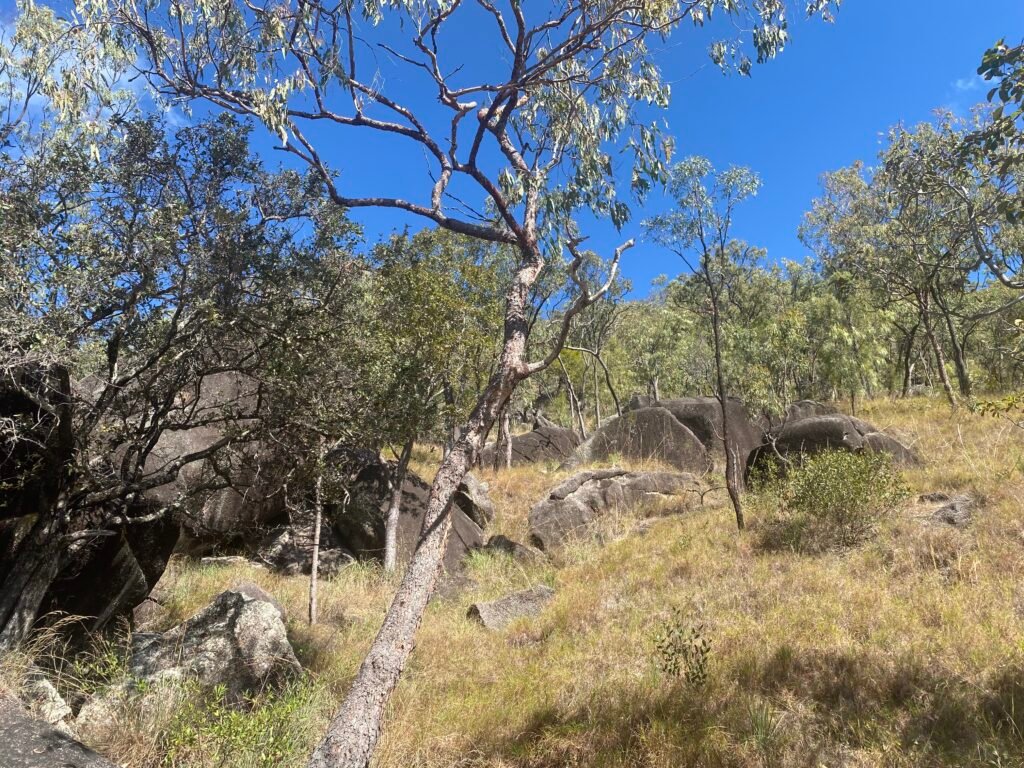
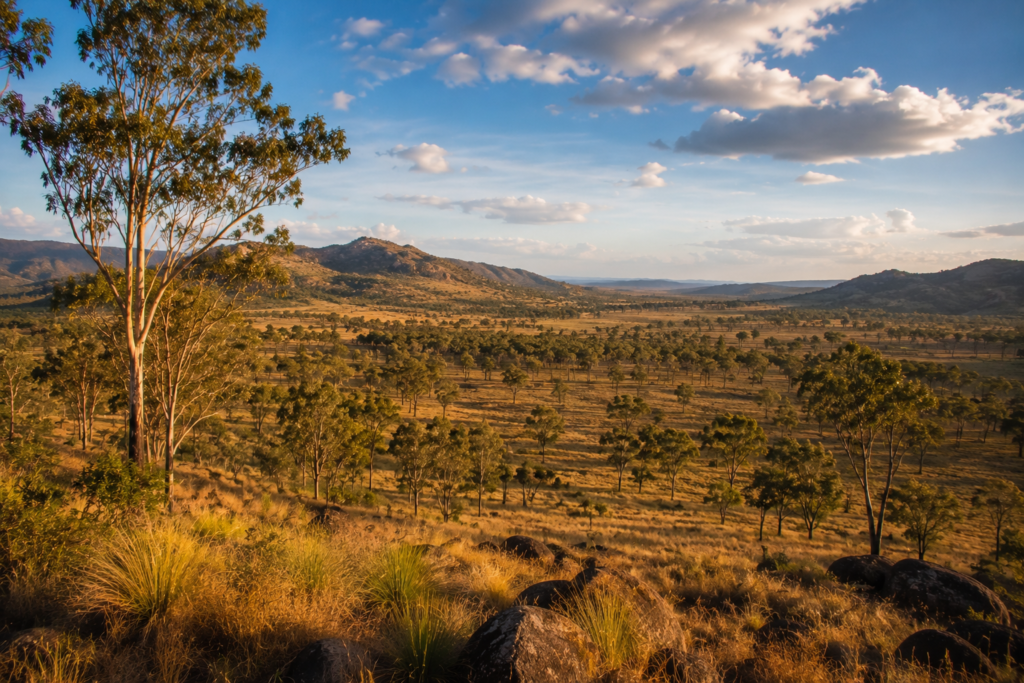
Unlike younger mountain ranges with sharp peaks and dramatic cliffs, the granitic landscapes around Mareeba have been weathered for millions of years. The result is a landscape of rounded hills, massive granite boulders, rocky ridges, and gently undulating plains that appear timeless. These granite formations are among the defining characteristics of the region and create countless small habitats for plants and animals.
Weathering continues to shape the landscape today. During the wet season, heavy tropical rainfall flows across exposed rock surfaces before collecting within seasonal creeks and drainage lines. During the long dry season, heat causes rocks to slowly expand and contract, gradually breaking apart into sandy soils that support native vegetation. Although these changes occur almost imperceptibly within a human lifetime, they are continually reshaping the landscape.
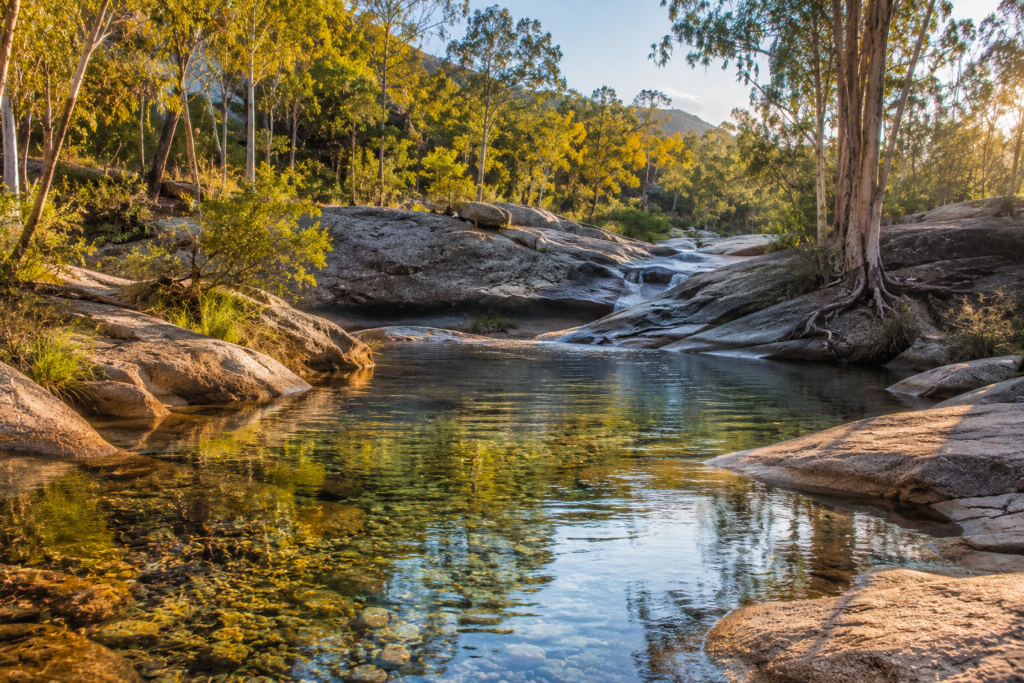
Some of the most beautiful examples of this ancient geology can be seen around Emerald Creek Falls. While many visitors are drawn to the waterfalls themselves, the exposed granite surrounding the creek tells a much older story. Smooth rock platforms, rounded boulders, shallow pools, and sculpted channels reveal millions of years of erosion, creating one of the most visually striking examples of tropical granite landscapes in northern Australia. The falls themselves are simply one small expression of a geological history stretching back hundreds of millions of years.
Why Doesn’t Mareeba Look Like Cairns?
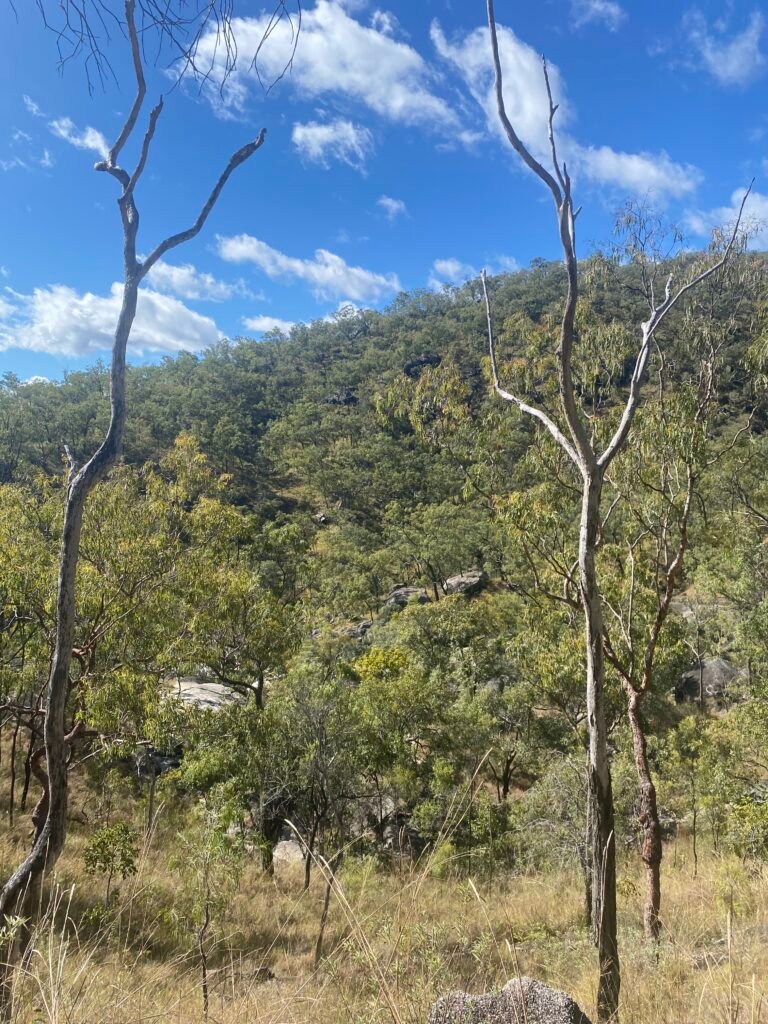
One of the first things visitors notice when travelling inland from Cairns is how suddenly the landscape changes.
The transition feels almost dramatic. Dense rainforest gradually disappears, replaced by scattered eucalyptus trees growing across open woodland. Thick vines give way to native grasses, while towering rainforest canopies are replaced by wide open skies.
This transformation occurs because Mareeba sits within what ecologists often call the rain shadow of the Great Dividing Range.
Moist air blowing inland from the Coral Sea rises over the coastal mountain ranges surrounding Cairns. As the air cools, moisture condenses into clouds, producing the heavy rainfall that supports the Wet Tropics rainforests. By the time these air masses descend onto the inland plateau surrounding Mareeba, much of their moisture has already fallen.
The result is a much drier climate despite the relatively short distance separating the two regions.
While parts of the Wet Tropics can receive well over 3,000 millimetres of rainfall each year, Mareeba generally receives less than half that amount. Rainfall is also far more seasonal, with most precipitation arriving during the tropical wet season between December and April.
The remaining months are dominated by warm sunshine, low humidity, and long dry periods.
These climatic differences completely alter the vegetation capable of surviving here.
Rainforest plants depend upon consistently moist conditions throughout the year. Open woodland species, by contrast, have evolved strategies allowing them to survive months with very little rainfall. Rather than competing with rainforest species, woodland plants have specialised for an entirely different environment.
This transition between rainforest and tropical savanna makes Mareeba particularly fascinating for ecologists because it sits close to one of Australia’s major ecological boundaries. Only a relatively short drive separates two ecosystems that function in remarkably different ways.
The Open Woodland: Australia’s Defining Landscape
Although rainforests often receive the most attention, open eucalypt woodlands actually cover enormous areas of Australia and represent one of the country’s defining ecosystems.
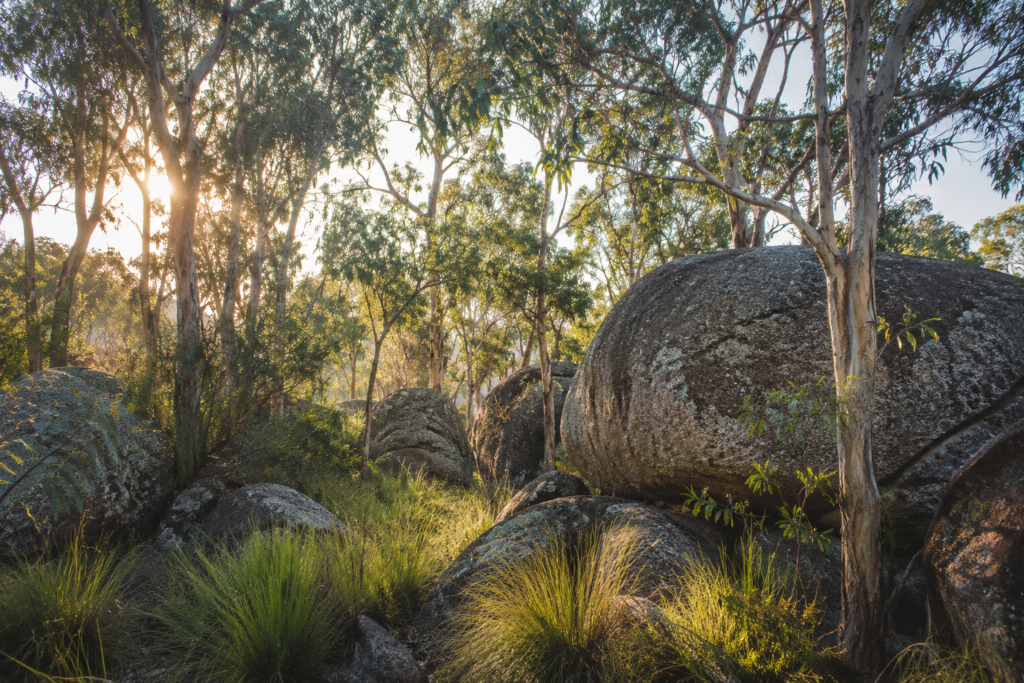
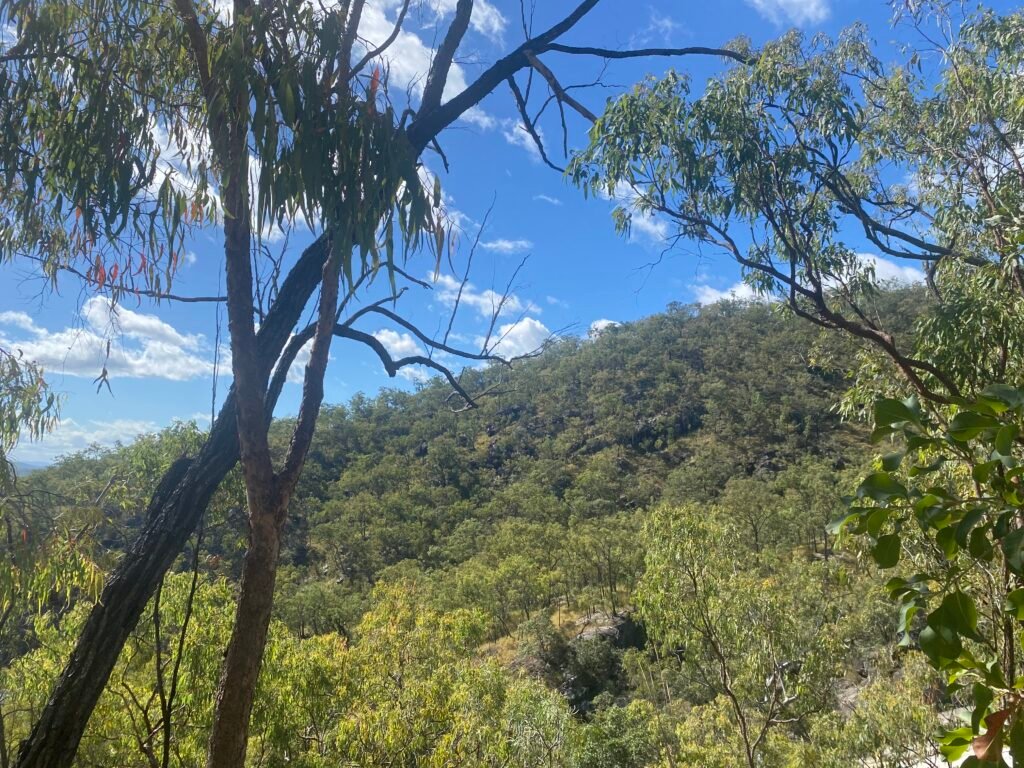
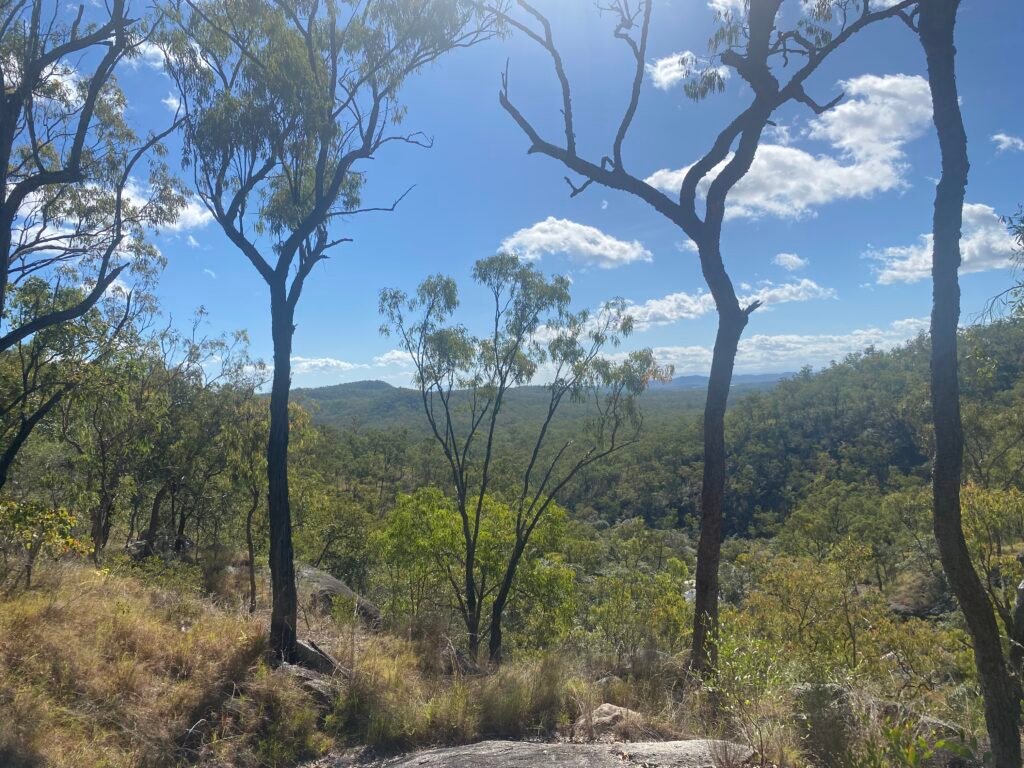
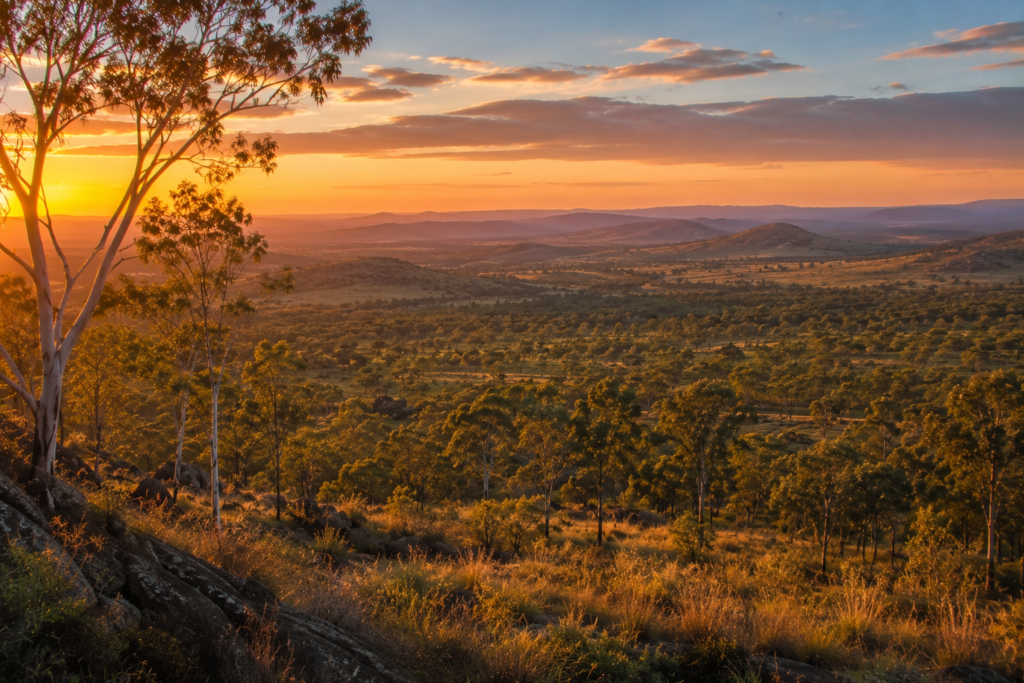
The Mareeba region is dominated by tropical savanna woodland—a landscape characterised by widely spaced trees growing above an almost continuous layer of native grasses. This open structure allows sunlight to reach the ground throughout much of the year, supporting an incredible diversity of grasses, herbs, orchids, lilies, and smaller shrubs beneath the canopy.
Unlike dense forests where tree crowns merge together overhead, woodland trees remain separated, creating an environment filled with light and space.
This openness influences everything.
More sunlight reaches the soil, encouraging grass growth. Wind moves more freely through the vegetation. Surface temperatures fluctuate more dramatically, and wildlife species have adapted to these changing conditions over thousands of generations.
Many visitors mistakenly assume open woodland contains fewer species simply because the vegetation appears less dense than rainforest.
In reality, the opposite is often true.
Woodland ecosystems support astonishing biodiversity. The open canopy creates numerous ecological niches where different plants occupy slightly different soil types, moisture conditions, and light levels. Some species flourish on rocky slopes. Others occur only beside seasonal waterways. Certain grasses dominate sandy soils, while shrubs become more common on heavier clays.
Every subtle environmental change influences which species are able to grow.
The Remarkable Trees That Define Mareeba
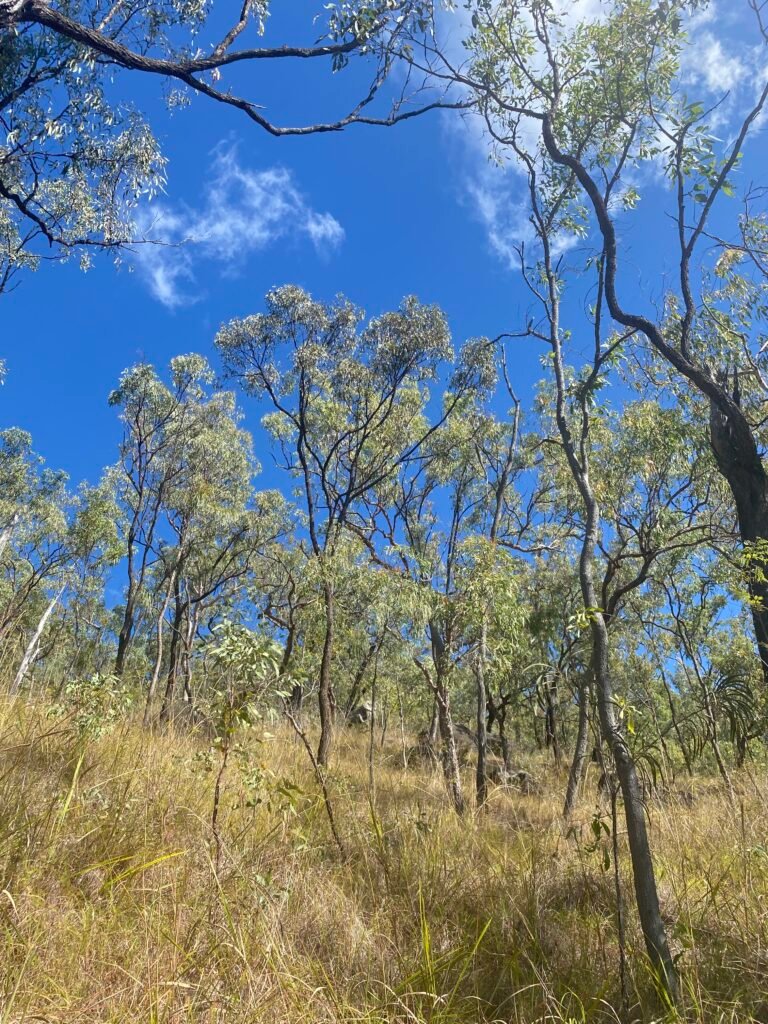
The most recognisable feature of Mareeba’s landscape is undoubtedly its eucalyptus trees.
Australia is home to more than 700 species of eucalypts, and northern Queensland supports a particularly diverse collection adapted to tropical conditions. These trees have become icons of the Australian landscape not only because they are widespread, but because they possess extraordinary adaptations allowing them to survive harsh environmental conditions.
Many eucalyptus species growing around Mareeba have thick insulating bark that protects living tissues from heat during bushfires. Their leaves often hang vertically rather than horizontally, reducing direct exposure to the intense midday sun. Waxy leaf surfaces help minimise water loss, while extensive root systems allow trees to access moisture deep beneath the soil.
Some species can even temporarily reduce growth during prolonged drought before responding rapidly when rain finally arrives.
Perhaps the most remarkable adaptation is their relationship with fire.
Unlike many forests around the world where severe fire can permanently destroy vegetation, Australian woodlands evolved alongside regular burning. Many eucalyptus species not only survive fire but depend upon it. Some rapidly resprout from protected buds beneath their bark after fire passes. Others release seeds into nutrient-rich ash beds where competition from surrounding vegetation has temporarily decreased.
These adaptations developed over millions of years as natural lightning fires and, later, Aboriginal cultural burning shaped Australian landscapes.
Fire, when occurring at appropriate frequencies and intensities, has become an ecological process rather than simply a destructive force.
More Than Just Trees
While eucalyptus trees dominate the skyline, much of the woodland’s biodiversity exists closer to the ground.
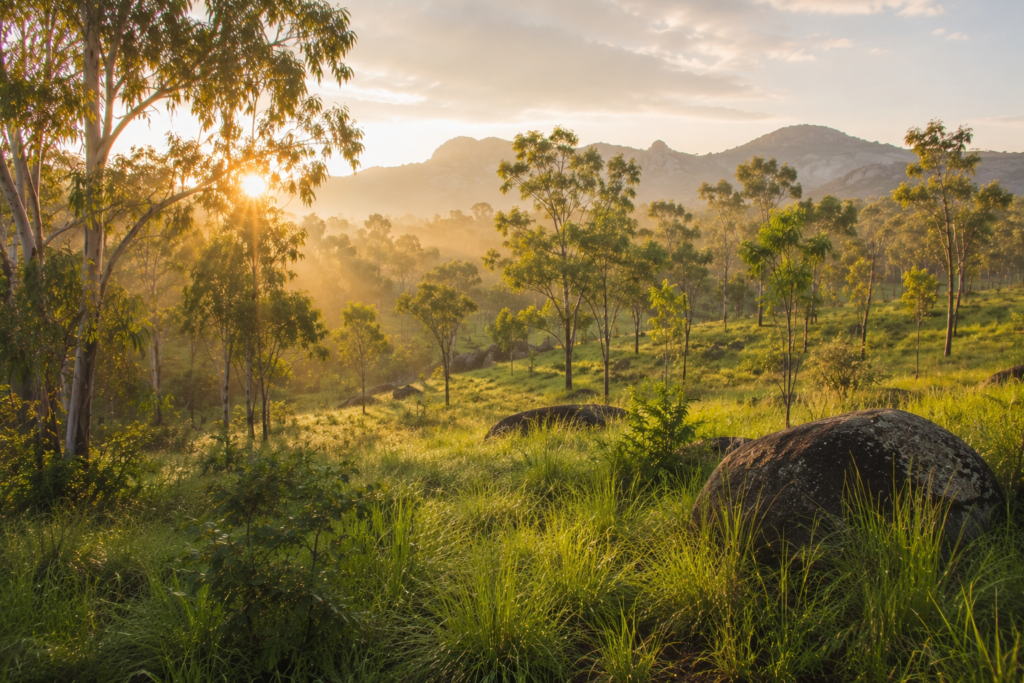
Native grasses form the foundation of these ecosystems. During the wet season, they grow rapidly, covering hillsides with lush green vegetation that provides food for insects, birds, reptiles, and mammals. As the dry season progresses, grasses gradually turn golden, creating the iconic colours associated with northern Australia’s savannas.
These grasses are far more important than they appear.
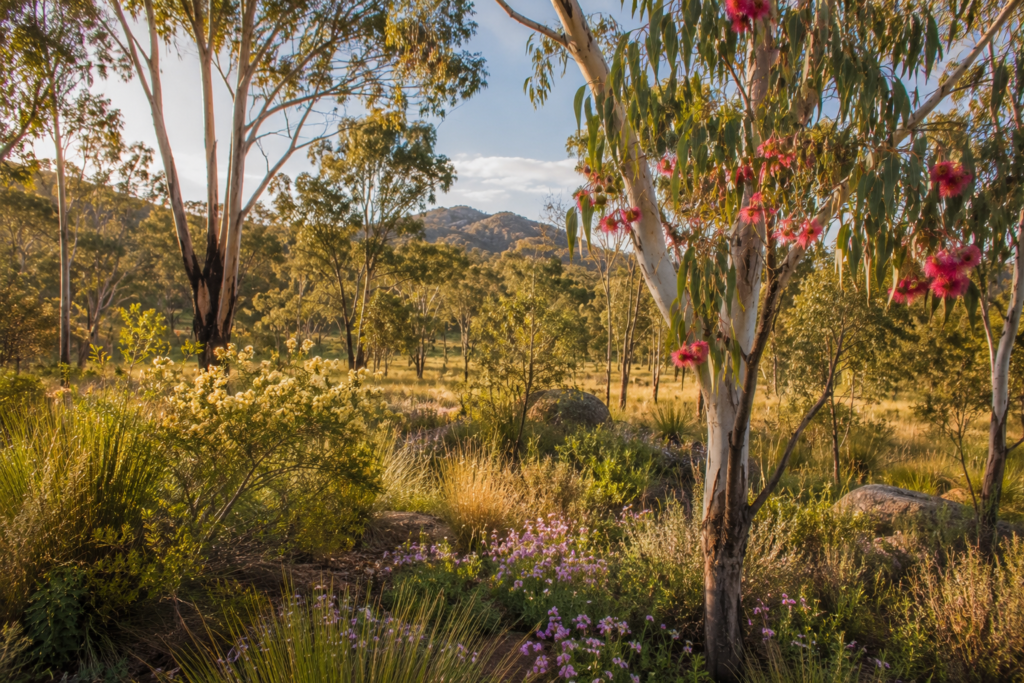
Their roots stabilise soil during heavy rainfall, reduce erosion, recycle nutrients, and provide habitat for countless invertebrates. Many native wildflowers also emerge during the wet season, briefly transforming sections of woodland into colourful displays before disappearing again during the dry months.
Hidden among the grasses are orchids, lilies, sedges, herbs, and shrubs that most visitors walk straight past without noticing.
Together they create one of Australia’s richest plant communities.
A Landscape That Is Always Changing
One of the most fascinating aspects of Mareeba’s woodland ecosystems is that they never remain exactly the same.
Unlike temperate forests where seasonal changes often occur gradually, tropical woodlands undergo dramatic transformations each year.
Following the first significant rains, dormant grasses rapidly produce fresh green growth almost overnight. Seasonal creeks begin flowing again. Frogs emerge after months hidden underground. Insects multiply rapidly, providing food for birds and reptiles. Trees flush with new leaves, while many flowering species begin attracting pollinators from across the surrounding landscape.
Only a few months later, the same woodland begins drying once more.
Creeks shrink into isolated pools. Grasses cure beneath the tropical sun. Leaves become tougher and more drought resistant. Wildlife adjusts its behaviour as water becomes increasingly scarce.
Far from representing ecological stress, these seasonal cycles define the very identity of Mareeba’s woodlands.
Every species has evolved alongside this annual rhythm, making the landscape remarkably resilient despite its sometimes harsh appearance.
A Landscape Alive with Wildlife
At first glance, Mareeba’s open woodlands can appear surprisingly quiet. Unlike tropical rainforests where birds call continuously and dense vegetation conceals constant movement, woodland ecosystems often reveal their wildlife more gradually. Spend only a few minutes standing quietly beneath the eucalyptus canopy, however, and the landscape begins to come alive.
Rainbow Bee-eaters glide effortlessly through open clearings, catching insects in mid-air before returning to exposed branches. Sulphur-crested Cockatoos announce their presence long before they appear overhead, while Blue-winged Kookaburras watch patiently from dead tree limbs searching for reptiles and insects below. During the early morning, the rich whistles of Grey Shrike-thrushes drift through the trees, and as temperatures rise, cicadas create one of the defining sounds of northern Australia’s dry season.
The openness of the woodland actually supports an extraordinary diversity of birdlife. Many species depend upon scattered mature trees for nesting while using the grassy understory to forage for insects, seeds, and small reptiles. Others move seasonally between woodland and neighbouring rainforest or wetland habitats depending on flowering events, rainfall, and food availability.
Unlike forests where dense vegetation limits visibility, woodland birds often rely on keen eyesight and speed. Raptors such as Black Kites, Brown Falcons, and Wedge-tailed Eagles frequently soar above the landscape using rising warm air to search for prey over vast distances. Their presence highlights just how productive these ecosystems really are.
The Mammals Hidden Among the Trees
Although visitors often hope to encounter iconic Australian mammals, many woodland species remain remarkably elusive. Most native mammals become active during the cooler hours of dawn, dusk, or night, helping them avoid the intense tropical heat.
Eastern Grey Kangaroos graze in open grassy areas surrounding the woodlands, particularly where fresh growth follows seasonal rain. Agile Wallabies move between patches of woodland and creek lines, while Northern Brown Bandicoots quietly forage beneath dense grasses searching for insects and fungi.
Perhaps some of the most fascinating residents are the species few people ever notice.
Tiny insectivorous bats emerge shortly after sunset, consuming thousands of insects every night. Feathertail Gliders and Sugar Gliders move silently between trees beneath the cover of darkness, feeding on nectar, pollen, sap, and insects. Even though these mammals are rarely seen during the day, they perform important ecological roles, including pollination and insect control.
Their survival depends upon mature woodland containing old trees with natural hollows.
Tree hollows are among the most valuable habitats within Australian ecosystems. Unlike many forests elsewhere in the world, suitable hollows often take well over a century to develop naturally. Cockatoos, parrots, owls, gliders, possums, reptiles, and even some native bees rely on these cavities for nesting and shelter.
This is why even seemingly old, weathered eucalyptus trees remain critically important long after they stop growing vigorously.
Reptiles: Masters of Australia’s Dry Tropics
The warm climate surrounding Mareeba provides ideal conditions for reptiles.
Skinks dart across sunlit granite boulders before disappearing into cracks almost instantly. Bearded Dragons bask beside tracks during cooler mornings before retreating beneath shrubs as temperatures climb. Larger Lace Monitors patrol woodland floors searching for insects, eggs, carrion, and small animals.
Snakes also form an important part of the ecosystem. Although often feared, they play valuable ecological roles by controlling rodent populations and maintaining balance within woodland food webs. Most species actively avoid human contact and remain unseen despite their abundance.
The rocky granite landscapes surrounding Mareeba create ideal reptile habitat. Crevices provide shelter from predators and temperature extremes, while sun-exposed rocks offer excellent basking sites needed for regulating body temperature.
Every granite outcrop effectively becomes its own miniature ecosystem.
Insects: The Woodland’s Hidden Workforce
While larger animals attract most attention, insects arguably perform the greatest share of ecological work within Mareeba’s woodlands.
Native bees pollinate flowering shrubs and eucalyptus trees. Butterflies move pollen between wildflowers. Ants recycle organic matter while improving soil structure through extensive underground tunnel networks. Termites break down dead timber, returning nutrients to the soil and creating habitat for countless other organisms.
During the build-up to the wet season, enormous termite mounds become particularly noticeable across parts of northern Australia. Although not as common around Mareeba as further west, termites remain among the ecosystem’s most important decomposers.
Then there are the cicadas.
For much of the dry season, the air fills with an almost overwhelming chorus generated by thousands of males calling simultaneously from the tree canopy. Their emergence follows years spent developing underground before climbing trees, shedding their skins, and transforming into winged adults. The sound has become one of the defining characteristics of Australian summers.
What many people hear simply as background noise is actually one of the largest seasonal insect events in the woodland ecosystem.
Water Changes Everything
Although Mareeba experiences long dry seasons, water remains the single most important factor shaping life across the landscape.
Permanent rivers are relatively limited, meaning seasonal creeks play an outsized ecological role. During the wet season, heavy rainfall transforms dry drainage lines into flowing waterways linking different parts of the landscape. Fish disperse, frogs breed explosively, aquatic insects emerge, and surrounding vegetation responds almost immediately.
As the dry season progresses, many creeks contract into isolated pools.
These remaining waterholes become ecological hotspots.
Birds gather to drink. Mammals visit during dawn and dusk. Insects concentrate around damp margins, attracting reptiles and amphibians. Even trees growing beside creek lines often differ from surrounding woodland because their roots access moisture for much longer each year.
These narrow ribbons of greener vegetation create important wildlife corridors connecting otherwise dry landscapes.
Emerald Creek Falls: More Than Just a Waterfall
One of the best-known natural features within the Mareeba region is Emerald Creek Falls. While the waterfalls attract photographers, swimmers, and nature enthusiasts, their ecological importance extends well beyond their visual appeal.
Emerald Creek begins within the surrounding woodland catchment before flowing across exposed granite bedrock that has been sculpted by millions of years of erosion. During the wet season, increased flows reshape sediments, transport nutrients, and replenish downstream habitats. During the dry season, permanent pools become refuges for aquatic organisms surviving until the next rains arrive.
The vegetation surrounding the creek differs noticeably from adjacent woodland.
Moisture-loving plants grow along shaded banks while larger trees provide nesting opportunities for birds and cooler microclimates for reptiles and amphibians. Ferns and mosses occur in protected areas that would otherwise be too dry elsewhere in the landscape.
The result is a mosaic of habitats packed into a relatively small area.
Rather than existing separately, Emerald Creek and the surrounding woodland depend upon one another. Rain falling across the woodland catchment eventually reaches the creek, while the creek itself supports biodiversity extending well beyond its immediate banks.
It is an excellent example of how landscape processes connect seemingly different ecosystems.
Fire: Nature’s Ecosystem Engineer
Few natural processes have shaped Mareeba’s woodlands more profoundly than fire.
For many people unfamiliar with Australian ecology, fire represents destruction. In woodland ecosystems, however, fire has been a natural ecological process for millions of years.
Many native plants have evolved specifically because fire occurs.
Some eucalyptus trees rapidly produce new shoots from protected buds beneath their bark after fire passes. Certain shrubs regenerate from underground lignotubers. Many grasses respond quickly to post-fire rainfall, producing fresh growth rich in nutrients that attracts grazing animals.
Some native seeds even require chemicals within smoke before they germinate successfully.
Historically, lightning ignitions during the build-up to the wet season and Aboriginal cultural burning created a shifting mosaic of recently burnt and older vegetation. This diversity of fire ages supported different wildlife species requiring different habitat conditions.
Modern fire management attempts to mimic many of these natural patterns while reducing the risk of large, high-intensity bushfires.
Researchers continue studying how changing fire frequency, invasive grasses, and climate change influence woodland ecosystems throughout northern Australia.
Why Woodland Trees Are Surprisingly Far Apart
One question many visitors ask is why Mareeba’s woodlands appear so open compared with forests.
The answer lies largely beneath the surface.
Water and nutrients are relatively limited within these environments. Widely spaced trees reduce competition, allowing each individual access to enough resources to survive prolonged dry seasons.
If trees grew much closer together, they would compete intensely for soil moisture, reducing survival during drought.
The open canopy also allows grasses to flourish, creating the characteristic savanna landscape seen throughout much of northern Australia.
These grasses are not simply empty space between trees.
They are fundamental components of the ecosystem, supporting herbivores, insects, nutrient cycling, and natural fire regimes.
Every metre of woodland reflects millions of years of ecological fine-tuning.
An Ecosystem Built on Balance
Perhaps the most remarkable feature of Mareeba’s woodland ecosystem is how interconnected everything becomes once you begin looking closely.
Granite influences soil.
Soil influences vegetation.
Vegetation influences fire.
Fire influences wildlife.
Wildlife disperses seeds.
Rainfall shapes creek systems.
Creeks support forests.
Forests stabilise soils.
Every component depends, directly or indirectly, upon countless others.
The longer scientists study Australian woodlands, the clearer these relationships become. What initially appears to be a relatively simple landscape is actually an incredibly dynamic ecological network where geology, climate, water, plants, fungi, insects, birds, reptiles, and mammals all contribute to maintaining ecosystem health.
Understanding these interactions fundamentally changes how people experience places like Mareeba.
The landscape stops being simply “dry bush.”
Instead, it becomes one of Australia’s most remarkable examples of ecological adaptation and resilience.
Conserving One of Australia’s Great Woodland Landscapes
Although the woodlands surrounding Mareeba often appear vast and untouched, they face many of the same environmental pressures affecting ecosystems throughout Australia. Their open structure can create the impression that these landscapes are resilient enough to withstand almost anything, yet ecologists know that even subtle changes to fire regimes, invasive species, land use, and climate can gradually alter the delicate balance that has developed over millions of years.
Conservation today is not simply about protecting individual animals or preserving isolated patches of bushland. Instead, modern ecology increasingly focuses on maintaining healthy ecosystems capable of functioning naturally over long periods of time. This means protecting soils, waterways, native vegetation, pollinators, fungi, wildlife corridors, and the countless ecological interactions that allow the woodland to continually regenerate.
One of the greatest strengths of the Mareeba region is that large areas of relatively intact woodland still remain. Unlike many highly fragmented ecosystems elsewhere in the world, much of this landscape continues to support natural ecological processes. Seasonal rainfall still drives plant growth, native wildlife still disperses seeds across the woodland, and carefully managed fire continues to play an important ecological role. Protecting these functioning systems is often far more effective than attempting to rebuild ecosystems that have already been heavily degraded.
The Challenge of Invasive Species
Like many Australian ecosystems, Mareeba’s woodlands have experienced significant changes following the introduction of non-native plants and animals.
Some invasive grasses, originally introduced for pasture improvement, now grow far more densely than native species. During the dry season these grasses can create unusually heavy fuel loads, increasing the intensity of bushfires beyond what many native plants evolved to tolerate. Fires that burn hotter or more frequently than historical patterns can gradually change woodland structure, reducing habitat for species adapted to mature vegetation.
Feral animals also influence the landscape in complex ways. Wild pigs disturb wetlands and creek margins while searching for food, increasing erosion and damaging native vegetation. Feral cats and foxes prey upon small mammals, reptiles, and birds, placing additional pressure on native wildlife populations that have evolved without these introduced predators.
Managing invasive species remains one of the largest ongoing challenges facing conservation managers throughout northern Australia. Successful programs require long-term monitoring, cooperation between landholders and government agencies, and a deep understanding of how individual species affect the broader ecosystem.
Climate Change and Australia’s Tropical Woodlands
Climate has always shaped the Mareeba landscape. Wet seasons, dry seasons, droughts, floods, and tropical storms have influenced these ecosystems for thousands of years. However, climate change is expected to alter many of these natural patterns.
Scientists project that northern Australia will continue experiencing warmer average temperatures, while rainfall patterns may become more variable. Longer dry periods, more intense rainfall events, and increased frequency of extreme weather all have the potential to influence woodland ecosystems in different ways.
Plants adapted to seasonal drought may experience additional stress during prolonged dry periods. Waterholes that traditionally persist through much of the dry season may shrink more rapidly during particularly hot years. Wildlife dependent upon these permanent water sources may need to travel greater distances, increasing competition and predation risks.
At the same time, many Australian species have already demonstrated remarkable resilience to environmental variability. Eucalypts have survived millions of years of changing climates, shifting continents, and repeated natural disturbances. The future of these ecosystems will depend largely upon maintaining healthy, connected landscapes that allow species to adapt naturally as environmental conditions continue changing.
Why Biodiversity Matters
The value of Mareeba’s woodlands extends far beyond their scenic beauty.
Every native species contributes something to the ecosystem. Birds disperse seeds that allow plants to colonise new areas. Native bees pollinate flowering shrubs and trees. Insects recycle nutrients while providing food for reptiles and birds. Fungi decompose fallen timber and form underground partnerships with plant roots, helping trees absorb water and nutrients from otherwise poor soils.
Even species that appear insignificant often perform ecological functions that become apparent only when they disappear.
This diversity also provides resilience. Ecosystems containing many different species are generally better able to withstand disturbances such as drought, fire, storms, or disease because multiple organisms perform similar ecological roles. If one species declines temporarily, others may help maintain essential ecosystem functions.
This principle is increasingly recognised as one of the foundations of modern conservation biology. Protecting biodiversity is not simply about preserving individual species. It is about maintaining the complex ecological networks that allow ecosystems to continue functioning into the future.
Learning to Read the Landscape
Perhaps the most rewarding aspect of exploring Mareeba’s woodlands is learning to notice details that initially seem invisible.
The colour of the soil often reveals underlying geology. Rocky slopes support different vegetation from nearby creek flats. Certain eucalyptus species become more common as elevation changes, while grasses respond quickly to subtle differences in drainage and soil fertility.
Even fallen logs tell ecological stories.
A decaying tree becomes habitat for fungi, insects, reptiles, and mammals while gradually returning nutrients to the soil. Hollow branches shelter birds and gliders. Mosses establish where moisture lingers after rain, while termites slowly recycle wood back into the ecosystem.
Nothing within the woodland exists in isolation.
The more time people spend walking quietly through these landscapes, the more connections begin revealing themselves. A bird feeding on flowering gums depends upon seasonal rainfall that stimulated flowering months earlier. Those flowers, in turn, rely upon nutrient cycling occurring beneath the soil. Every observation becomes part of a much larger ecological picture.
Experiencing the Woodland for Yourself
One of the best ways to understand Mareeba’s ecosystems is simply to spend time within them.
Early morning often provides the greatest opportunity to experience the woodland at its most active. As sunlight filters through the eucalyptus canopy, birds begin calling across the landscape while insects emerge from overnight shelter. Cool air lingers within drainage lines before gradually warming beneath the tropical sun.
Walking slowly rather than rushing allows subtle details to emerge. Tree bark textures, wildflowers growing beside granite outcrops, butterflies moving between flowering shrubs, and distant raptor calls all become part of the experience.
Places such as Emerald Creek Falls provide excellent examples of how water, granite, woodland vegetation, and wildlife interact within a relatively small area. Although many visitors focus on the waterfall itself, the surrounding open woodland is equally worthy of exploration because it reveals the ecological context that makes the creek possible.
Understanding these relationships transforms an ordinary walk into something much richer. Every landscape becomes a living classroom where geology, climate, ecology, and evolution intersect.
Bringing Nature Closer to Home
Many people leave places like Mareeba with a deeper appreciation for Australia’s unique ecosystems and a desire to continue learning about them.
A pair of Nikon PROSTAFF P7 Binoculars allows birdwatchers and nature enthusiasts to observe wildlife without disturbing it, making even familiar bushland walks far more rewarding. Watching honeyeaters move between flowering eucalyptus trees or spotting distant raptors soaring above the woodland quickly reveals behaviours that are easily missed with the naked eye.
Capturing these landscapes is equally rewarding. The Canon EOS R50 Mirrorless Camera is an excellent companion for photographing woodlands, granite landscapes, waterfalls, and native wildlife while remaining lightweight enough for longer hikes.
For those interested in understanding local plants, the Australian Native Plants: Concise Edition field guide provides an accessible introduction to many of the species commonly encountered throughout northern Australia. Learning to identify trees, shrubs, and grasses adds an entirely new dimension to exploring natural areas.
Many readers also become inspired to create habitat within their own gardens. The MIXC Seed Starter Tray Kit with Humidity Dome is ideal for propagating native plants from seed, encouraging local biodiversity by providing food and shelter for pollinators and birds.
And for anyone planning to spend extended time exploring Australia’s bushland, the Osprey Talon 22 Hiking Backpack offers a practical way to comfortably carry water, cameras, binoculars, notebooks, and other essentials during long days outdoors.
A Landscape Worth Protecting
Australia’s tropical woodlands rarely receive the same international attention as rainforests or coral reefs, yet they represent one of the continent’s largest, oldest, and most ecologically significant ecosystems.
The landscapes surrounding Mareeba demonstrate that beauty is not always found in dramatic mountains or dense forests. Sometimes it exists within open spaces where scattered eucalyptus trees stand above golden grasses, granite boulders slowly weather beneath endless blue skies, and seasonal creeks quietly sustain life through the long dry months.
These woodlands are products of extraordinary timescales. Ancient rocks formed hundreds of millions of years ago support ecosystems shaped by fire, climate, rainfall, and evolution over countless generations. Every tree, bird, insect, and creek contributes to a living landscape that continues changing while remaining deeply connected to its geological past.
Perhaps the greatest lesson Mareeba teaches is that ecosystems often reveal their complexity gradually. At first glance, the woodland appears simple. Spend time within it, however, and the layers begin unfolding. The geology explains the soils. The soils shape the vegetation. The vegetation supports wildlife. Fire maintains the woodland. Seasonal rainfall drives renewal.
Everything is connected.
That understanding lies at the heart of ecology.
And once you begin seeing landscapes through that lens, places like Mareeba become far more than beautiful scenery. They become remarkable examples of how nature has spent millions of years building resilient ecosystems that continue to thrive today—quietly, patiently, and often unnoticed.
Few places capture that story better than the open woodlands of Tropical North Queensland.