
Imagine walking through an orchard in spring. Fruit trees are covered in delicate blossoms, native wildflowers carpet the ground, and the air hums with the sound of bees moving from flower to flower. It feels timeless—a natural rhythm that has existed for millions of years. Yet in many places around the world, that familiar sound is becoming quieter.
Scientists have been documenting worrying declines in pollinating animals for decades. Honey bees, native bees, butterflies, moths, hoverflies, beetles, birds, bats, and countless other pollinators are disappearing from landscapes where they once thrived. Some populations have declined gradually, while others have experienced sudden collapses that continue to puzzle researchers.
This is far more than a story about bees.
Pollinators sit at the heart of almost every terrestrial ecosystem on Earth. They help reproduce the flowering plants that feed wildlife, support forests, stabilise soils, and provide much of the food we eat every day. Without them, ecosystems begin to unravel in ways that extend far beyond agriculture.
The decline of pollinators has become one of the most important environmental challenges of the twenty-first century—not because every pollinator is disappearing, but because many species are facing multiple pressures simultaneously. Habitat loss, pesticides, disease, invasive species, climate change, and changing land management practices are combining to create challenges unlike anything pollinators have experienced before.
Understanding this crisis requires looking beyond the familiar image of the honey bee.
The real story is much bigger.
Nature’s Most Important Workforce
Every flowering plant faces the same challenge.
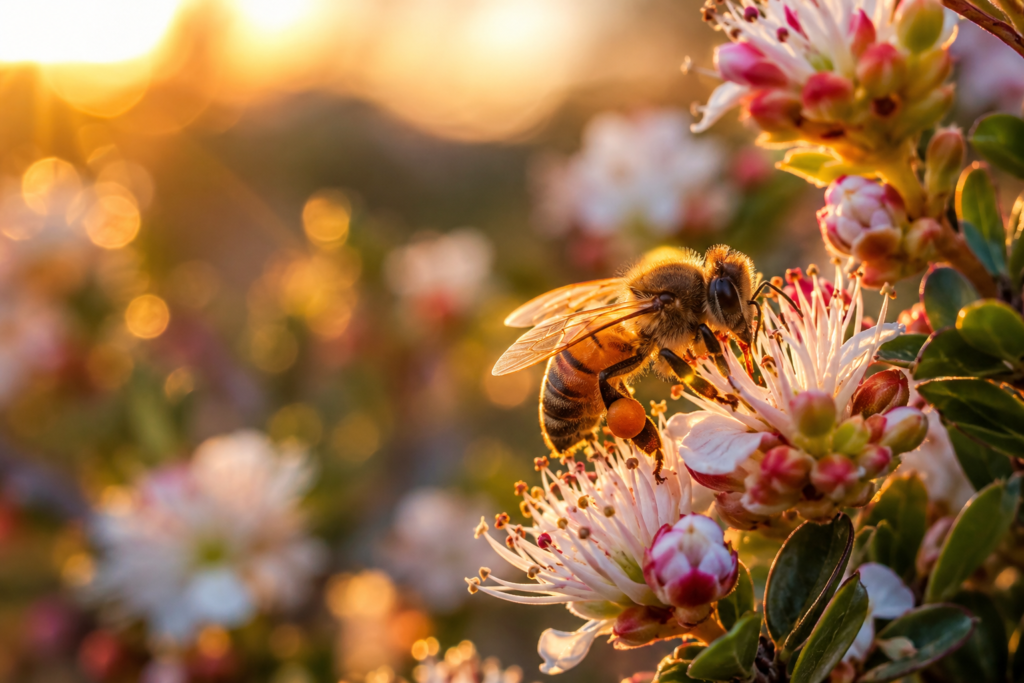
Unlike animals, plants cannot walk towards a mate. Instead, they rely on outside forces to move pollen from one flower to another. Some species depend upon wind, while others use water. But approximately three-quarters of the world’s flowering plants rely, at least partly, on animals to transfer pollen.
That simple process drives much of life on Earth.
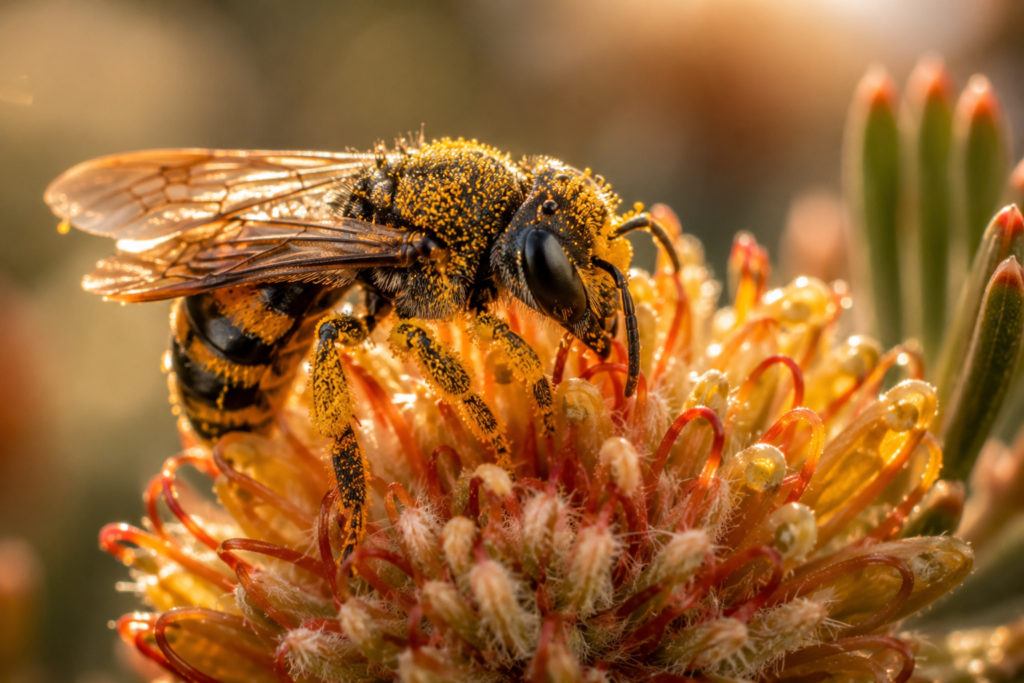
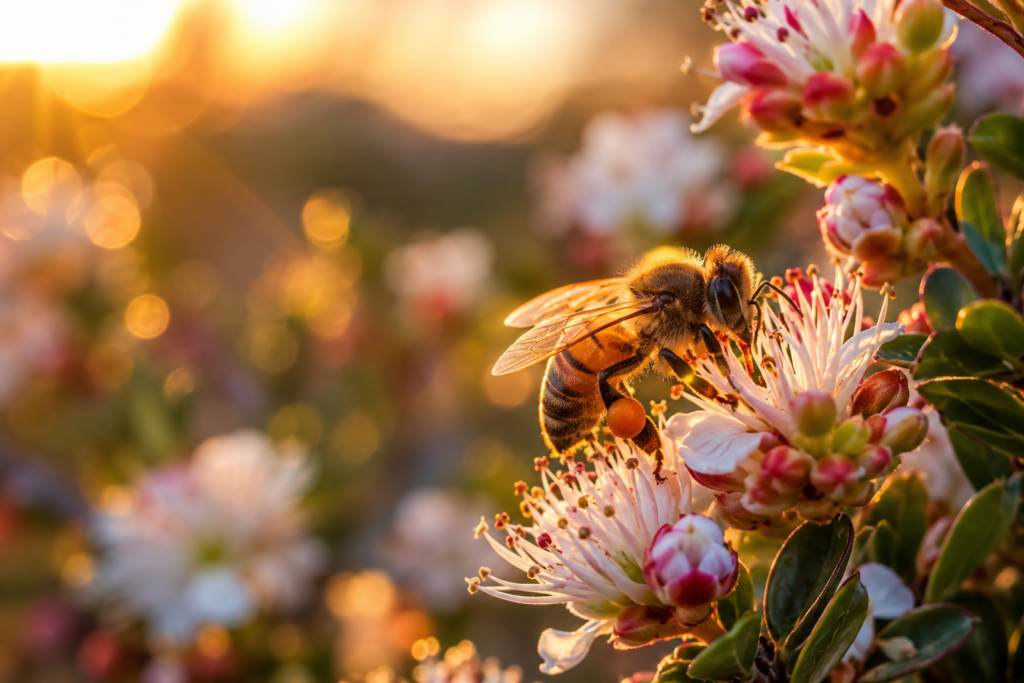
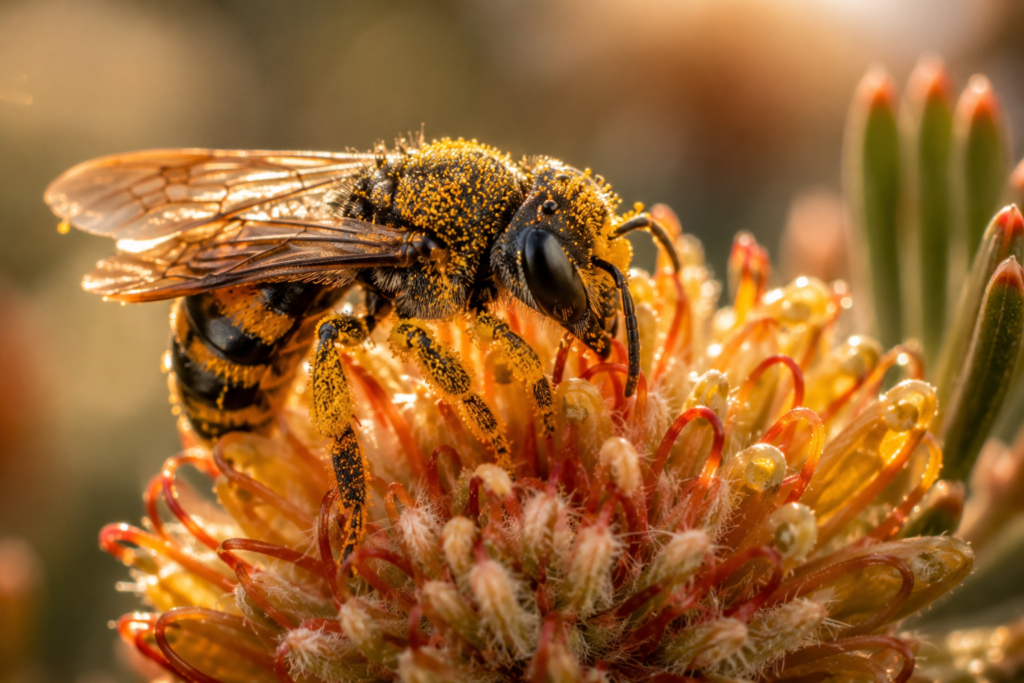
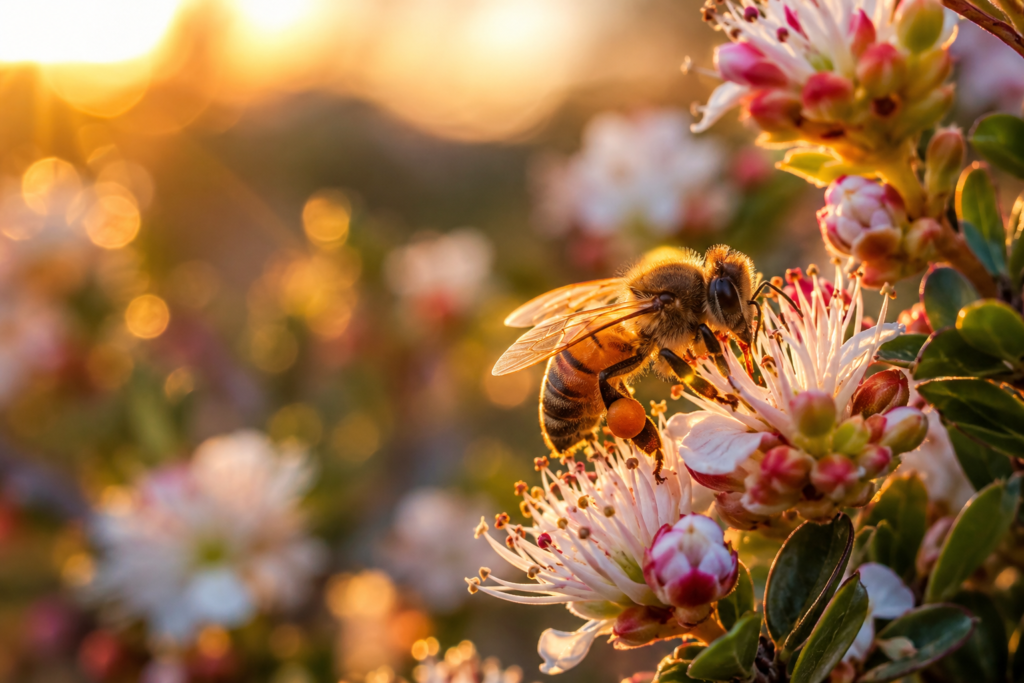
When a bee visits a flower searching for nectar or pollen, tiny grains of pollen stick to its body. As the bee visits another flower of the same species, some of that pollen rubs off onto the flower’s reproductive structures, allowing fertilisation to occur. Seeds develop. Fruits form. New plants grow.
This interaction has been evolving for well over 100 million years.
Many flowering plants and their pollinators have evolved together so closely that each depends upon the other for survival. Some flowers produce colours only certain insects can detect. Others bloom at precise times of year when their preferred pollinators become active. Some emit fragrances at night specifically to attract moths or bats.
These relationships represent some of evolution’s most remarkable partnerships.
More Than Just Honey Bees
Ask most people to name a pollinator and they immediately think of the European honey bee.
That isn’t surprising.
Honey bees produce honey, live in large colonies, and have become symbols of environmental conservation worldwide. They also pollinate numerous agricultural crops and contribute billions of dollars to global food production each year.
Yet honey bees tell only a small part of the story.
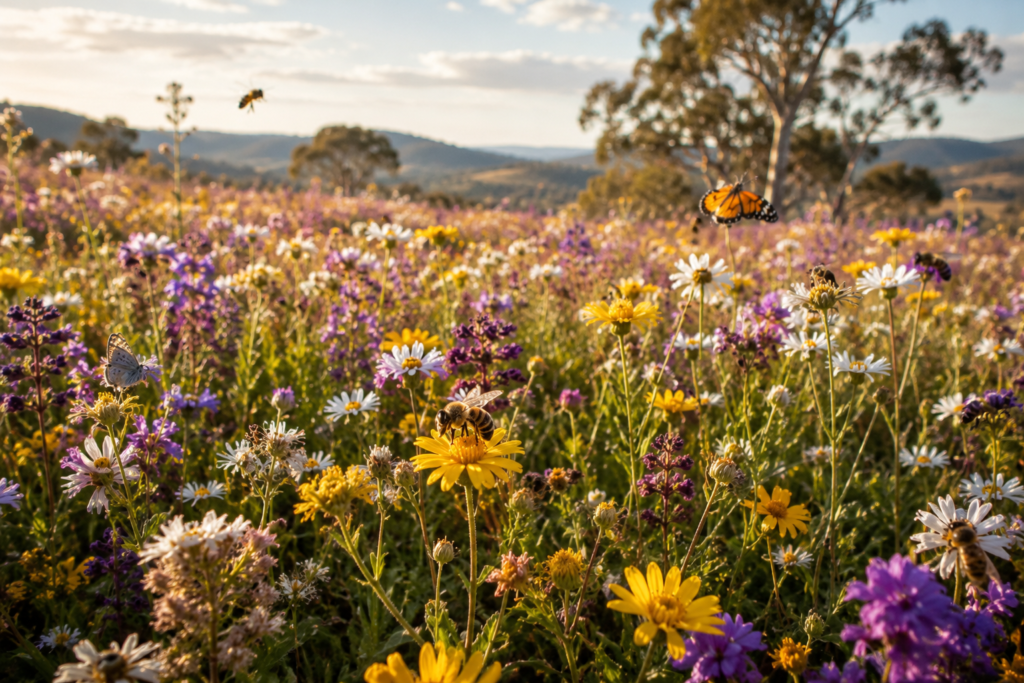
Scientists estimate there are more than 20,000 species of bees worldwide, many of which live completely solitary lives. Unlike honey bees, solitary bees do not produce honey or build large hives. A single female often constructs her own nest underground, inside hollow stems, or within small holes in timber before collecting pollen to feed her offspring.
Australia alone is home to approximately 2,000 native bee species.
Many people never notice them.
Some are metallic green or brilliant blue. Others are barely larger than a grain of rice. Some specialise in pollinating only a handful of plant species, while others visit hundreds of different flowers throughout the year.
Many native bees are actually more efficient pollinators than honey bees for particular Australian plants because they evolved alongside them over millions of years.
And bees are only the beginning.
Butterflies pollinate flowering shrubs across grasslands. Hoverflies visit thousands of blossoms while their larvae consume agricultural pests such as aphids. Beetles pollinated some of the earliest flowering plants long before bees evolved. Wasps, moths, birds, bats, and even small mammals contribute to pollination in ecosystems across the globe.
Nature spreads its risk.
Rather than relying upon one pollinator, many ecosystems depend upon hundreds of different species performing similar roles.
Why Pollinators Matter to Everyone
It is easy to think of pollination as something that only concerns farmers or beekeepers.
In reality, almost everyone depends upon pollinators every single day.
Around one-third of the world’s food production relies directly or indirectly on animal pollination. Apples, almonds, blueberries, avocados, pumpkins, cucumbers, cherries, coffee, cocoa, melons, tomatoes, and countless other crops all benefit from pollinating animals.
Even foods that do not require pollination often depend upon pollinated plants somewhere within the production system.
Livestock consume forage plants that rely upon pollinators. Native vegetation surrounding farms supports healthy soils, regulates water, and provides habitat for beneficial insects.
Pollinators therefore contribute not only to food quantity but also to food diversity.
Without them, supermarket shelves would look very different.
Many fruits would become scarcer and more expensive. Vegetable production would decline. Diets would become less nutritious as foods rich in vitamins, minerals, and antioxidants became increasingly difficult to produce.
The consequences extend well beyond agriculture.
Approximately 90% of wild flowering plants depend to some extent on animal pollination. Those plants provide food and shelter for birds, mammals, reptiles, insects, and countless other organisms.
When pollination declines, entire ecosystems can begin changing.
The Rise of Colony Collapse Disorder
Perhaps no event brought pollinator decline into public awareness more than Colony Collapse Disorder, commonly abbreviated as CCD.
Beginning in the mid-2000s, beekeepers in North America and parts of Europe reported a strange phenomenon.
Worker bees were disappearing.
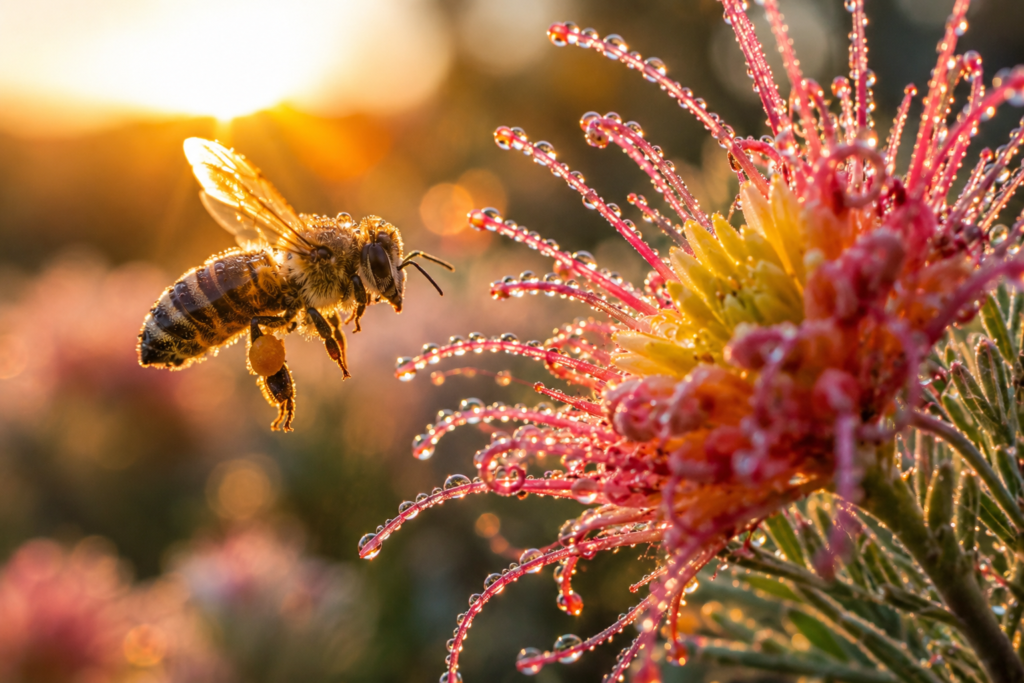
Healthy-looking hives suddenly contained queens, immature bees, and food reserves—but very few adult workers. Without enough workers to collect food and care for developing larvae, colonies often collapsed completely.
Scientists launched one of the largest investigations into honey bee health ever undertaken.
Initially, researchers searched for a single cause.
Perhaps a virus.
Perhaps pesticides.
Perhaps a fungal disease.
Perhaps parasites.
Instead, the evidence suggested something much more complicated.
Honey bee declines appear to result from multiple interacting stressors rather than one single problem.
Parasitic Varroa mites weaken colonies while spreading viruses. Poor nutrition reduces immune function. Certain pesticides may affect navigation or behaviour under particular conditions. Habitat loss decreases food availability. Climate change alters flowering times.
Each pressure alone might be manageable.
Together they become far more challenging.
Today, many scientists no longer view Colony Collapse Disorder as one unique disease but rather as part of a broader decline in pollinator health driven by numerous interacting environmental pressures.
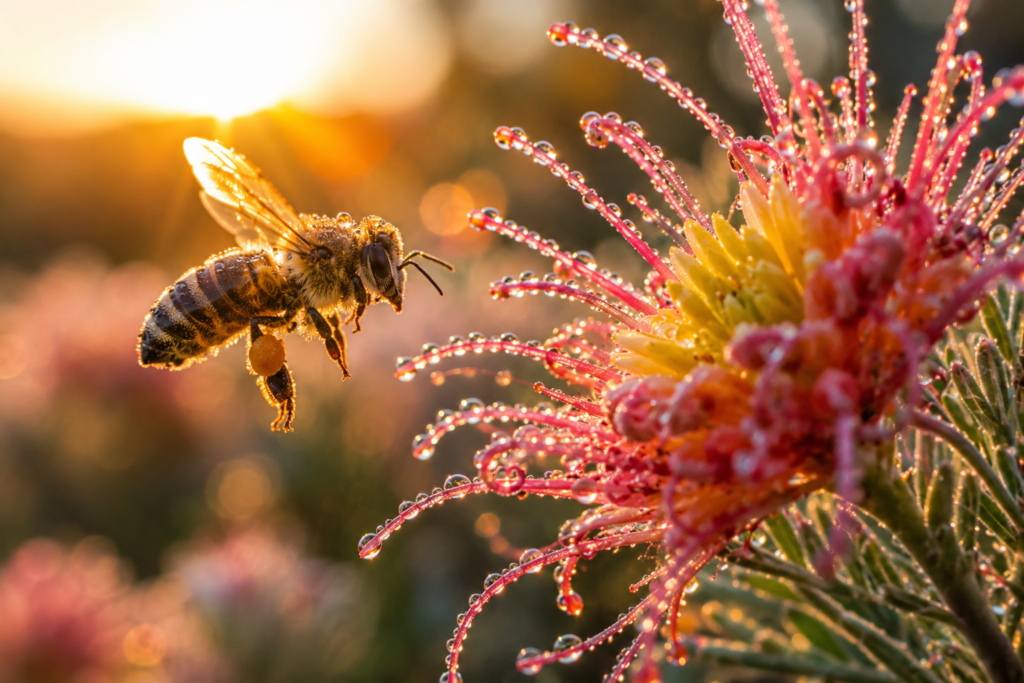
It’s Not Just Honey Bees That Are Declining
While honey bees often dominate headlines, researchers have become increasingly concerned about wild pollinators.
Unlike managed honey bee colonies, wild insects cannot simply be replaced by purchasing another hive.
If a local native bee disappears, it may be gone permanently.
Long-term monitoring has revealed declines in many groups across different parts of the world.
Some butterfly populations have shrunk dramatically as native grasslands disappeared beneath agriculture and urban development.
Certain bumblebee species have retreated towards cooler climates as temperatures increased.
Specialist bees that depend upon only one or two flowering plants have become particularly vulnerable when those plants decline.
The problem is not universal.
Some pollinator species remain stable or have even expanded into new regions.
However, the overall trend concerns scientists because many declines are occurring simultaneously across unrelated groups living in completely different ecosystems.
This pattern strongly suggests broad environmental change rather than isolated local problems.
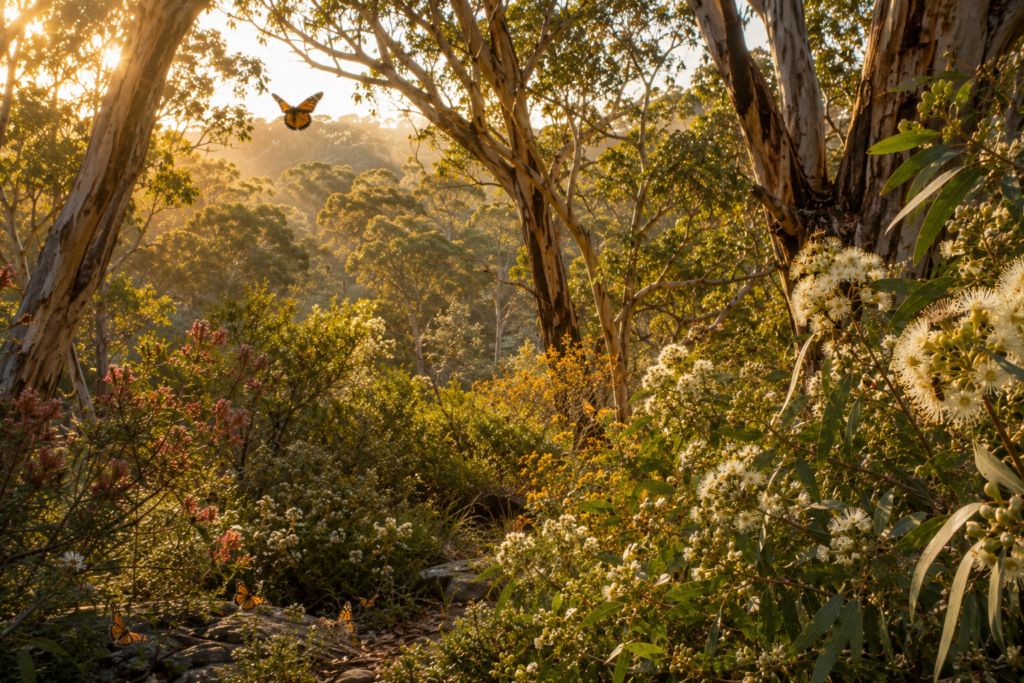
A World Losing Its Wildflowers
One of the biggest drivers of pollinator decline is also one of the easiest to overlook.
Habitat.
Every pollinator needs three basic things.
Food.
Shelter.
Places to reproduce.
Modern landscapes increasingly provide fewer of these resources.
Native grasslands become housing developments.
Woodlands become farmland.
Roadside wildflowers disappear beneath regular mowing.
Even well-maintained gardens often contain large areas of lawn with relatively few flowering plants.
To people, these changes may appear minor.
To a bee that flies only a few hundred metres during its lifetime, they can mean the difference between survival and starvation.
Imagine trying to survive in a city where every supermarket gradually disappeared.
That is effectively what happens when flowering plants vanish from the landscape.
The result is not always immediate.
Pollinator populations may decline slowly over years as fewer young survive each generation.
Eventually, entire communities begin changing.
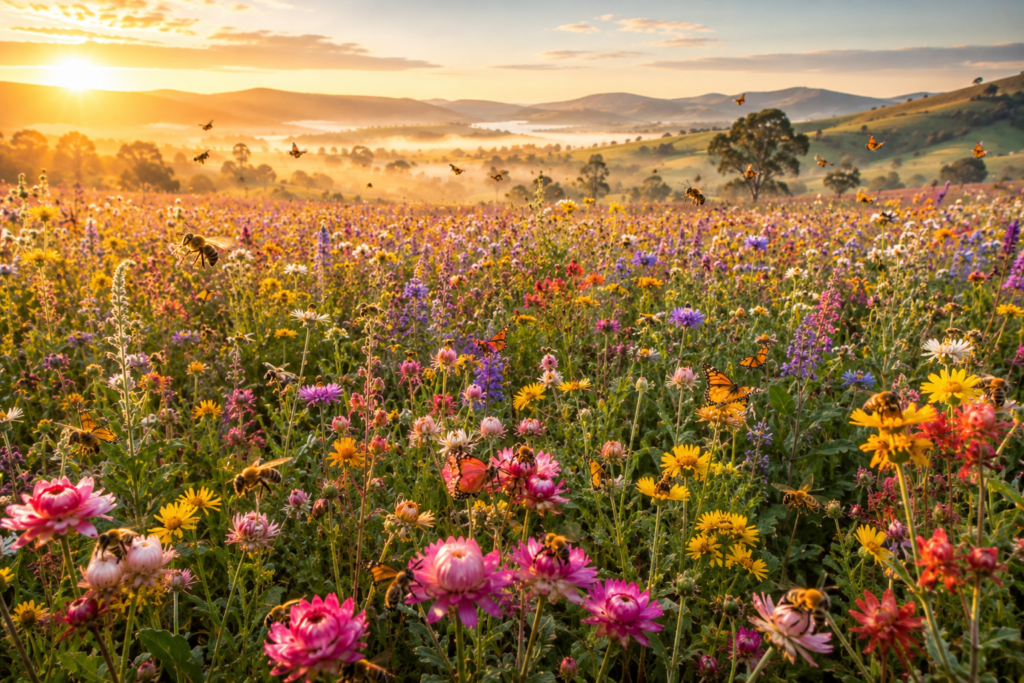
Pollination Is an Ecological Network
Perhaps the most important lesson emerging from modern research is that pollination is not simply a relationship between one bee and one flower.
It is an enormous ecological network.
One flowering shrub may support dozens of insect species.
Those insects feed birds.
Birds disperse seeds.
Plants stabilise soils.
Healthy soils store water.
Water supports forests.
Forests regulate climate.
Every connection influences another.
When scientists study pollinator decline today, they increasingly examine entire ecosystems rather than individual species.
Protecting pollinators means protecting landscapes.
And protecting landscapes ultimately benefits everything that depends upon them—including us.
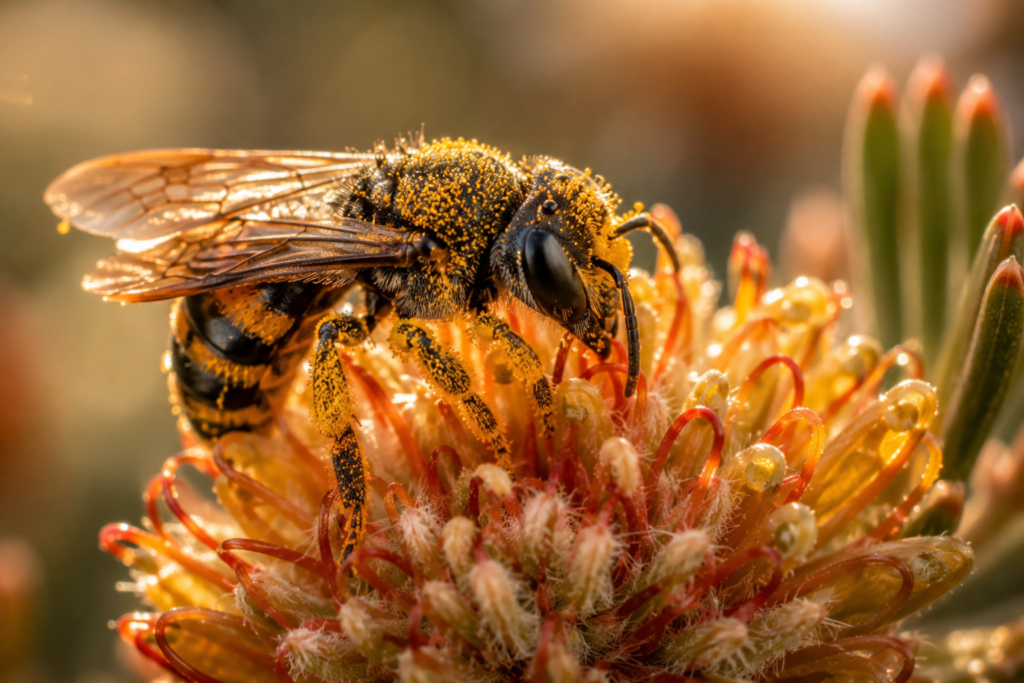
A Thousand Small Pressures
When people first hear about pollinator decline, they often ask a simple question:
“What’s causing it?”
Scientists have spent decades trying to answer exactly that. Early research searched for a single culprit—a pesticide, disease, or environmental change that could explain the disappearance of bees and other pollinators. The more researchers investigated, however, the clearer it became that there wasn’t one answer.
Instead, pollinators are facing what ecologists describe as multiple interacting stressors. Habitat loss, pesticides, parasites, climate change, invasive species, pollution, and changing land management practices all place pressure on pollinator populations. Individually, many species can cope with one or two of these challenges. Together, however, the combined effects can overwhelm even resilient populations.
Imagine trying to stay healthy while simultaneously losing your home, finding less food, catching repeated illnesses, and living through increasingly unpredictable weather. Each challenge makes dealing with the next one even harder.
That is increasingly the reality facing pollinators across many parts of the world.
The Disappearing Landscape
One of the greatest threats facing pollinators is surprisingly simple.
There are fewer places left for them to live.
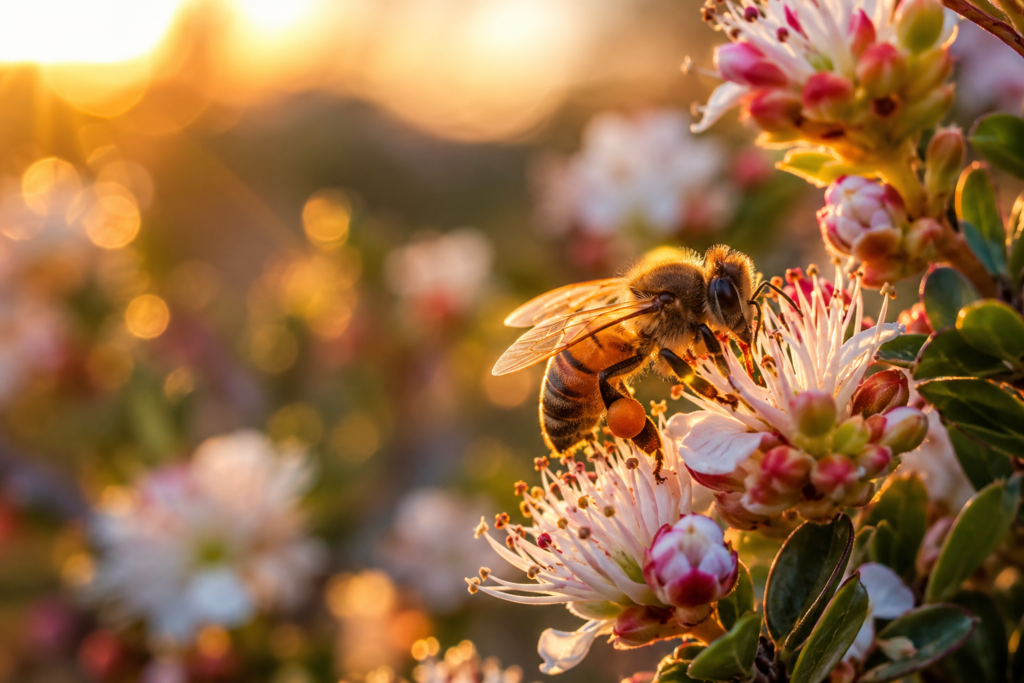
Over the past century, cities have expanded, farmland has intensified, and natural vegetation has become increasingly fragmented. Fields that once contained flowering native plants throughout the year have often been converted into single-crop landscapes where food is abundant for only a few weeks before disappearing completely.
For a honey bee colony capable of flying several kilometres, this may simply mean travelling further to collect nectar.
For many native bees that rarely travel more than a few hundred metres, it can be devastating.
Many solitary bees spend their entire lives within remarkably small areas. If flowering plants disappear from those landscapes, they often cannot simply relocate somewhere else.
Roadside vegetation provides a good example of how important even small habitats can be.
To drivers, a strip of flowering native plants beside a highway may seem insignificant.
To pollinators, it may function as a critical corridor connecting isolated patches of habitat, allowing insects to move safely across fragmented landscapes.
These small patches often become ecological lifelines.
The Role of Pesticides
Few topics surrounding pollinator conservation generate as much discussion as pesticides.
Modern agriculture depends upon effective pest management to produce reliable food supplies, yet some pesticides can also affect beneficial insects if used incorrectly or under certain conditions.
One group of chemicals, known as neonicotinoids, has received particular scientific attention over the past two decades.
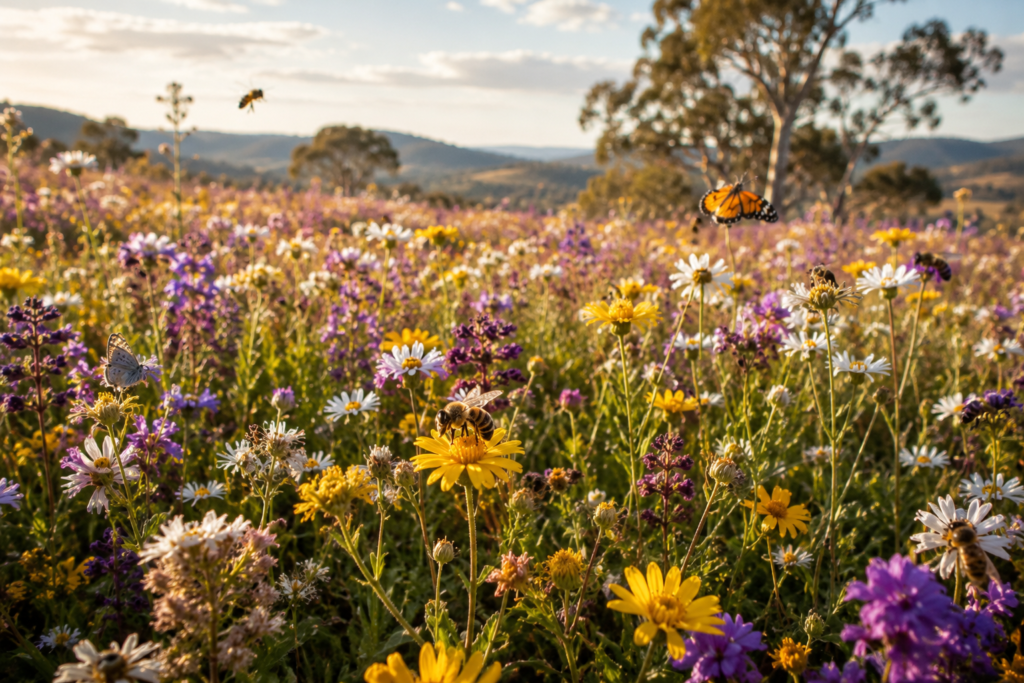
These insecticides are absorbed throughout plant tissues, meaning they can occur in pollen and nectar collected by pollinators. Laboratory studies have shown that exposure to certain concentrations may influence navigation, learning, reproduction, or immune function in some bee species.
The picture becomes more complicated in natural environments.
Field studies have produced mixed results because real ecosystems contain countless interacting variables including weather, habitat quality, nutrition, disease, and differences between species.
Rather than identifying pesticides as the sole cause of pollinator decline, many researchers now consider them one important stressor operating alongside several others.
Good land management increasingly focuses on balancing crop protection with pollinator conservation through careful application timing, targeted treatments, and maintaining flowering habitat around agricultural landscapes.
Tiny Parasites with Enormous Consequences
One of the greatest challenges facing managed honey bees comes from an organism barely visible to the naked eye.
The Varroa destructor mite.
Originally associated with Asian honey bees, Varroa mites spread internationally during the twentieth century and now represent one of the most significant threats to honey bee colonies worldwide.
The mites attach themselves to developing bees, feeding on body tissues while transmitting viruses that weaken colonies.
A healthy hive may tolerate low numbers of mites for some time.
As mite populations increase, however, viruses spread more rapidly, worker bees become weaker, and colony survival declines dramatically.
Beekeepers around the world now spend enormous effort monitoring and managing Varroa infestations.
Australia remained remarkably free of Varroa for decades, but recent detections have highlighted just how important ongoing surveillance and management will be for protecting managed honey bee populations into the future.
Climate Change Is Changing the Seasons
Climate has always influenced pollinators.
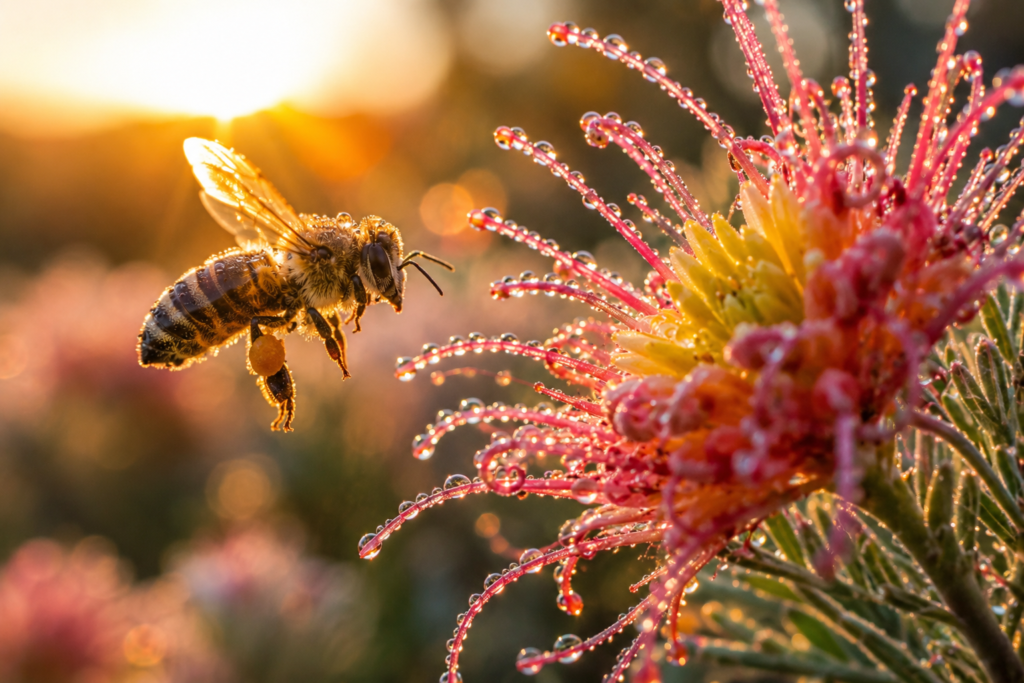
Flowers bloom in response to rainfall, temperature, and day length. Bees emerge when food becomes available. Birds migrate according to seasonal resources.
For millions of years these events have remained broadly synchronised.
Climate change is beginning to alter those relationships.
In some regions, warmer temperatures cause certain plants to flower earlier than usual.
If pollinators do not emerge at the same time, flowers may bloom before enough insects are available to pollinate them.
Likewise, insects emerging too early may find very few flowers providing nectar.
Scientists refer to these mismatches as phenological shifts.
Although many species demonstrate remarkable flexibility, long-term mismatches could gradually influence both plant reproduction and pollinator survival.
Climate change also increases the frequency of heatwaves, droughts, floods, and severe storms, each capable of temporarily reducing flowering resources or damaging nesting habitat.
Australia’s Forgotten Pollinators
When Australians think about pollinators, honey bees usually receive most of the attention.
Yet many native ecosystems evolved long before European honey bees arrived.
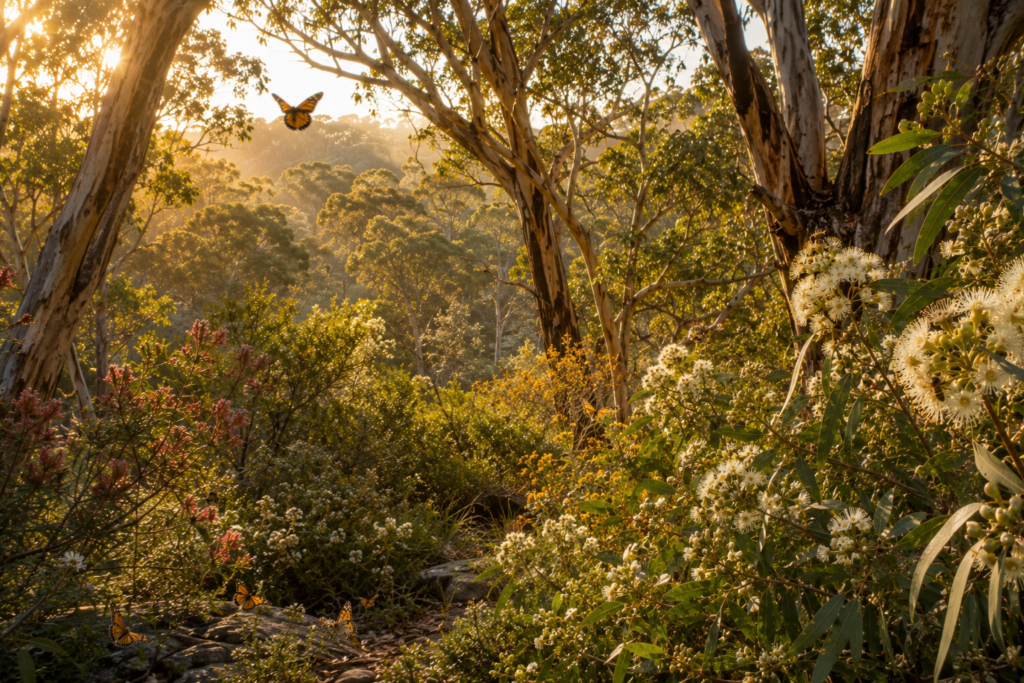
Australia’s native plants were originally pollinated by an extraordinary variety of local insects, birds, bats, and mammals.
Blue-banded Bees vibrate flowers to release pollen through a process known as buzz pollination.
Tiny Stingless Bees pollinate rainforest plants throughout northern Australia.
Hoverflies quietly move between wildflowers while also controlling agricultural pests during their larval stages.
Butterflies transport pollen across grasslands.
Even beetles continue pollinating some of Australia’s oldest flowering plant lineages.
Perhaps the most famous Australian pollinators are the honeyeaters.
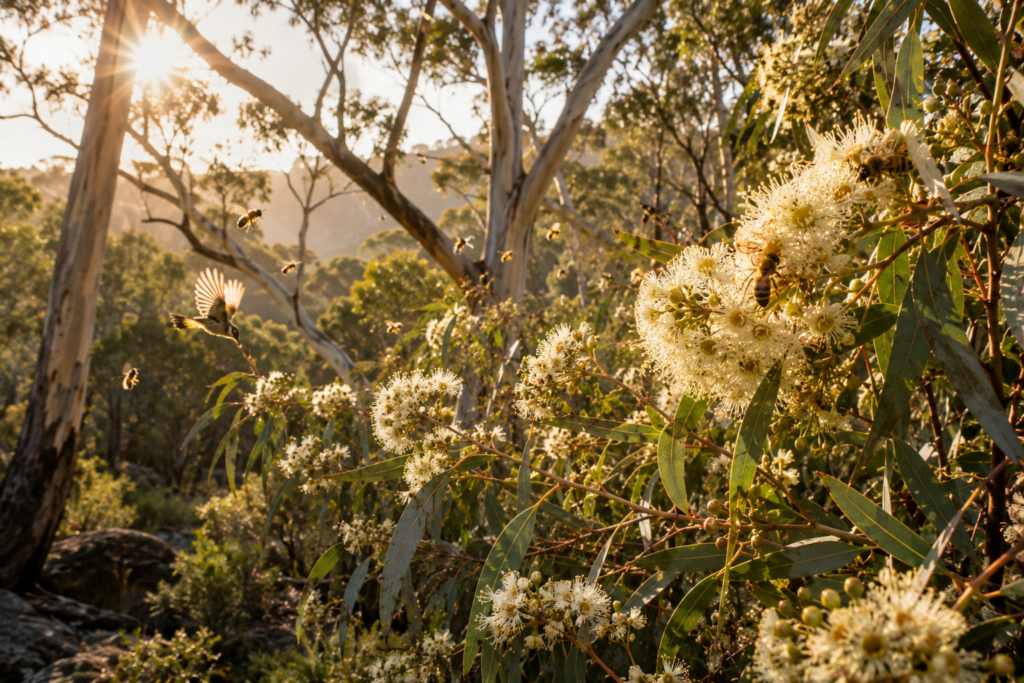
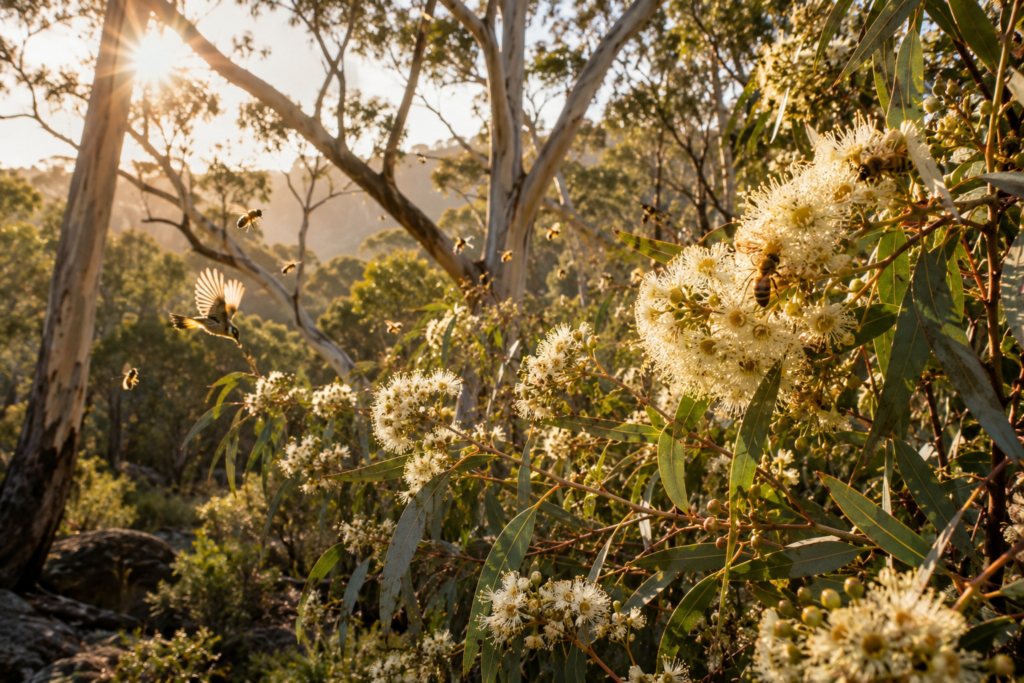
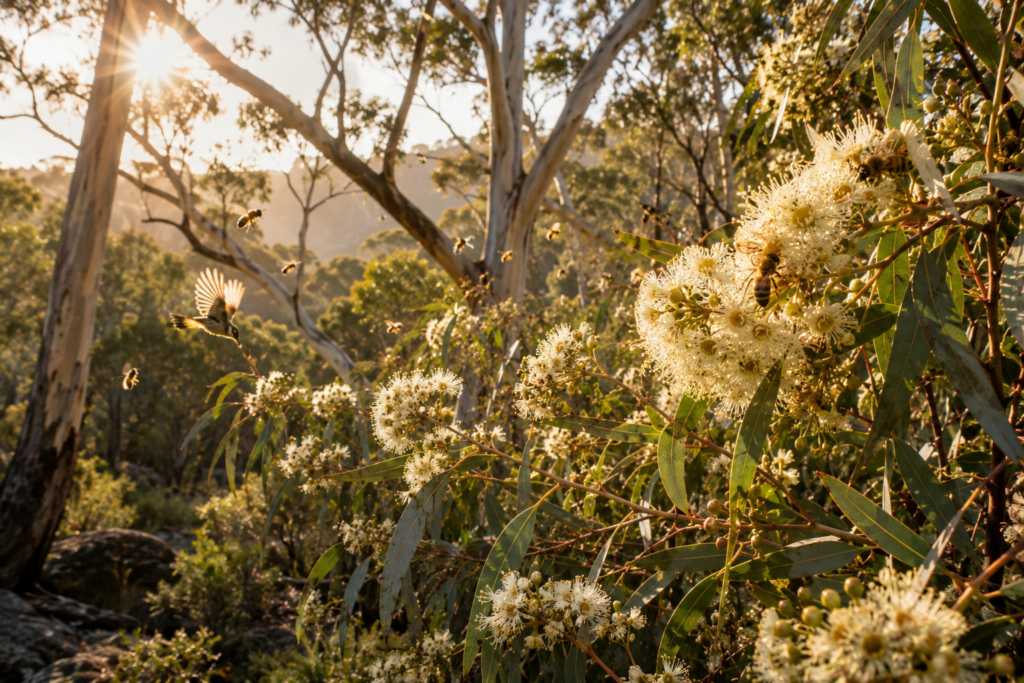
These energetic birds move between flowering eucalyptus trees, banksias, grevilleas, bottlebrushes, and countless other native plants, carrying pollen on their heads and feathers as they feed on nectar.
Flying foxes perform similar roles at night, pollinating many flowering trees while dispersing seeds over enormous distances.
Every one of these species contributes to ecosystem health.
Why Diversity Makes Ecosystems Stronger
Nature rarely relies upon only one pollinator.
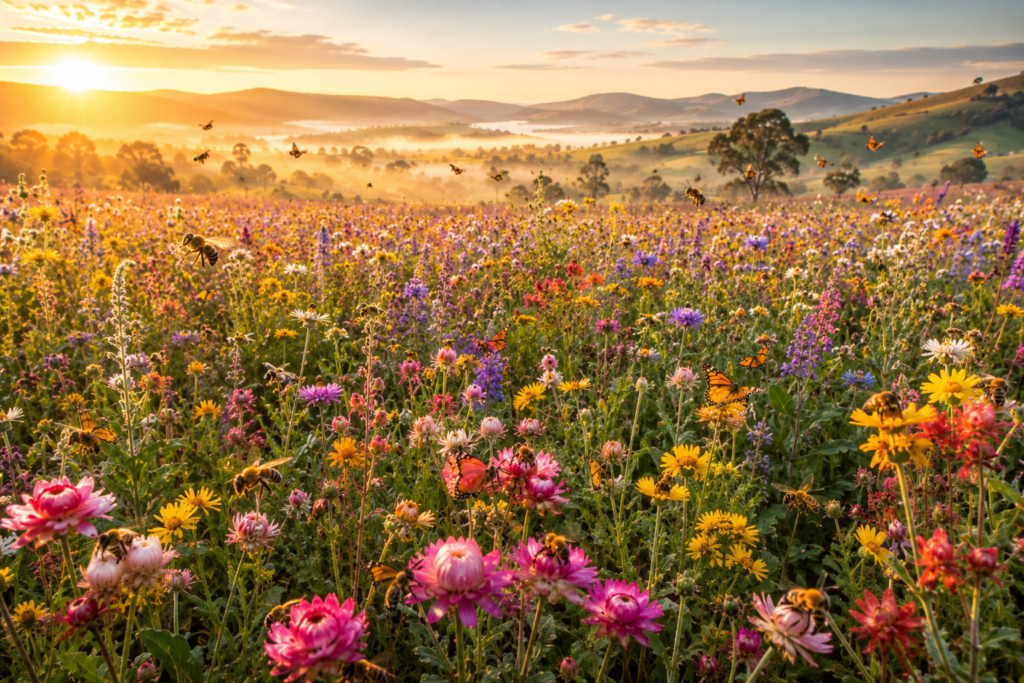
A single flowering tree may attract bees during the morning, butterflies through the afternoon, birds throughout the day, and moths after sunset.
This diversity provides resilience.
If poor weather temporarily reduces bee activity, birds or flies may continue pollinating flowers.
If one pollinator species declines, others may partially compensate.
Ecologists often describe this as ecological redundancy.
Different species perform similar ecological functions, helping ecosystems remain stable despite changing conditions.
The loss of biodiversity therefore reduces more than simply species numbers.
It reduces resilience itself.
Healthy ecosystems are not built upon individual organisms.
They are built upon countless overlapping relationships.
What Scientists Are Learning
One encouraging development is that pollinator research has expanded enormously over the past two decades.
Advanced tracking technologies now allow researchers to follow individual bees as they move through landscapes.
Genetic analysis helps scientists understand how isolated populations remain connected.
Satellite imagery identifies habitat changes across entire regions.
Artificial intelligence assists researchers in automatically identifying insects from photographs and monitoring pollinator activity using acoustic recordings.
These technologies reveal encouraging news alongside the challenges.
Pollinator populations often respond remarkably quickly when habitat improves.
Restored wildflower meadows attract insects within only a few years.
Roadside native vegetation supports surprisingly diverse bee communities.
Urban gardens planted with flowering native species can become valuable refuges.
Nature demonstrates extraordinary resilience when given suitable conditions.
Learning From Pollinators
One of the easiest ways to begin appreciating pollinators is simply to spend more time observing them.
A flowering garden quickly reveals dozens of different species that many people previously overlooked.
The National Geographic Bug Catcher & Viewer provides a fun way for families to safely observe insects before releasing them unharmed, helping children develop curiosity rather than fear about the tiny animals supporting our ecosystems.
For those wanting to identify bees, butterflies, beetles, and flies more accurately, The Australian Insect Guide introduces many of the remarkable pollinators found throughout the country and explains their ecological roles.
Creating pollinator habitat at home is equally rewarding. The MIXC Seed Starter Tray Kit with Humidity Dome makes it easy to grow native flowering plants from seed, providing nectar and pollen for local bees, butterflies, and other beneficial insects while contributing to biodiversity in even small urban gardens.
Perhaps the greatest lesson pollinators teach us is that ecosystems depend upon cooperation.
Every flower visited, every grain of pollen transferred, and every seed produced becomes another small connection holding the natural world together.
When those connections weaken, entire ecosystems begin feeling the effects.
Fortunately, they can also recover.
And that is where the next chapter of this story begins.
Hope for Pollinators
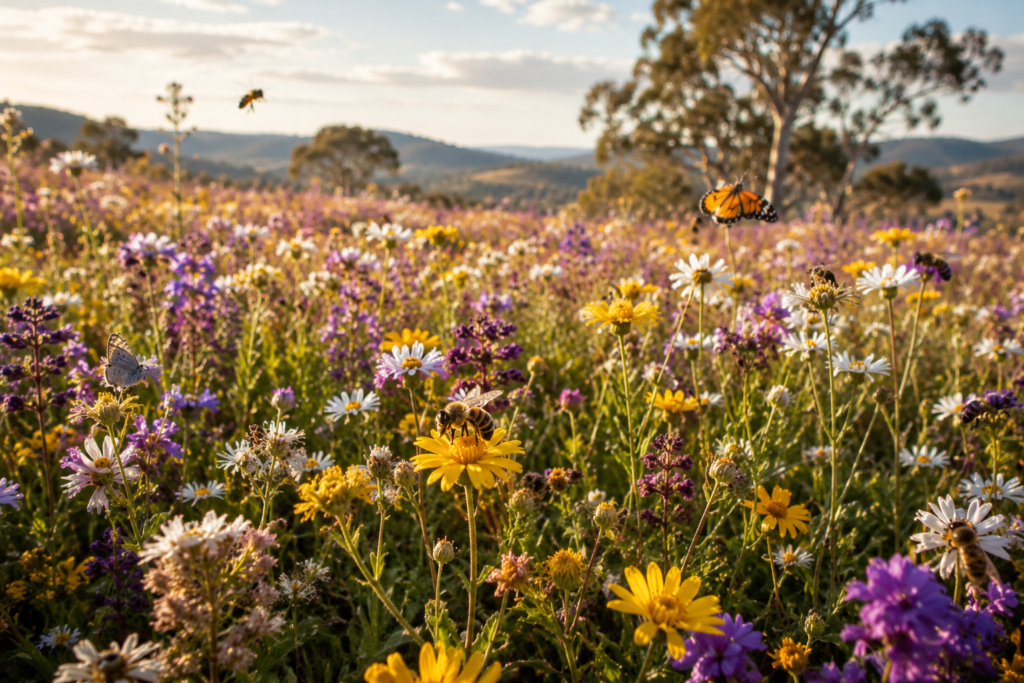
With so much attention focused on declining pollinator populations, it is easy to assume the situation is hopeless. Fortunately, that isn’t what the science shows.
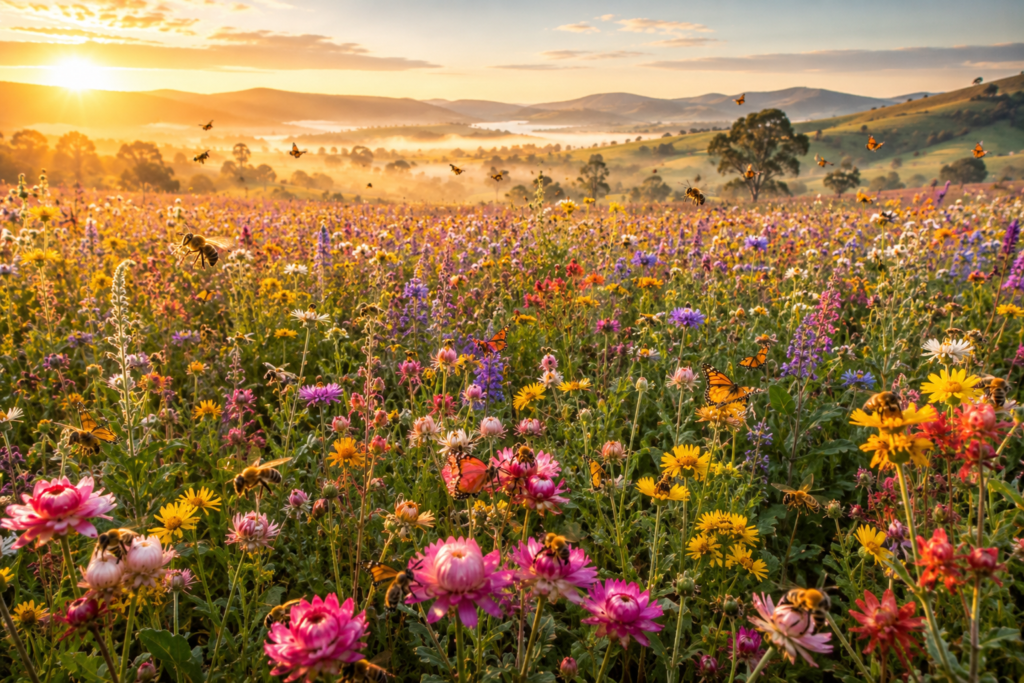
Around the world, researchers are documenting encouraging examples of pollinator recovery where habitats have been restored and landscapes managed with biodiversity in mind. Native wildflower meadows are returning to farmland across Europe. Urban parks are being redesigned with flowering plants that bloom throughout the year. Roadside revegetation projects are creating vital habitat corridors, while conservation groups are restoring wetlands, woodlands, and grasslands that support thousands of pollinating species.
These projects demonstrate an important ecological principle.
Pollinators are remarkably resilient.
Given suitable habitat, abundant flowering plants, safe nesting sites, and reduced environmental pressures, many populations can recover surprisingly quickly. Unlike ancient forests that may require centuries to regenerate, insects often respond within only a few seasons when conditions improve.
That resilience gives scientists reason for optimism.
Why Native Plants Matter
One of the biggest lessons emerging from pollinator research is the importance of native vegetation.
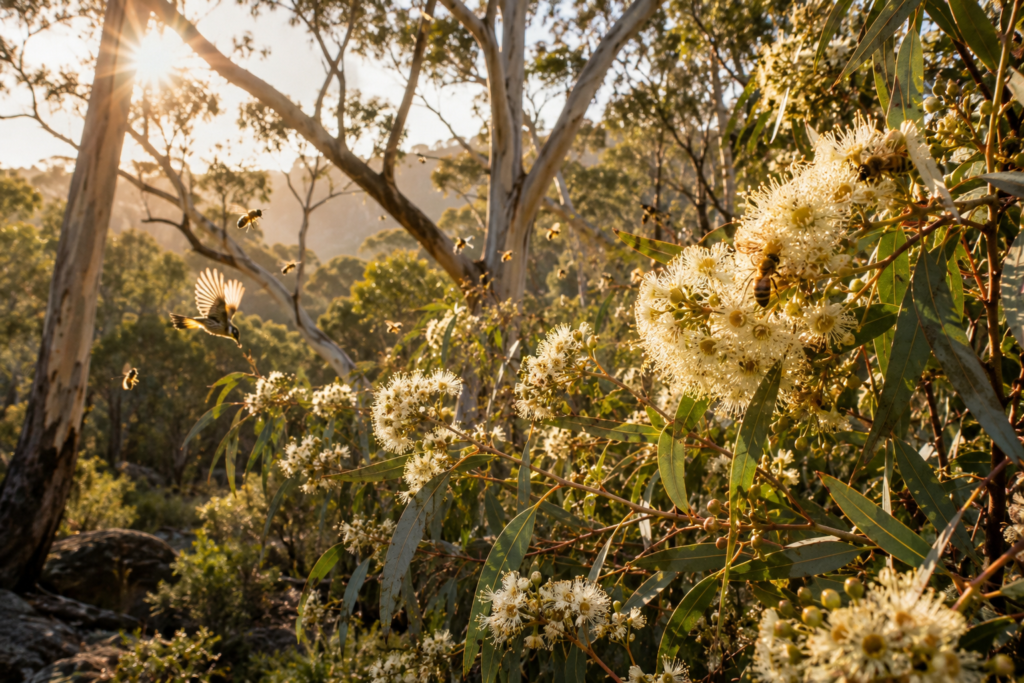
Many pollinators evolved alongside particular plant communities over millions of years. Native flowers provide nectar, pollen, fragrances, colours, and flowering schedules that local insects recognise and depend upon.
Some Australian native bees collect pollen from only a small number of plant species. If those plants disappear, the bees may struggle to survive. Likewise, certain butterflies rely upon particular native grasses or shrubs as food for their caterpillars.
Planting native species therefore supports far more biodiversity than simply increasing the number of flowers.
A small garden filled with local native plants can become an important food source for bees, butterflies, hoverflies, beetles, and nectar-feeding birds. Even balconies, courtyards, schools, and community gardens can provide valuable habitat when planted thoughtfully.
Collectively, thousands of small gardens can create significant networks of pollinator habitat across entire cities.
The Power of Connected Landscapes
Conservation scientists increasingly emphasise that protecting isolated nature reserves is no longer enough.
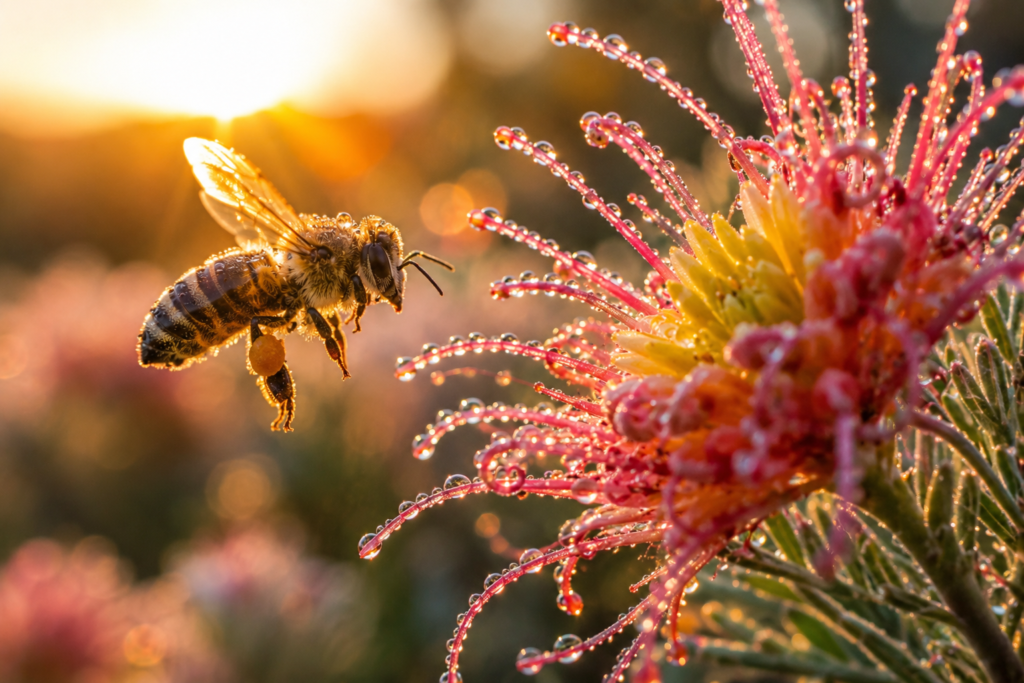
Pollinators move through landscapes rather than remaining within single locations. Native bees may forage across nearby bushland, gardens, creek lines, and roadside vegetation during their daily activities.
If these habitats become disconnected, movement becomes increasingly difficult.
Wildlife corridors have therefore become one of the most effective conservation strategies.
These connected strips of vegetation allow insects, birds, mammals, and reptiles to travel safely between larger habitat patches while maintaining healthy genetic diversity within populations.
In agricultural landscapes, flowering shelterbelts and restored creek vegetation provide similar benefits.
Rather than viewing farmland and conservation as competing interests, many land managers now recognise that healthy pollinator populations can improve crop production while simultaneously supporting biodiversity.
What Can Individuals Do?
One of the encouraging aspects of pollinator conservation is that individual actions genuinely matter.
Unlike many global environmental challenges that seem distant or overwhelming, creating pollinator habitat often begins at home.
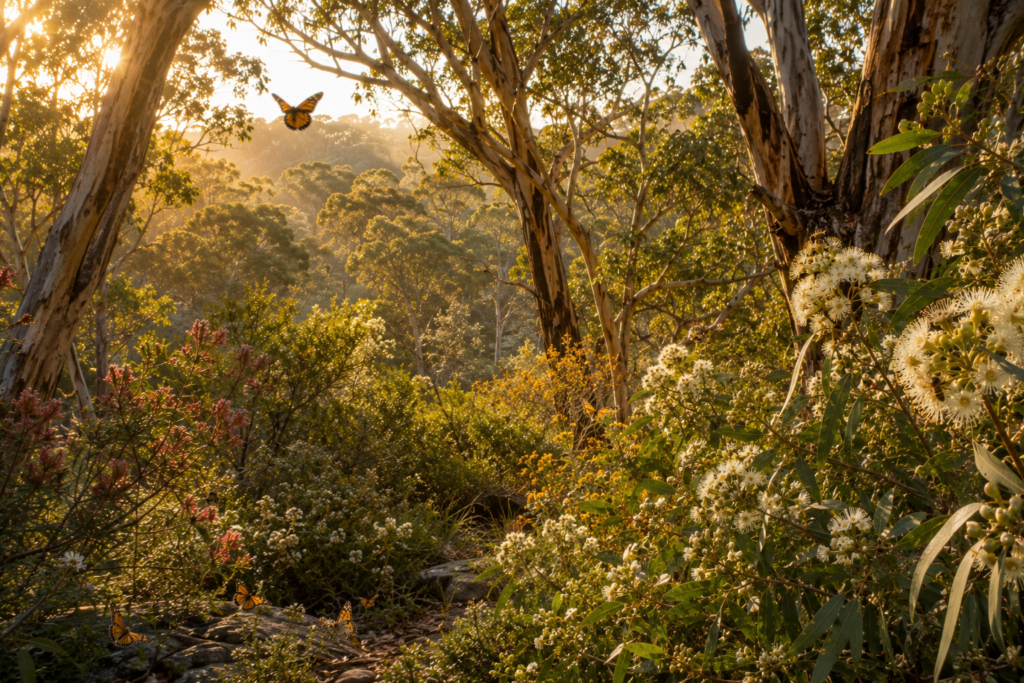
Planting native flowering species that bloom during different seasons provides continuous food throughout the year.
Reducing unnecessary pesticide use helps protect beneficial insects alongside pest species.
Leaving small patches of bare ground allows many solitary native bees to build underground nests.
Dead timber, hollow stems, and leaf litter also provide shelter for countless insects that contribute to healthy ecosystems.
Even something as simple as allowing a section of lawn to flower before mowing can dramatically increase nectar availability for pollinators.
These small changes may appear insignificant individually.
Together, they create landscapes where pollinators can survive and reproduce.
Pollinators and the Future of Food
As the global population continues growing, agriculture faces an enormous challenge.
Food production must increase while simultaneously protecting biodiversity and adapting to climate change.
Pollinators will play a central role in achieving this balance.
Healthy pollinator populations improve yields for many crops while increasing fruit quality, seed production, and genetic diversity. Farmers increasingly recognise that maintaining native vegetation around farms can support pollinator communities that directly benefit agricultural production.
Rather than viewing conservation and farming as opposing goals, many researchers now see them as deeply interconnected.
Protecting biodiversity helps secure future food supplies.
Healthy ecosystems support healthy agriculture.
Learning to See Pollinators Differently
Perhaps the greatest change scientists hope to inspire is a shift in perspective.
For generations, insects were often viewed simply as pests.
Today, ecology paints a very different picture.
A tiny native bee visiting a wildflower may help produce seeds that feed birds months later.
A hoverfly pollinating native shrubs may also reduce crop pests during its larval stage.
A butterfly moving between flowers contributes to genetic diversity across entire plant populations.
Every pollinator becomes another thread within a vast ecological network.
The more closely researchers study these relationships, the more remarkable they appear.
Bringing Nature Closer to Home
Many people discover a lifelong interest in ecology simply by watching pollinators at work.
A guide such as The Australian Native Bee Book introduces readers to the incredible diversity of Australia’s native bees while explaining their behaviour, nesting habits, and ecological importance.
Observing flowers closely quickly reveals an astonishing variety of insects. The National Geographic Dual LED Student Microscope allows curious naturalists to examine pollen grains, bee wings, butterfly scales, and flower structures in remarkable detail, revealing a hidden world invisible to the naked eye.
For gardeners wanting to actively support pollinator conservation, the MIXC Seed Starter Tray Kit with Humidity Dome provides an easy way to propagate native wildflowers and shrubs that offer food throughout the year.
Nature photography has also become one of the most effective ways to inspire conservation. The Canon EOS R50 Mirrorless Camera is an excellent choice for photographing bees, butterflies, native flowers, and garden wildlife, helping people document biodiversity while sharing the beauty of pollinators with others.
Spending time outdoors remains one of the simplest ways to appreciate these remarkable animals. Whether exploring national parks or local reserves, carrying the Nikon PROSTAFF P7 8×42 Binoculars makes it easier to observe birds, butterflies, and flowering trees without disturbing them, revealing ecological interactions that often go unnoticed.
A Future Worth Protecting
The story of pollinators is ultimately not a story about honey bees alone.
It is the story of millions of relationships that quietly sustain life across the planet.
Every flowering tree, native wildflower, orchard, woodland, rainforest, and grassland depends upon pollinators in some way. They connect plants with insects, insects with birds, birds with forests, forests with rivers, and ecosystems with people.
Without their daily work, much of the natural world simply would not function as it does today.
The encouraging news is that scientists are not simply documenting decline—they are also discovering solutions.
Restored habitats are bringing insects back.
Native gardens are supporting local biodiversity.
Farmers are working alongside conservationists.
Communities are recognising that protecting pollinators benefits everyone.
The future of pollinators will depend on countless small decisions made across landscapes worldwide.
Planting native flowers.
Protecting woodland.
Restoring wetlands.
Reducing unnecessary pesticide use.
Supporting biodiversity wherever possible.
None of these actions alone will solve the problem.
Together, however, they create something powerful.
They create landscapes where pollinators—and everything that depends on them—can continue thriving.
Perhaps that is the most important lesson pollinators have to teach us.
The natural world has always relied on connection.
Every bee visiting a flower, every butterfly drifting through a meadow, every bird carrying pollen between flowering trees represents another link in an extraordinary ecological network that has evolved over millions of years.
Protecting those connections means protecting the ecosystems that sustain life on Earth—including our own.
The quiet hum of pollinators may seem small, but it is one of the most important sounds in nature.
And ensuring that hum continues into the future is a responsibility shared by us all.