
For centuries, forests were viewed as collections of individual trees competing against one another for sunlight, water, and nutrients. Nature was often imagined as a harsh system driven almost entirely by competition, where only the strongest organisms survived while weaker ones disappeared. But over the past few decades, scientists have uncovered something extraordinary hidden beneath the forest floor — a vast underground network connecting trees, fungi, and entire ecosystems in ways no one fully understood before. Beneath nearly every forest on Earth lies a living web of fungal threads linking plants together through the soil. This hidden system, often referred to as the “Wood Wide Web,” allows trees and fungi to exchange nutrients, water, chemical signals, and even forms of ecological information across surprisingly large distances. Forests are not simply groups of isolated organisms scattered across landscapes. In many ways, they behave more like interconnected living systems, quietly communicating and supporting one another beneath the surface in ways humans are only beginning to understand.
At the centre of this underground system are organisms known as mycorrhizal fungi. The word “mycorrhiza” literally means “fungus-root,” and it describes the intimate partnership between fungi and plant roots. Tiny fungal filaments called hyphae spread through the soil in enormous branching networks, attaching themselves to roots and dramatically increasing a plant’s ability to absorb nutrients and water. In return, plants provide fungi with sugars produced through photosynthesis. For a long time, scientists assumed this relationship was relatively simple — plants feed fungi, fungi help plants gather nutrients. But modern ecological research revealed something far more complex. These fungal networks often connect multiple plants at the same time, allowing resources to move throughout entire ecosystems. One fungal network may link dozens or even hundreds of trees together underground. In some forests, towering mature trees and tiny young seedlings are connected through the same hidden biological infrastructure beneath the soil.
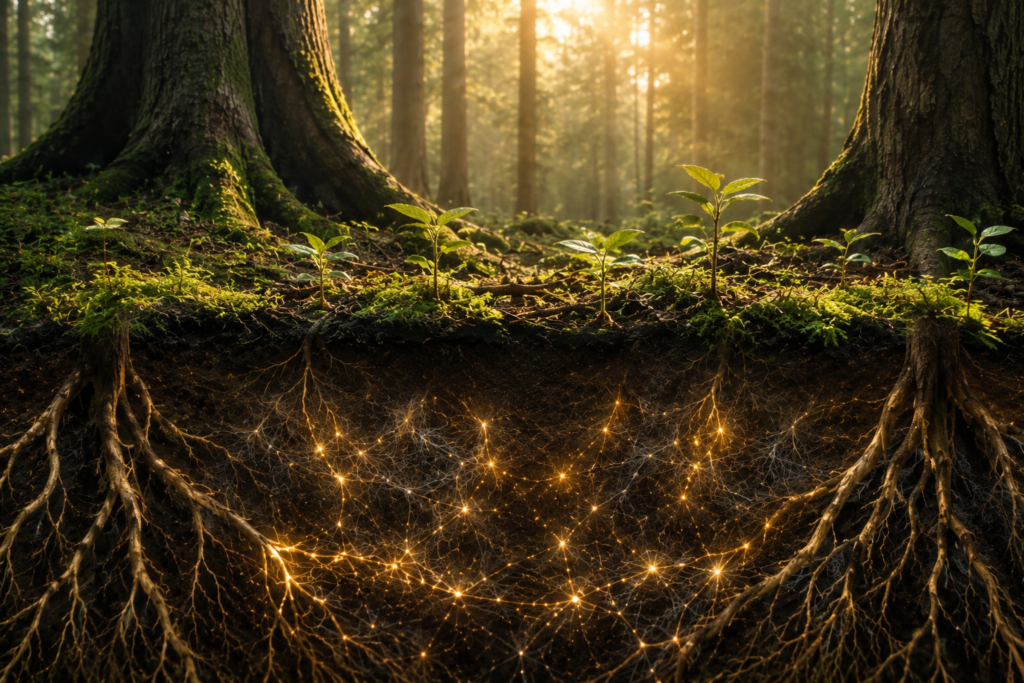
The implications of this discovery are enormous because it changes how scientists understand forest ecosystems entirely. Nutrients can move between plants through fungal pathways. Carbon produced by large trees may be transferred to smaller seedlings growing in deep shade where sunlight is limited. Water and nutrients can move toward stressed plants during difficult environmental conditions. Some studies even suggest that chemical warning signals may spread through these networks when plants are attacked by insects or exposed to disease. The forest may not “communicate” in the conscious human sense, but ecosystems clearly exchange biological information in sophisticated ways. Trees that once appeared isolated are actually participating in deeply interconnected ecological systems shaped by millions of years of evolution. Nature begins to look less like random competition and more like a network of relationships operating quietly beneath the surface.
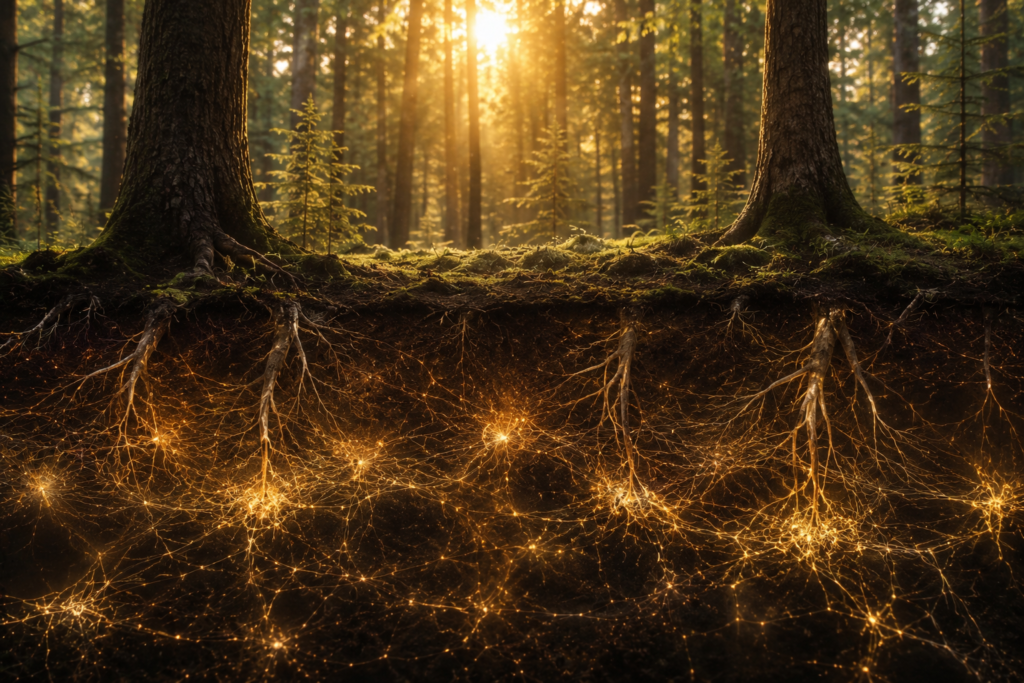
One reason these underground systems remained misunderstood for so long is because fungi themselves are remarkably strange organisms. They are neither plants nor animals, yet they interact closely with both. Most of a fungus exists hidden underground, making it almost invisible despite its enormous ecological importance. Walking through a forest, people notice trunks, leaves, moss, and sunlight filtering through branches, but beneath every step lies a dense living system of roots, microbes, insects, and fungal threads exchanging nutrients and energy continuously. Soil itself transforms from something seemingly lifeless into one of the most biologically active environments on Earth. This hidden complexity becomes surprisingly obvious even in small-scale gardening. People who grow plants often notice that tiny differences in soil moisture dramatically change plant growth and health. A simple tool like the XLUX Soil Moisture Meter quickly reveals how environmental conditions vary beneath the surface, even within the same garden bed or container. In natural forests, these underground differences become amplified across entire ecosystems, influencing biodiversity, nutrient cycling, and ecosystem resilience.
The fungal systems connecting forests are astonishingly efficient. Fungal hyphae are far thinner than plant roots, allowing them to penetrate microscopic spaces in soil that roots cannot reach on their own. Through these tiny networks, fungi gather phosphorus, nitrogen, water, and other nutrients before transporting them directly to plants. Without these partnerships, many forests would struggle to survive. Scientists now believe that most land plants on Earth form some type of mycorrhizal relationship, and these partnerships may have played a critical role when the earliest plants first colonised land hundreds of millions of years ago. Ancient plants attempting to survive in harsh terrestrial environments likely depended heavily on fungi to acquire nutrients from primitive soils. In many ways, forests as humans know them today may never have evolved without fungi. Entire ecosystems are built upon relationships so ancient they predate dinosaurs by hundreds of millions of years.
What makes the underground forest network even more fascinating is that these relationships are not purely cooperative. Nature rarely operates in simple categories of harmony or conflict. Different species compete, exchange resources, manipulate one another, and adapt continuously depending on environmental conditions. Some fungi behave very beneficially toward plants, while others appear more opportunistic. Certain plants may receive more nutrients than others. Large trees can dominate access to resources while still indirectly supporting nearby seedlings. The underground network is not a peaceful utopia hidden beneath forests. It is a dynamic ecological system shaped simultaneously by cooperation, competition, adaptation, and survival. Yet despite this complexity, the overall structure of the network appears to increase ecosystem stability and resilience in remarkable ways.
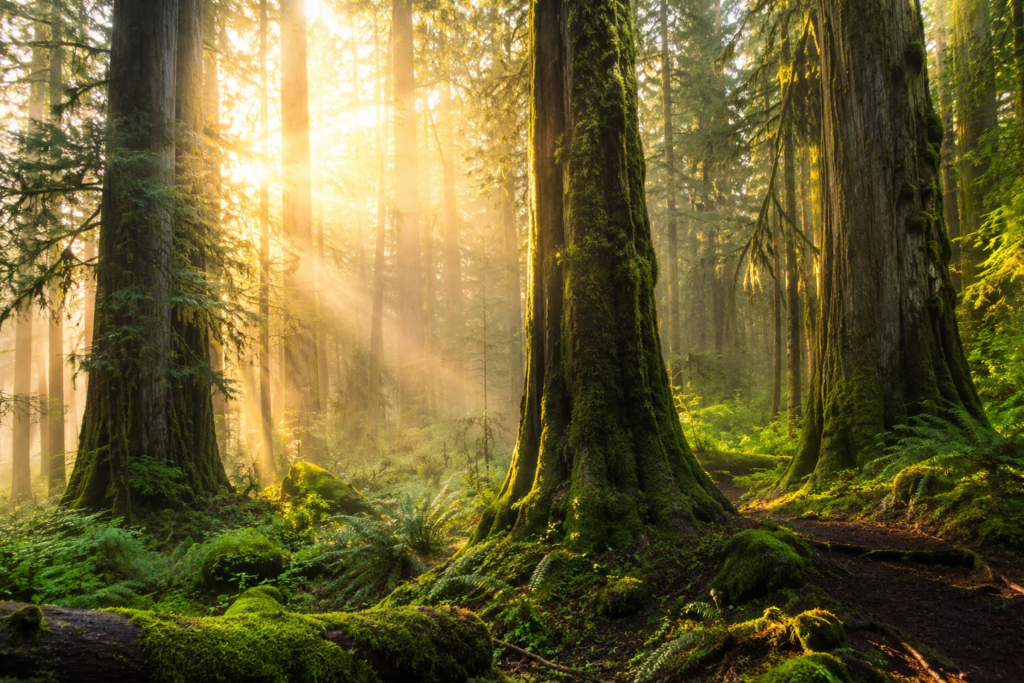
Researchers studying forest ecology discovered that large, mature trees often function as central hubs within fungal systems. Older trees with extensive root systems may connect to many surrounding plants simultaneously, acting as major transfer points for nutrients and carbon. In shaded forests where sunlight barely reaches the ground, young seedlings sometimes survive because fungal networks connect them to larger trees capable of producing excess carbon through photosynthesis. These older trees may indirectly support younger generations through underground pathways, helping maintain forest regeneration over time. This discovery captured public imagination because it made forests appear unexpectedly interconnected and almost social. Scientists are careful not to anthropomorphise ecosystems too heavily, but the ecological relationships themselves are genuinely extraordinary. Forests are far more structurally connected than humans previously realised.
These underground fungal systems may also play an important role in helping forests survive environmental stress. During droughts, fires, disease outbreaks, or climate-driven disturbances, fungal networks can help redistribute water and nutrients across ecosystems. Healthy fungal diversity appears strongly linked to ecosystem resilience. The hidden infrastructure beneath forests functions almost like a biological support system stabilising the ecosystem during periods of stress. This becomes especially important under climate change, where forests worldwide face rising temperatures, changing rainfall patterns, stronger droughts, and increasingly severe wildfires. Scientists are now increasingly concerned that protecting fungal biodiversity may be just as important as protecting the visible trees themselves. Forest conservation is no longer only about preserving what humans can see above ground. It is also about preserving the invisible systems operating beneath the soil.
Climate change threatens these underground systems in multiple ways. Rising temperatures alter soil moisture and microbial activity. Deforestation destroys root-fungal partnerships that may have taken centuries to develop. Pollution changes soil chemistry, disrupting delicate biological relationships. Severe wildfires can damage underground networks responsible for nutrient cycling and forest regeneration. Once disrupted, these systems may recover extremely slowly. This perspective also changes how deforestation is understood. Cutting down forests does not simply remove visible trees. It destroys enormous underground networks supporting biodiversity, resilience, and ecosystem stability. Replanting trees alone may not fully restore forests if the underground fungal systems remain damaged or fragmented. The visible forest canopy represents only part of the ecosystem. Much of the true complexity exists underground.
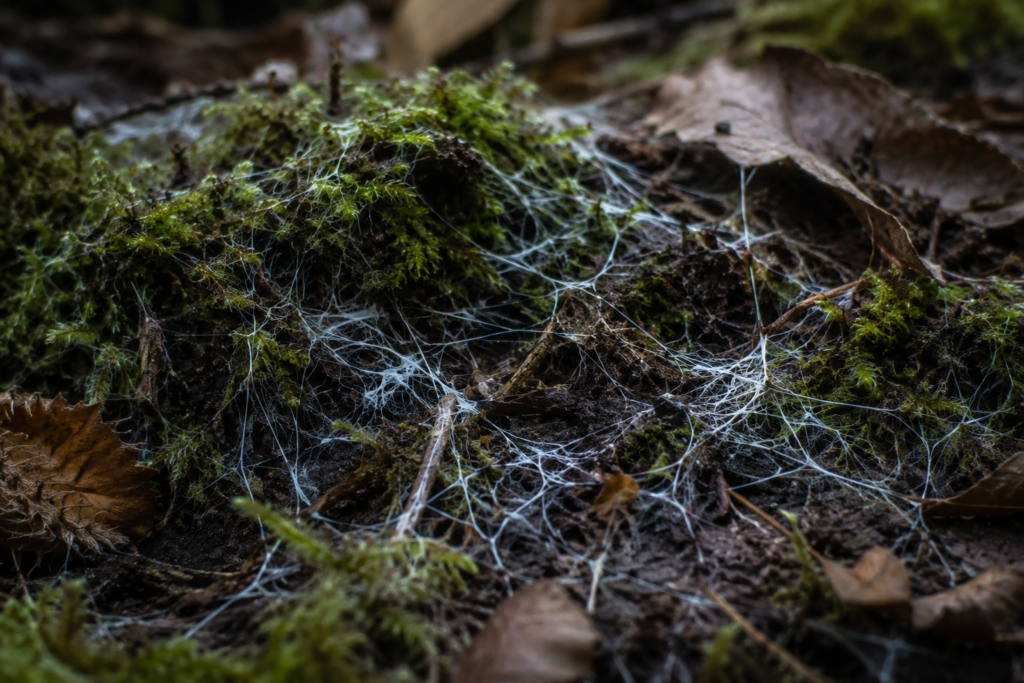
The discovery of fungal communication systems also transformed how scientists think about ecological information. Some studies suggest that when one plant experiences insect attacks or environmental stress, chemical signals can travel through fungal networks and trigger defensive responses in neighbouring plants before the threat spreads. Plants connected through fungal pathways sometimes alter their chemistry preemptively, increasing defensive compounds before damage occurs. The forest is not “talking” in a conscious sense, but biological information clearly moves through ecosystems in sophisticated ways. These findings changed how many people emotionally relate to nature. Forests no longer appear silent or disconnected. They begin to feel alive in a deeper, more interconnected sense.
This growing fascination with fungi has expanded far beyond academic science. Fungi, once largely ignored outside scientific circles, have become one of the most intriguing subjects in modern ecology. People increasingly realise that some of the most important organisms on Earth remain almost entirely hidden from view. This explains why products like the Back to the Roots Organic Mushroom Grow Kit have become so popular. Many people are fascinated by fungi for the first time and want to observe fungal growth directly at home. Watching mycelium develop inside a mushroom kit creates a surprisingly tangible connection to the same biological processes operating beneath forests worldwide. The hidden underground systems connecting ecosystems suddenly become easier to imagine when observed at smaller scales.
The more scientists study these fungal systems, the more complex they appear. Some fungal species connect multiple plant species simultaneously, creating enormous shared ecological networks. Others specialise in particular hosts or environmental conditions. Tropical rainforests, boreal forests, grasslands, and deserts all contain distinct fungal ecologies adapted to local climates and soils. This complexity highlights one of the most important lessons in ecology: visible ecosystems are only part of the story. Much of Earth’s biological activity occurs underground or at microscopic scales humans rarely notice. Forests that once appeared simple suddenly reveal astonishing levels of hidden organisation and interaction.
Even small indoor environments often reflect these same ecological principles. People who arrange plants indoors quickly notice how environmental structure influences growth, moisture, airflow, and light exposure. Something like the AIMALL 2 Tier Bamboo Plant Stand subtly recreates the layered environmental structure found in forests, where differences in height and exposure create microclimates that influence biological interactions. Similarly, starting plants from seed using the MIXC Seed Starter Tray Kit with Humidity Dome reveals how sensitive biological systems are to moisture, temperature, and environmental stability from the earliest stages of growth. These small experiences mirror much larger ecological processes operating across forests globally.
One of the most profound aspects of the underground forest network is that it reminds humans how incomplete our understanding of nature still is. Forests humans walked through for centuries contained hidden systems almost no one suspected existed. Entire ecosystems were connected beneath human feet all along. The discovery carries an emotional dimension many scientific findings lack because it fundamentally changes how nature feels. Trees no longer seem like isolated objects competing independently across landscapes. Forests begin to resemble communities woven together through invisible biological relationships operating continuously beneath the soil.
Modern ecology increasingly reveals that life on Earth depends on networks operating across multiple scales simultaneously. Nutrients cycle through fungal pathways. Carbon moves between organisms. Species interactions shape biodiversity and ecosystem stability. Hidden biological systems regulate visible landscapes. The forest floor, once dismissed as dirt and decay, becomes one of the most biologically active environments on the planet. Beneath every forest lies an ancient living infrastructure connecting ecosystems together in ways humans are only beginning to understand. And hidden beneath every step is a network that has quietly shaped forests for hundreds of millions of years.