
For most of human history, diseases were limited by geography. Tropical pathogens remained in tropical regions. Cold climates prevented certain parasites from spreading. Mountains, deserts, and oceans acted as natural barriers that shaped where diseases could survive and where they could not.
But that stability is beginning to change.
One of the most important ecological discoveries of the past few decades is that human pathogens are not fixed in place. Their geographic ranges are shifting rapidly, often in response to changes humans themselves have created. Climate change, urbanisation, global travel, deforestation, agriculture, and biodiversity loss are all reshaping the environments pathogens depend on. The result is a world where diseases are increasingly appearing in places they were never previously found.
The Annual Review article Changing Geographic Distributions of Human Pathogens explores how environmental and ecological change influence the spread of infectious diseases across the planet. The research highlights that pathogens are exploiting nearly every alteration humans make to ecosystems, from changing land use to rising global temperatures.
What makes this especially concerning is that pathogens often move long before societies are prepared for them. Diseases that were once geographically isolated are now expanding into entirely new regions, exposing populations with little immunity or preparedness.
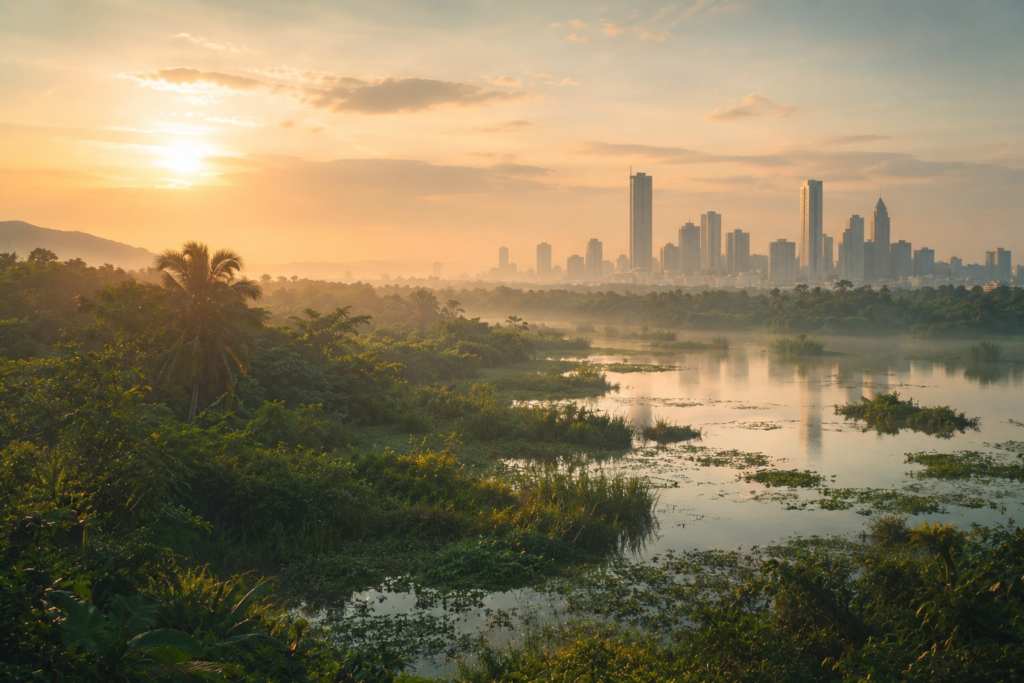
For much of history, geography acted as a form of protection. Environmental conditions determined where mosquitoes could survive, where parasites could complete life cycles, and where hosts and vectors could interact. Temperature, rainfall, humidity, and biodiversity all created invisible ecological boundaries limiting disease spread.
Today, those boundaries are weakening.
Rising temperatures are allowing disease-carrying organisms to survive farther from the equator. Changes in rainfall patterns create new breeding conditions for mosquitoes and other vectors. Expanding cities and global transportation networks connect ecosystems and populations that were once isolated. Human movement has become so rapid and widespread that pathogens can now travel across continents in hours rather than generations.
The article explains that human pathogens are fundamentally ecological organisms. They depend on hosts, vectors, environmental conditions, and transmission opportunities. When ecological systems change, disease systems change alongside them.
One of the clearest examples involves mosquito-borne diseases. Mosquitoes are extremely sensitive to environmental conditions, especially temperature and moisture. As climates warm, mosquito species capable of carrying diseases such as dengue fever, malaria, and West Nile virus are expanding into regions previously too cold for long-term survival.

This is not simply a matter of warmer weather making mosquitoes more common. Temperature also influences pathogen development inside the mosquito itself. In many cases, warmer conditions accelerate pathogen reproduction, increasing transmission rates and shortening disease cycles.
Even small environmental changes can have enormous consequences. People who garden or grow plants often notice how dramatically moisture and temperature affect biological activity. Something as simple as the XLUX Soil Moisture Meter reveals how environmental conditions fluctuate even within tiny areas. In natural ecosystems, these same subtle shifts influence breeding habitats for insects, microbial survival, and pathogen persistence.
The review also highlights how land-use change plays a major role in pathogen emergence. Deforestation, agriculture, and urban expansion alter ecosystems in ways that increase contact between humans, wildlife, and domesticated animals. This creates new opportunities for pathogens to jump between species.
Historically, many diseases remained confined within wildlife populations because ecological barriers limited interaction with humans. But as forests are cleared and habitats fragmented, humans increasingly encounter animals carrying unfamiliar pathogens.
The article emphasises that emerging infectious diseases are often strongly associated with human-driven environmental disruption.
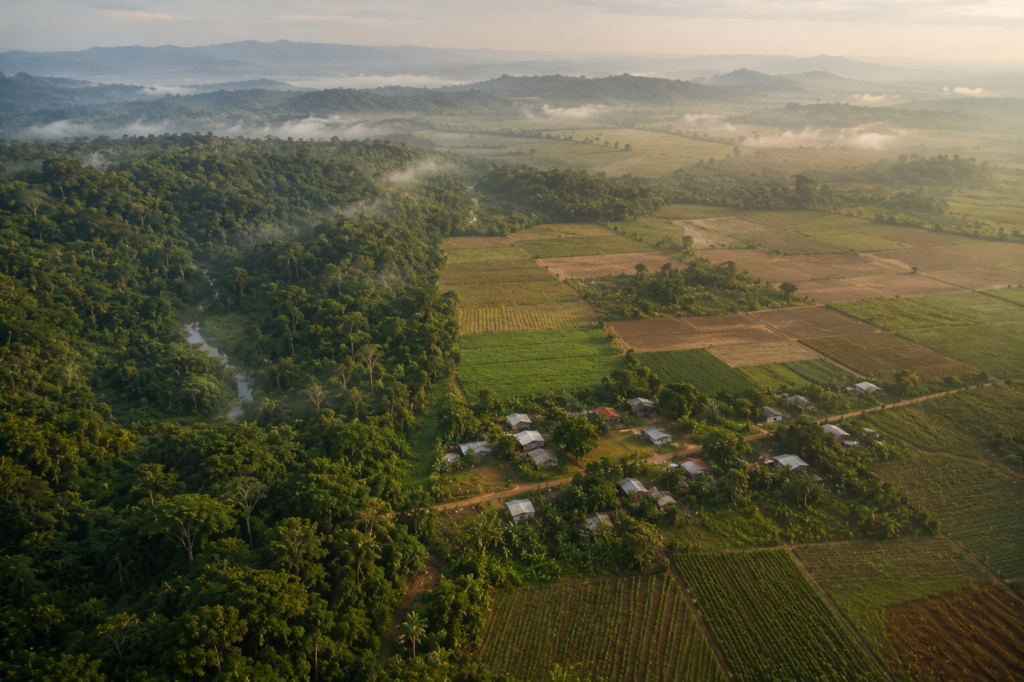
This process is especially important because many pathogens circulating within wildlife populations never previously encountered humans regularly enough to establish transmission. Once ecological conditions change, however, those barriers weaken.
Urbanisation further intensifies the problem. Cities create dense human populations connected through global transportation systems, providing ideal conditions for rapid disease spread. At the same time, urban heat islands and altered drainage systems can create highly favourable habitats for vectors such as mosquitoes and rodents.
The modern world has effectively created a global ecological network for pathogens.
Global travel has amplified this dramatically. Diseases that once spread slowly through local populations can now move internationally within a single day. A pathogen emerging in one ecosystem may appear on another continent before symptoms even develop.
This level of connectivity fundamentally changes disease ecology. Historically, geographic isolation limited pathogen expansion. Today, ecological and transportation systems are increasingly intertwined.

Climate change adds another layer of complexity. Rising temperatures are shifting entire ecosystems, altering the geographic ranges of hosts and vectors simultaneously. Species are moving poleward and upward in elevation as environmental conditions change.
As hosts move, pathogens move with them.
Research discussed in the review suggests that pathogen distributions are highly dynamic and tightly linked to broader ecological processes.
One of the most fascinating aspects of disease ecology is how strongly biodiversity influences transmission. In some ecosystems, higher biodiversity can reduce disease risk because pathogens encounter more non-competent hosts that interrupt transmission cycles. In other systems, biodiversity loss increases pathogen spread by favouring species that efficiently transmit disease.
This means ecosystems themselves can influence human health outcomes.

The relationship between biodiversity and disease is incredibly complex. Ecosystems are not passive backgrounds where diseases happen to occur. They actively shape transmission dynamics through species interactions, population structure, and environmental stability.
These ecological relationships become easier to appreciate when observing smaller biological systems. Indoor plant growth, for example, quickly demonstrates how environmental conditions influence organism behaviour. Using something like the LBW Full Spectrum LED Grow Light with Stand reveals how strongly biological activity responds to temperature and light conditions. The same environmental sensitivity operates throughout ecosystems globally.
The review also explores how pathogens themselves evolve rapidly in response to ecological change. Pathogens possess extraordinarily short generation times compared to humans, allowing them to adapt quickly to new hosts, environments, and transmission opportunities.
Human activity continuously creates new ecological niches for pathogens to exploit. Intensive livestock farming, dense urban populations, antibiotic overuse, and climate-driven environmental change all generate conditions favouring pathogen evolution.
The widespread use of antibiotics is a particularly important example. Antibiotics transformed medicine by dramatically reducing mortality from bacterial infections. But heavy use also created powerful evolutionary pressure favouring resistant strains.

Pathogens evolve because ecological conditions reward certain traits.
The article notes that human ecology itself has become one of the strongest drivers of pathogen evolution and geographic redistribution.
Agriculture has also profoundly reshaped disease ecology. Domesticated animals often act as reservoirs or intermediate hosts for pathogens. Large-scale farming systems create dense populations where diseases can spread rapidly and evolve efficiently.
Historically, many major human diseases originated through interactions with domesticated animals. As agricultural systems intensify globally, opportunities for pathogen transmission and evolution continue increasing.
Deforestation further compounds the issue by reducing ecological complexity. Simplified ecosystems often favour species capable of surviving near human populations, many of which are highly effective disease reservoirs.

Rodents, mosquitoes, and certain bird species frequently thrive in disturbed environments, increasing transmission risks for multiple pathogens.
One of the most concerning findings from modern disease ecology is that environmental change may produce entirely new disease interactions. As species distributions shift under climate change, hosts and pathogens that never previously encountered one another may begin interacting for the first time.
This creates unpredictable ecological outcomes.
Scientists are increasingly concerned that climate-driven redistribution of species may accelerate pathogen sharing between wildlife populations, potentially increasing the risk of future zoonotic diseases.
The ecological systems governing disease are deeply interconnected. Human health cannot be separated from environmental health.
Interestingly, many people intuitively recreate ecological principles within their own environments. Organised, structured systems often reduce biological stress and improve stability. Something like the Simple Houseware Bamboo Desk Organizer reflects the same principle ecosystems rely on: organised environments function more efficiently than chaotic ones.
Similarly, creating layered indoor plant systems using the AIMALL 2 Tier Bamboo Plant Stand demonstrates how environmental structure influences airflow, humidity, and biological interactions at small scales.
Even seed germination illustrates the sensitivity of life to environmental conditions. Using a MIXC Seed Starter Tray Kit with Humidity Dome quickly shows how tiny changes in temperature, humidity, and moisture dramatically influence biological development. Pathogens respond to environmental conditions with similar sensitivity.
One of the most important messages from the review is that infectious disease emergence is not random. Pathogens respond to ecological opportunity. Human-driven environmental change continuously creates new opportunities for transmission, evolution, and geographic expansion.
This means preventing future disease outbreaks requires thinking ecologically rather than purely medically.

Protecting biodiversity, reducing habitat destruction, improving environmental management, and limiting climate change are all public health strategies as much as conservation goals.
The article ultimately reveals that disease geography is becoming increasingly unstable because the ecosystems controlling pathogen distributions are themselves changing rapidly.
Pathogens are not invading new places randomly.
They are following the ecological pathways humans continue creating.