Evolution is one of the most important scientific ideas ever developed. It explains why life on Earth is so diverse, how species change over time, and why every living organism—from giant blue whales to tiny bacteria—shares a common ancestry. Yet despite being one of the foundations of modern biology, evolution is often misunderstood. Many people imagine it as a process with a goal or a predetermined direction. In reality, evolution is far more fascinating than that. It is an ongoing process driven by variation, inheritance, environmental pressures, and chance events that have been shaping life for billions of years.
Understanding evolution changes the way we see the natural world. Suddenly, the incredible diversity of life begins to make sense. The wings of birds, the camouflage of insects, the long necks of giraffes, and even human intelligence become part of a larger story stretching back through deep time. Evolution is not simply a theory about the past. It is an active process occurring around us every day. Bacteria evolve resistance to antibiotics, animals adapt to changing climates, and species continue responding to environmental pressures in ways that scientists can observe directly.
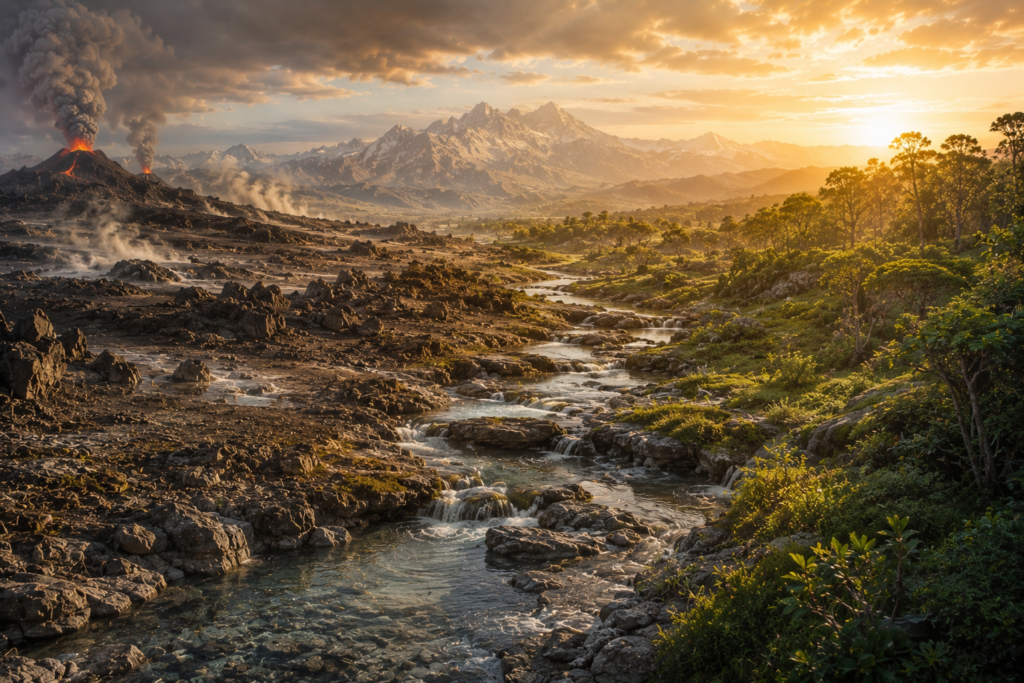
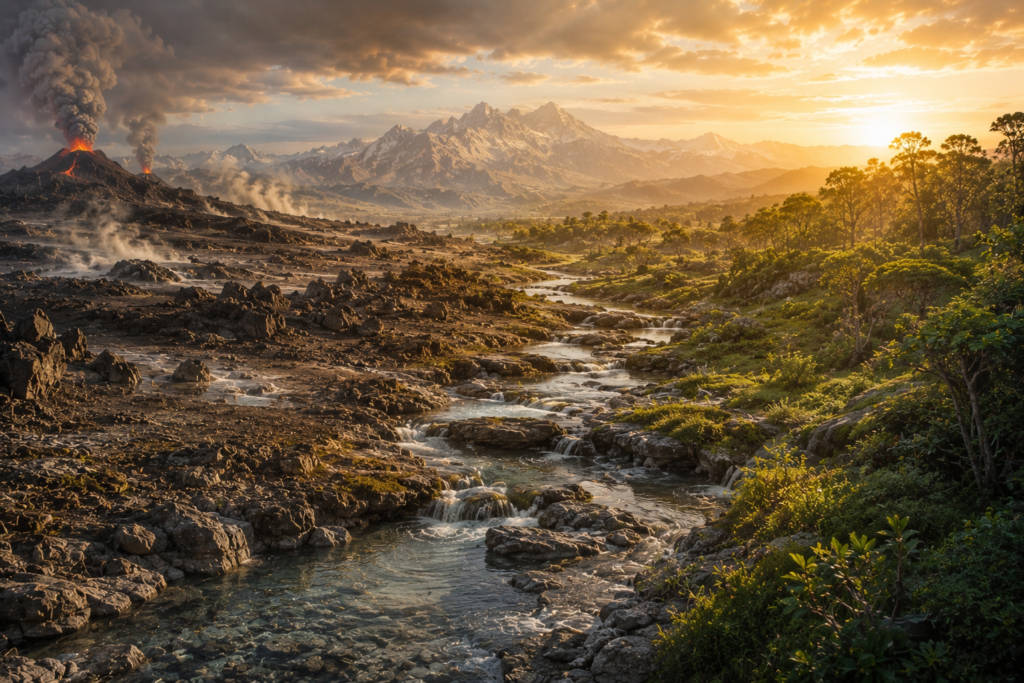
The story begins more than 3.5 billion years ago when the first simple life forms appeared on Earth. At that time, the planet looked dramatically different from today. There were no forests, animals, flowers, or insects. Instead, Earth’s surface was dominated by oceans, volcanic activity, and an atmosphere lacking much of the oxygen modern organisms depend upon. The earliest life forms were simple single-celled organisms, yet these tiny ancestors would eventually give rise to every plant, animal, fungus, and microbe alive today.
One of the most extraordinary discoveries in biology is that all living things share a common genetic language. The DNA found in humans operates using the same fundamental code as the DNA found in trees, birds, mushrooms, and bacteria. This shared biological framework provides some of the strongest evidence for evolution. It suggests that all life on Earth is connected through an immense family tree stretching back billions of years to common ancestors that lived long before complex organisms existed.
The idea of evolution by natural selection was most famously developed by Charles Darwin in the nineteenth century. During his voyage aboard the HMS Beagle, Darwin observed remarkable patterns in the natural world. He noticed that species often varied slightly between islands and environments. Organisms appeared adapted to local conditions, yet many also shared clear similarities with related species found elsewhere. These observations eventually led him to propose that species change over time through a process he called natural selection.
Natural selection is surprisingly simple in principle. Individuals within a population vary from one another. Some of these differences affect survival and reproduction. If certain traits help individuals leave more offspring, those traits tend to become more common in future generations. Over long periods of time, this process can produce significant changes within populations. Tiny differences accumulated across thousands or millions of generations can eventually lead to entirely new species.
A useful way to think about evolution is to imagine a population of animals living within a changing environment. Suppose some individuals possess slightly thicker fur than others. If the climate becomes colder, those animals may survive more successfully and produce more offspring. Over time, genes associated with thicker fur become increasingly common within the population. No conscious decision occurs. The environment simply influences which traits become more successful.
This process explains countless features observed throughout nature. Polar bears possess thick insulation because ancestors with traits suited to cold environments survived more effectively in Arctic conditions. Desert plants conserve water because individuals with water-saving adaptations left more descendants in dry climates. Birds evolved specialised beaks because different food sources favoured different feeding strategies.
Evolution often appears incredibly creative, yet it works without planning or foresight. New traits arise through genetic variation, while environmental conditions influence which variations persist. The result is a natural process capable of producing astonishing complexity without requiring a predetermined design.
One of the most powerful sources of evidence for evolution comes from fossils. Fossils provide snapshots of ancient life preserved within rock layers across the planet. These remains reveal how organisms changed over time and allow scientists to reconstruct evolutionary history. Transitional fossils are particularly important because they show intermediate stages between major groups of organisms. Fossils documenting the transition between dinosaurs and birds, for example, reveal how feathers evolved long before powered flight appeared.
The fossil record also highlights the immense timescales involved in evolution. Human lifespans are incredibly short compared with geological history. Entire species may persist for millions of years before changing significantly. Mountains rise and erode, oceans expand and disappear, and continents drift across the planet while evolution unfolds generation by generation.
Learning about fossils often inspires people to explore natural history more deeply. A book such as the National Geographic Little Kids First Big Book of Dinosaurs introduces younger readers to evolutionary concepts through some of the most iconic organisms ever discovered. Dinosaurs remain popular not simply because they were enormous, but because they offer a tangible connection to Earth’s distant past.

Another key mechanism driving evolution is genetic mutation. Mutations are changes in DNA that occur naturally over time. Most mutations have little effect, while some are harmful and others beneficial. These genetic changes provide the raw material upon which natural selection acts. Without mutation, evolution would eventually grind to a halt because populations would lack new variation.
It is important to understand that evolution does not always produce perfection. Organisms evolve solutions that work well enough under specific environmental conditions. Many biological features contain imperfections reflecting evolutionary history. The human spine, for example, evolved from ancestors that walked on four legs, contributing to many of the back problems humans experience today. Evolution modifies existing structures rather than designing organisms from scratch.
One of the most fascinating aspects of evolution is adaptation. Adaptations are traits that improve an organism’s ability to survive or reproduce within a particular environment. Camouflage, venom, migration, echolocation, and complex social behaviour all represent adaptations shaped through evolutionary processes. Some adaptations are obvious, while others become apparent only through careful scientific investigation.

The natural world is filled with remarkable examples. Arctic foxes change coat colour seasonally. Orchids evolve flower structures that attract specific pollinators. Deep-sea fish develop bioluminescent organs that generate light within perpetual darkness. Each adaptation tells a story about environmental pressures operating across countless generations.
Evolution also helps explain biodiversity. Earth currently supports millions of species, each occupying different ecological roles. This diversity emerged because populations became separated geographically, adapted to different environments, and accumulated genetic differences over time. Eventually, some populations diverged so extensively that they became distinct species incapable of interbreeding.
The process, known as speciation, is responsible for much of life’s incredible variety. Islands provide particularly useful examples because isolated populations often evolve unique characteristics. The famous finches of the Galápagos Islands evolved different beak shapes adapted to specific food sources, demonstrating how environmental conditions influence evolutionary outcomes.
Understanding evolution also transforms how we think about humans. Humans are not separate from nature. We are part of the same evolutionary story as every other organism on Earth. Modern humans evolved through a long lineage of ancestors stretching back millions of years. Fossil discoveries reveal a complex history involving multiple hominin species, environmental changes, and evolutionary innovations.
Traits often considered uniquely human emerged gradually. Bipedal walking, tool use, language, social cooperation, and large brains evolved over extended periods rather than appearing suddenly. Human evolution remains an active area of research because new discoveries continue reshaping scientific understanding of our origins.
Exploring these topics often sparks curiosity about biology and natural history. Tools like the AmScope Beginner Microscope Kit allow people to observe living organisms directly, revealing details of cells and microscopic life that highlight the shared biological foundations connecting all species.

Evolution is not limited to ancient history. Scientists observe evolutionary change occurring today. One of the most famous examples involves antibiotic resistance. When bacteria are exposed to antibiotics, some individuals possess genetic traits allowing survival. These bacteria reproduce, passing resistance genes to future generations. Over time, resistant populations become increasingly common. This process demonstrates evolution unfolding on timescales humans can directly observe.
Climate change is creating new opportunities to study evolution in real time as well. Species worldwide are shifting ranges, altering behaviours, and adapting to changing environmental conditions. Some populations evolve rapidly, while others struggle to keep pace with environmental change. Understanding evolutionary responses has become increasingly important for conservation biology.
Conservation itself is deeply connected to evolutionary principles. Protecting biodiversity means preserving not only species but also the genetic variation that allows populations to adapt. Ecosystems are dynamic systems shaped by evolutionary processes operating across multiple timescales. When species disappear, unique evolutionary histories vanish with them.
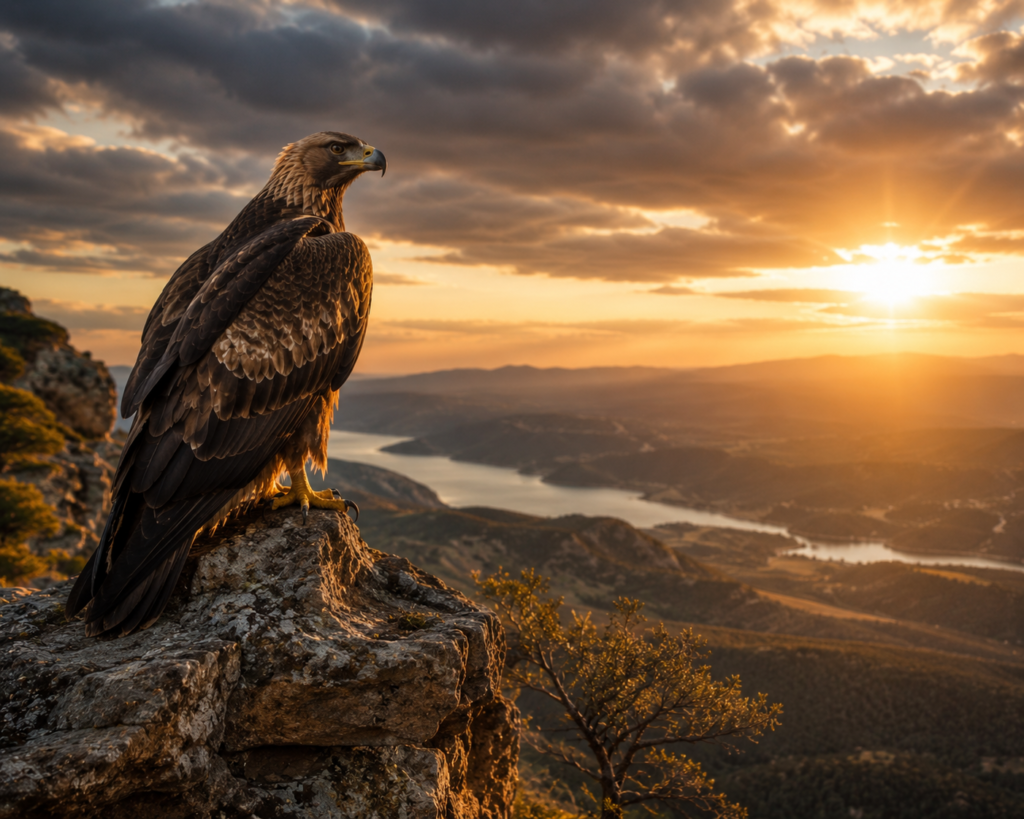
Observing wildlife in natural habitats often helps people appreciate these connections more deeply. The Nikon PROSTAFF P7 Binoculars can reveal behavioural adaptations in birds and mammals that might otherwise go unnoticed, from specialised feeding strategies to intricate social interactions shaped through evolution.
One misconception about evolution is that it always leads toward greater complexity. In reality, evolution simply favours traits that increase success under specific conditions. Sometimes this produces more complex organisms, while other times it results in simplification. Parasites, for example, often lose structures and functions unnecessary within their specialised lifestyles.
Chance also plays a surprisingly important role. Random events such as volcanic eruptions, asteroid impacts, disease outbreaks, and genetic drift influence evolutionary outcomes. If Earth’s history unfolded again from the beginning, life might look dramatically different. Evolution is shaped by both predictable environmental pressures and unpredictable events.
Mass extinctions provide striking examples of contingency in evolution. Throughout Earth’s history, several major extinction events eliminated large proportions of existing species. The extinction that ended the age of non-avian dinosaurs approximately 66 million years ago opened ecological opportunities that allowed mammals to diversify dramatically. Without that event, humans may never have evolved.
The interconnectedness of life becomes increasingly apparent the more evolution is studied. Similar structures appear across seemingly unrelated organisms because they inherited them from common ancestors. The bones within human arms, whale flippers, bat wings, and cat legs share remarkably similar arrangements despite serving different functions. These homologies provide powerful evidence of shared evolutionary origins.
Nature enthusiasts often enjoy exploring these relationships outdoors. A field guide such as the National Audubon Society Field Guide to North American Birds helps reveal evolutionary adaptations among bird species, demonstrating how morphology, behaviour, and ecology interact.
Modern genetics has revolutionised evolutionary science. DNA sequencing allows researchers to compare organisms at unprecedented levels of detail. Scientists can reconstruct evolutionary relationships, estimate divergence times, and identify genetic changes associated with particular adaptations. Many questions that once seemed impossible to answer are now accessible through molecular biology.
Perhaps the most profound lesson evolution teaches is that life is constantly changing. Species are not fixed entities. Ecosystems are not static. The natural world exists in a state of continuous transformation shaped by environmental pressures, genetic variation, and deep time. Every organism alive today represents a temporary branch within a much larger evolutionary story still unfolding.
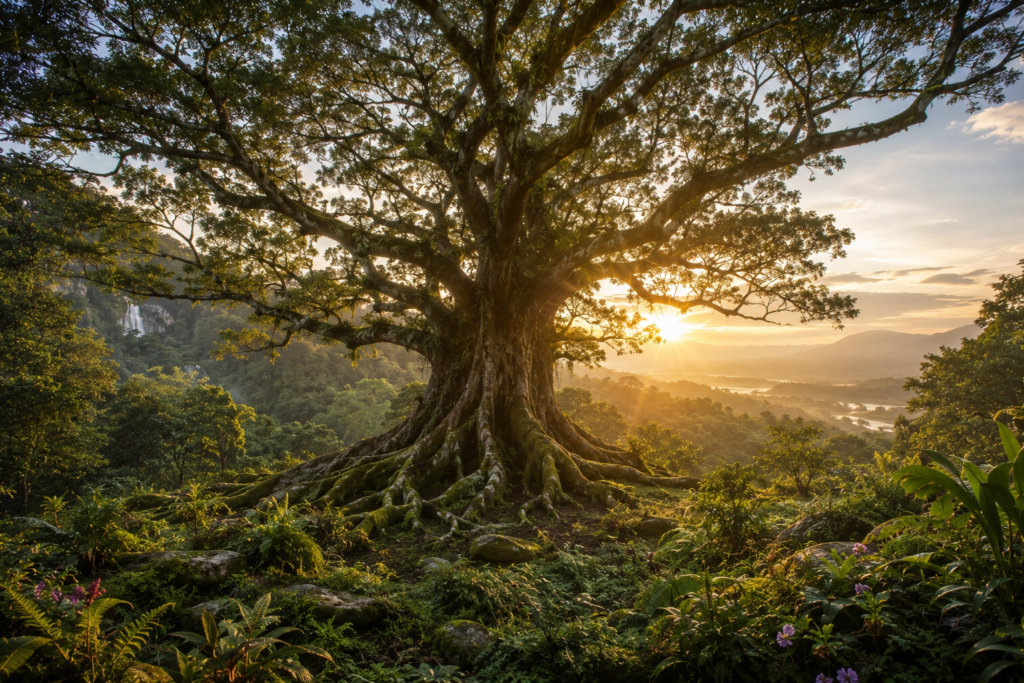
This perspective often changes how people view nature. Instead of seeing species as isolated creations, they begin to recognise connections linking all living things. The robin outside a window, the gum tree in a park, the fungi beneath a forest floor, and humans themselves become part of the same ancient narrative stretching back billions of years.

Even simple activities such as gardening can highlight evolutionary principles. Using a MIXC Seed Starter Tray Kit with Humidity Dome reveals variation among seedlings as different genetic combinations influence growth and survival. Small observations like these provide glimpses into the processes that have shaped life on Earth for unimaginable spans of time.
Evolution remains one of humanity’s greatest scientific discoveries because it unifies biology under a single explanatory framework. It explains the diversity of life, the similarities shared among organisms, the existence of fossils, the emergence of adaptations, and the ongoing changes observed within populations today. More than a theory about the past, evolution is a living process shaping the present and future of life on Earth.
Every forest, coral reef, grassland, and city contains organisms carrying the legacy of billions of years of evolutionary history. The natural world around us is not a collection of separate species but a vast interconnected family tree whose roots stretch deep into Earth’s ancient past. Understanding evolution reveals that every living thing is part of that story—including us.