
Muogamarra Nature Reserve is one of the most fascinating and mysterious protected landscapes in Australia. Hidden along the rugged northern edge of Sydney, overlooking the dramatic waterways of the Hawkesbury River, the reserve feels almost untouched by time. Towering sandstone cliffs rise above ancient forests, hidden waterfalls disappear into deep valleys, and Aboriginal rock engravings remain etched into the stone exactly where they were created thousands of years ago. Despite being located surprisingly close to one of the largest cities in the Southern Hemisphere, Muogamarra remains unknown to many Australians. Part of what makes the reserve so unique is that public access is heavily restricted for most of the year, helping preserve its fragile ecosystems and cultural heritage.
The result is a place that feels wild in a way few landscapes near major cities still do.
Muogamarra Nature Reserve covers more than 2,000 hectares of rugged bushland within the traditional Country of the GuriNgai People. The reserve sits within a broader network of protected landscapes connected to Ku-ring-gai Chase National Park and the Hawkesbury region, an area internationally recognised for its extraordinary biodiversity and geological history. From above, the landscape appears like a maze of sandstone plateaus, deep gullies, forests, creeks, and river systems stretching toward the Pacific coast. Yet on the ground, Muogamarra feels intimate and immersive. Walking through the reserve means moving beneath twisted angophoras, towering eucalyptus forests, moss-covered sandstone outcrops, and dense pockets of subtropical vegetation hidden within sheltered valleys.
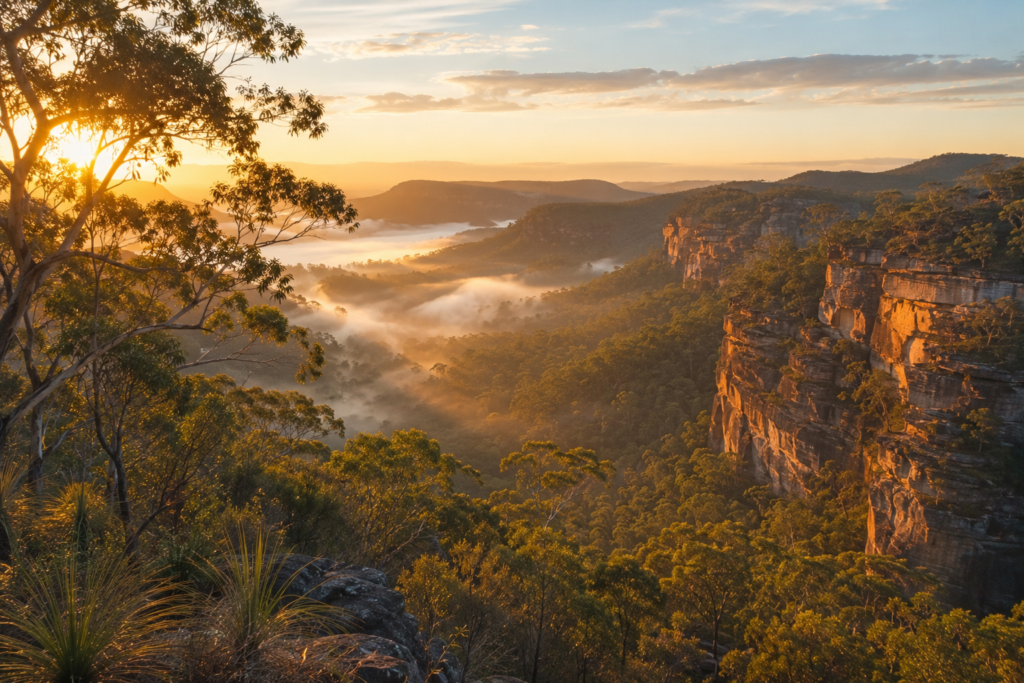
One of the reasons Muogamarra feels so biologically rich is because the landscape contains a remarkable variety of microhabitats packed into a relatively small area. The reserve’s steep terrain creates dramatic differences in sunlight, moisture, soil depth, and temperature. Exposed sandstone ridges experience intense heat and dry winds, while shaded gullies trap moisture and support lush rainforest vegetation. These environmental differences allow many plant communities to coexist within close proximity. Walking only a short distance through the reserve can feel like moving between entirely different ecosystems.
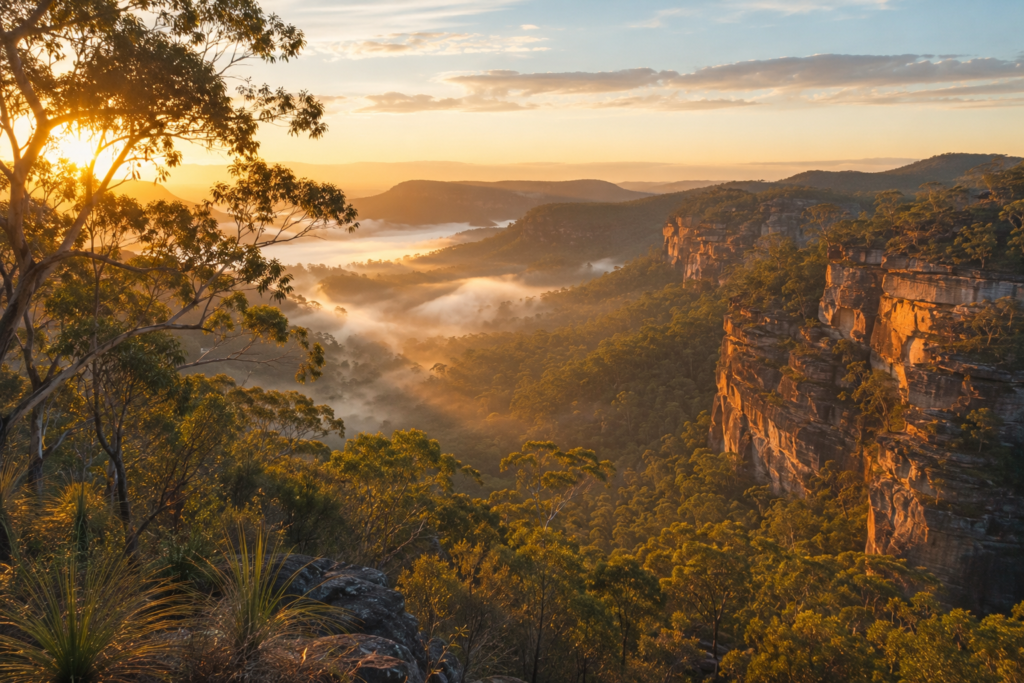
The sandstone geology shaping Muogamarra is incredibly ancient. Much of the region sits upon Hawkesbury sandstone formed during the Triassic period more than 200 million years ago. Over immense spans of time, erosion carved the dramatic cliffs, caves, ridges, and valleys visible throughout the landscape today. The result is one of Australia’s most visually striking natural environments. Soft golden light reflecting off sandstone cliffs during sunrise or late afternoon gives the reserve an almost cinematic atmosphere, especially when mist drifts through the valleys below.
This dramatic geology also shapes the ecology of the reserve. Sandstone soils are naturally nutrient-poor, forcing plants to adapt in extraordinary ways. Many species growing within Muogamarra evolved specialised survival strategies allowing them to persist in difficult conditions. Some plants developed incredibly efficient nutrient recycling systems. Others evolved hard leaves capable of reducing water loss during drought. Many species depend on periodic fire as part of their life cycle, with some seeds germinating only after exposure to smoke or intense heat.
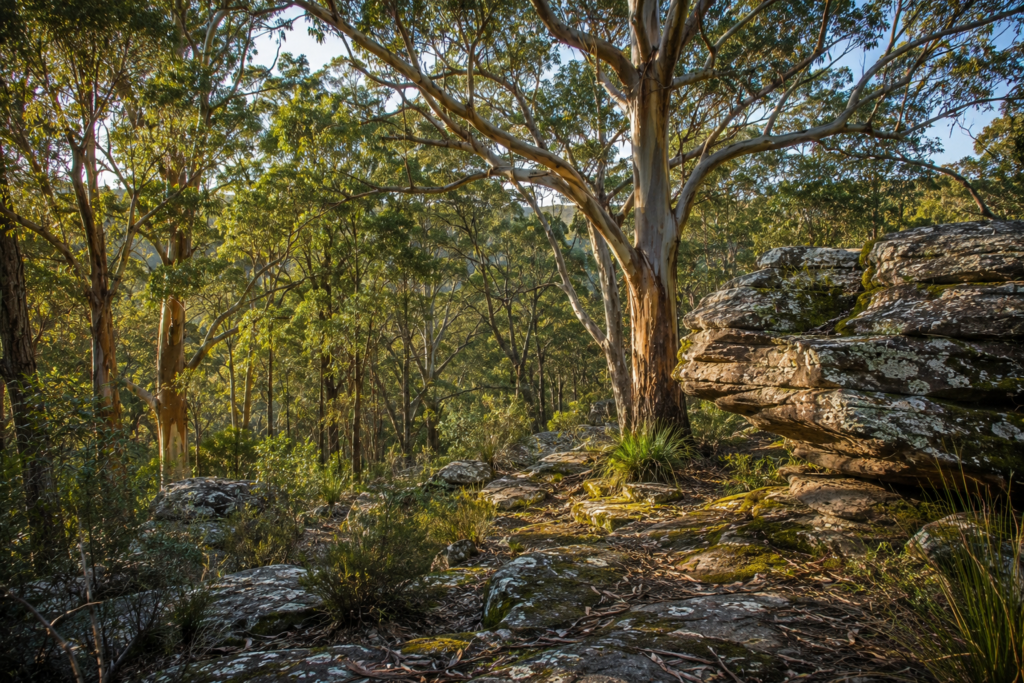
Fire has always been part of the Australian landscape, and Muogamarra’s ecosystems evolved alongside it for thousands of years. Aboriginal cultural burning practices once played a major role in shaping vegetation patterns across the region, creating mosaics of different plant communities and reducing fuel loads within the landscape. Today, fire management remains one of the most important challenges facing conservationists working to protect the reserve. Climate change is increasing the intensity and frequency of bushfires across Australia, placing pressure on ecosystems already adapted to naturally harsh environmental conditions.
Yet despite these challenges, Muogamarra remains incredibly resilient. Walking through the reserve after periods of rainfall reveals just how quickly Australian bushland can recover. Fresh green growth emerges from blackened trunks, wildflowers bloom across sandstone ridges, and dense understorey vegetation begins reclaiming the forest floor. This resilience is one reason the Australian bush continues to fascinate ecologists worldwide. Ecosystems that initially appear dry or sparse often contain hidden complexity and remarkable adaptive strategies beneath the surface.
The biodiversity within Muogamarra is extraordinary. The reserve supports hundreds of native plant species, including angophoras, scribbly gums, grass trees, banksias, wattles, and rare orchids hidden within sheltered gullies. During spring, large sections of the reserve erupt into colour as wildflowers bloom across sandstone heathlands. Native birds move constantly through the canopy, with species such as cockatoos, lorikeets, honeyeaters, lyrebirds, and powerful owls all inhabiting the surrounding forests.
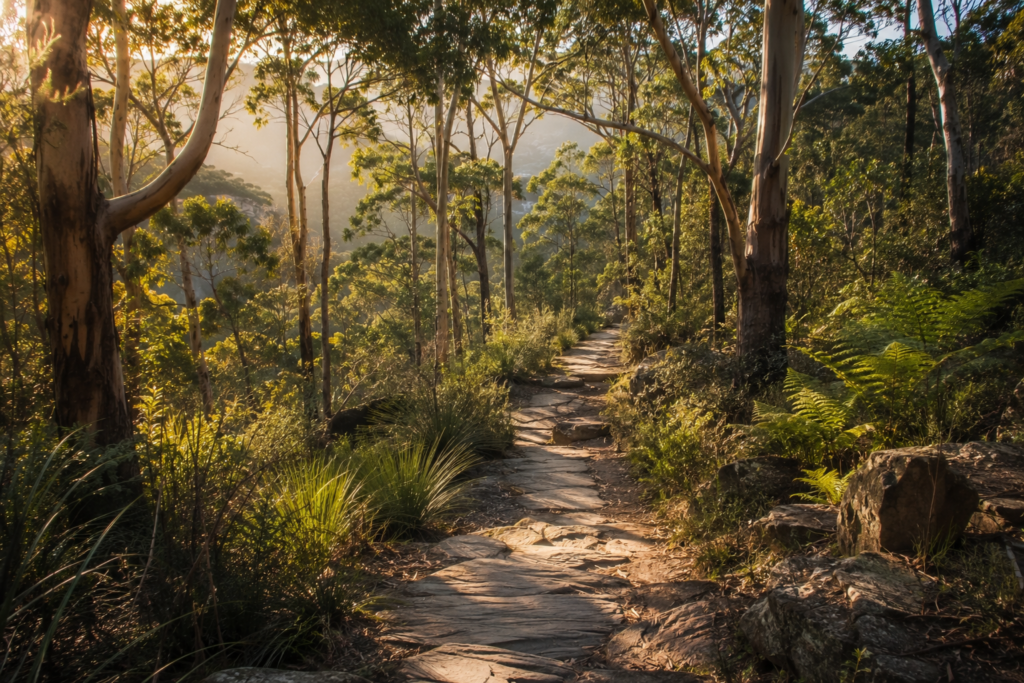
One of the most magical experiences within Muogamarra is simply slowing down enough to notice the small details hidden throughout the bush. Sunlight filtering through eucalyptus leaves creates shifting patterns across sandstone paths. Cicadas generate an almost overwhelming wall of sound during summer. Tiny skinks dart between rocks while lace monitors move quietly through the undergrowth. The Australian bush often feels harsh from a distance, but up close it reveals extraordinary texture, colour, and life.
This connection between observation and appreciation explains why so many people become fascinated by nature photography and bushwalking after visiting places like Muogamarra. A pair of Nikon PROSTAFF P7 Binoculars can completely transform how people experience landscapes like this, revealing birdlife and environmental details that are easy to miss with the naked eye. The reserve rewards patience and careful observation far more than fast-paced tourism.
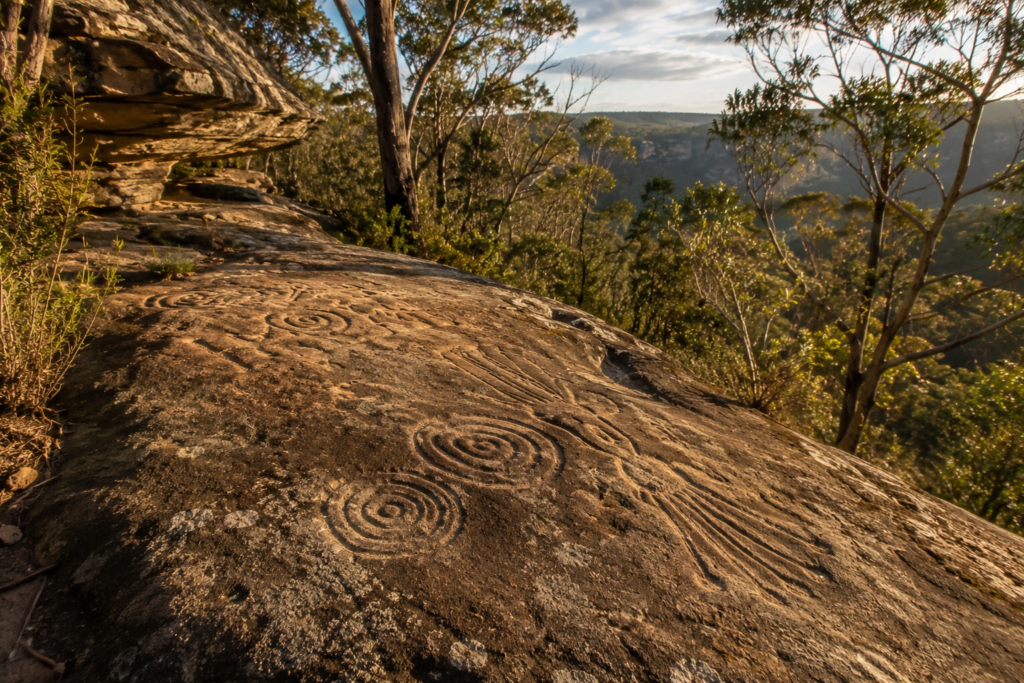
Perhaps the most culturally significant aspect of Muogamarra is its deep Aboriginal heritage. The reserve contains numerous Aboriginal sites, including rock engravings, shelters, axe-grinding grooves, and occupation areas reflecting thousands of years of continuous connection between people and Country. These cultural sites are not simply historical artefacts. They are part of living cultural traditions still deeply important to Aboriginal communities today.
Many of the engravings found throughout the Hawkesbury region depict animals, spiritual figures, and symbols connected to the surrounding environment. Their placement within the landscape often reflects an extraordinary understanding of geography, seasonal movement, and ecological systems. Standing beside these engravings creates a powerful sense of continuity between the ancient landscape and the present moment. The sandstone beneath your feet has witnessed thousands of years of human history while the surrounding forests continued evolving around it.
The reserve’s restricted public access helps protect both these cultural sites and the fragile ecosystems surrounding them. Unlike many national parks heavily impacted by tourism infrastructure, Muogamarra retains a sense of remoteness and ecological integrity that has become increasingly rare near major cities. Public open days occur only during certain times of the year, allowing visitors to explore designated walking trails while limiting long-term environmental pressure.
This limited access also contributes to the reserve’s almost mythical reputation among Sydney bushwalkers and photographers. Many people hear about Muogamarra for years before finally visiting during one of its seasonal openings. The experience often exceeds expectations because the landscape feels surprisingly untouched considering its proximity to urban development.
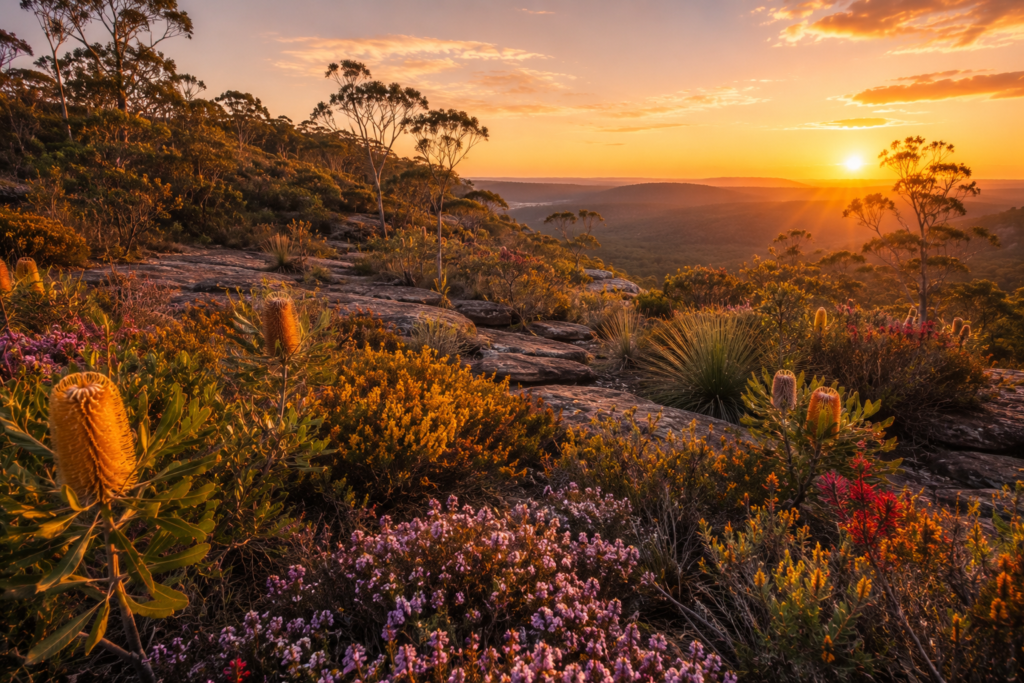
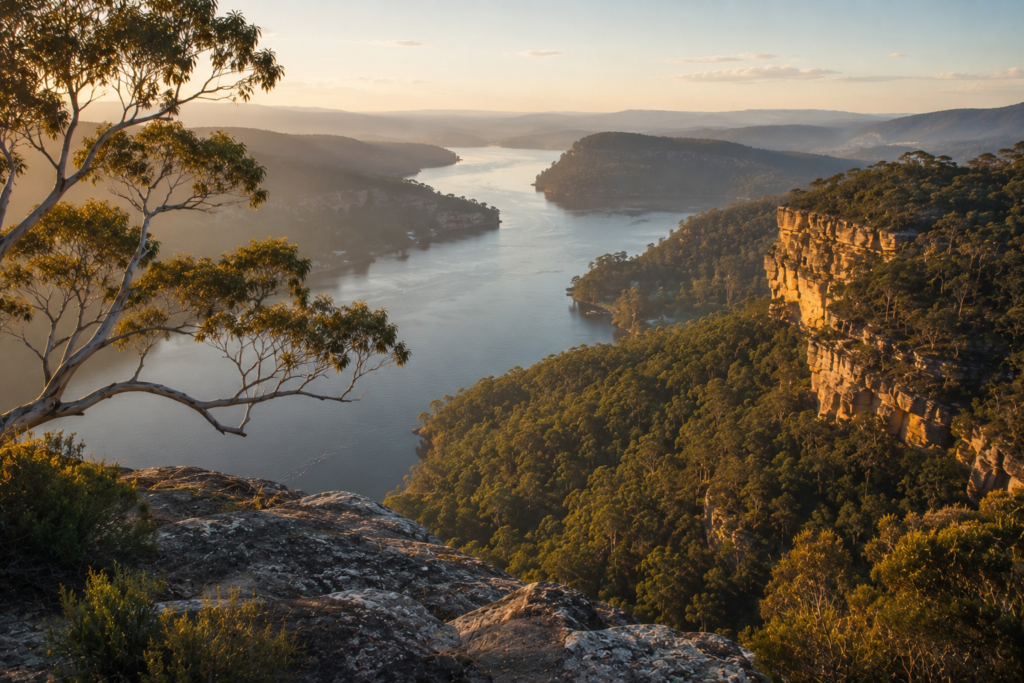
The Hawkesbury region surrounding the reserve is equally breathtaking. Vast river systems weave through sandstone cliffs and forested ridges, creating one of the most visually dramatic landscapes in New South Wales. From elevated lookouts within Muogamarra, the view stretches across endless layers of blue-green bushland fading into atmospheric haze. During early morning, mist rising from the river valleys below creates scenes that feel almost prehistoric.
Capturing these moments has become increasingly popular among photographers and content creators documenting Australia’s natural landscapes. A camera like the Canon EOS R50 Mirrorless Camera is perfectly suited to places like Muogamarra because lighting conditions shift constantly beneath the forest canopy and across open sandstone ridges. Soft morning light filtering through eucalyptus forests creates some of the most visually striking environmental photography opportunities in Australia.
Yet the reserve is not only visually impressive. It also plays an important ecological role within the broader Sydney region. Protected bushland corridors like Muogamarra allow wildlife populations to move across landscapes despite increasing urbanisation. Habitat fragmentation remains one of the biggest threats to biodiversity globally, making connected protected areas increasingly important for long-term conservation.
Species such as swamp wallabies, echidnas, gliders, and reptiles rely on intact bushland ecosystems to survive. Many native birds depend on seasonal flowering cycles within eucalyptus forests, while insects and pollinators support the broader ecological health of the reserve. Healthy ecosystems are built upon countless interconnected relationships operating continuously beneath the surface.
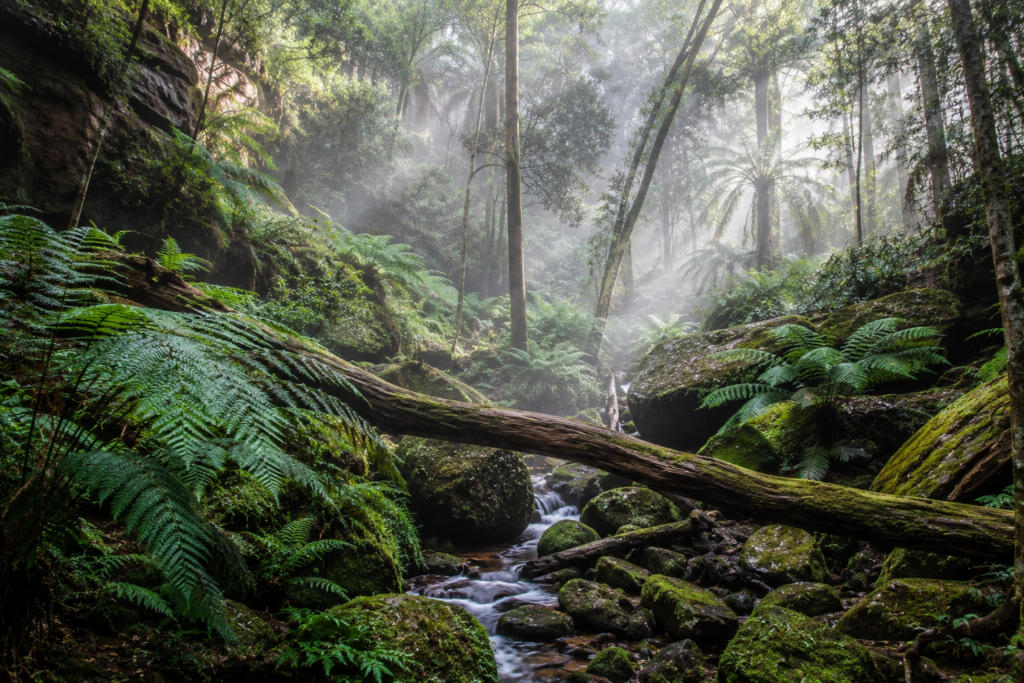
Walking through Muogamarra also changes the way people think about Australian landscapes more broadly. Many visitors arrive expecting dry bushland and sparse vegetation but leave surprised by how lush, layered, and biodiverse the reserve actually feels. Sheltered gullies contain dense fern growth and subtropical vegetation more reminiscent of rainforest environments than stereotypical Australian bush imagery.
This diversity of environments within a relatively small area reflects the extraordinary ecological complexity of the Sydney Basin region. Australia is often simplistically portrayed as environmentally harsh, but places like Muogamarra reveal ecosystems filled with subtle variation and hidden richness. Even small changes in elevation, moisture, and sunlight create entirely different biological communities.
People interested in understanding these ecosystems more deeply often become drawn toward native gardening and plant cultivation after visiting reserves like this. A product such as the MIXC Seed Starter Tray Kit with Humidity Dome becomes surprisingly useful for growing Australian native plants at home because many species require carefully controlled moisture conditions during germination. Watching native seedlings develop creates a much stronger appreciation for the environmental pressures shaping Australian ecosystems.
The reserve also highlights how important quietness and stillness are within nature experiences. Modern life often conditions people to move quickly and consume experiences rapidly, but Muogamarra encourages the opposite. The landscape rewards slowness. Sitting quietly beside sandstone cliffs while listening to birds move through the canopy changes the way people experience time itself.
This connection between nature and mental restoration is increasingly supported by scientific research. Studies consistently show that spending time within natural environments reduces stress, improves attention, and increases psychological wellbeing. Forest environments, in particular, appear especially effective at calming the nervous system. Walking through ancient bushland surrounded by natural textures, shifting light, and environmental sounds creates a type of sensory immersion difficult to replicate elsewhere.
This explains why many visitors leave reserves like Muogamarra feeling emotionally restored even after physically demanding walks. Nature engages attention differently from urban environments. Instead of overwhelming the brain with constant stimulation, natural landscapes create softer forms of focus that feel restorative rather than exhausting.
Comfort also becomes important during longer bushwalks through rugged terrain. A lightweight hiking backpack like the TETON Sports Oasis Hydration Backpack makes exploring landscapes like Muogamarra far more enjoyable, especially during warmer months when hydration becomes critical within exposed sandstone environments.
The reserve’s seasonal changes also contribute to its appeal. During spring, wildflowers bloom across the sandstone heathlands in extraordinary colour. Summer brings intense cicada sounds and dramatic thunderstorms rolling across the Hawkesbury region. Autumn softens the bushland with cooler temperatures and golden afternoon light, while winter mornings often fill the valleys with mist.
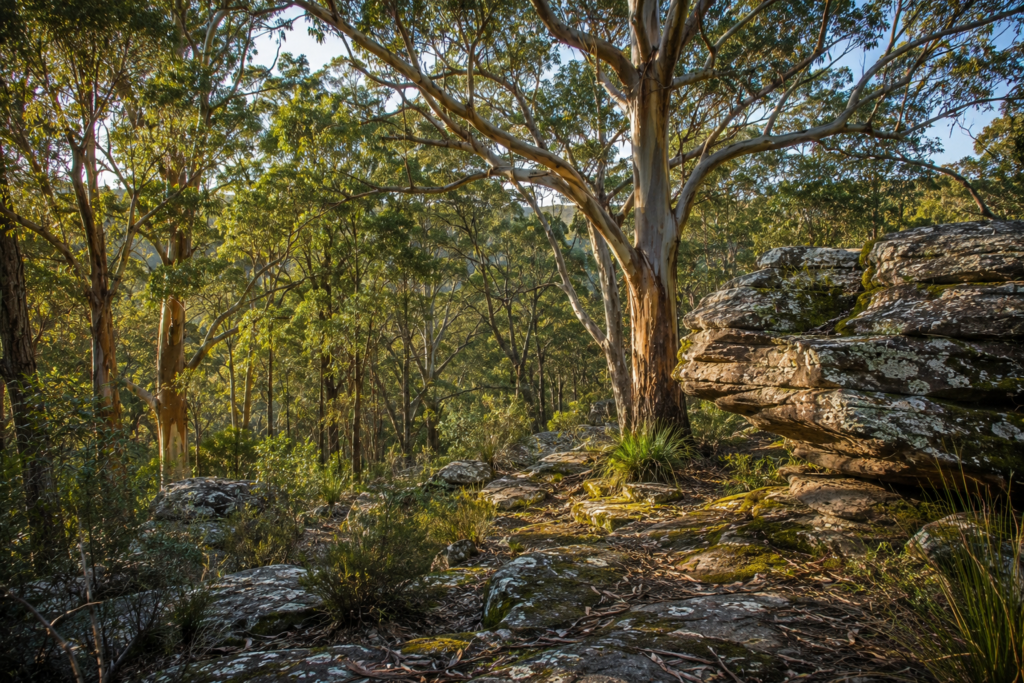
Every season reveals a different version of the landscape.
Even something as simple as observing birds within the reserve becomes deeply immersive because the forests remain relatively undisturbed. Many species behave differently in quieter environments with limited human activity. Using the Birdfy Smart Bird Feeder with Camera at home after visiting places like Muogamarra often sparks a much deeper appreciation for bird behaviour and ecological interactions because people begin recognising species and patterns they previously overlooked.
One of the most important lessons places like Muogamarra teach is that wildness still exists, even near major cities. Despite urban expansion, highways, and growing development across New South Wales, landscapes like this continue preserving ancient ecological systems and cultural histories stretching back thousands of years.
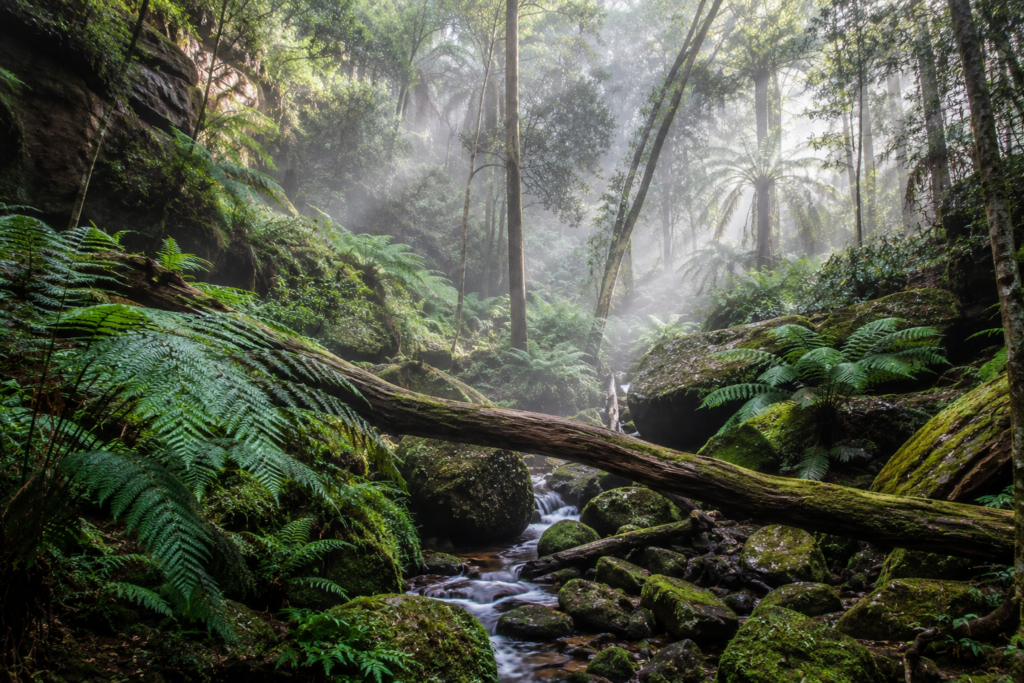
The reserve feels important not simply because it is beautiful, but because it represents continuity. The forests, sandstone cliffs, river systems, and Aboriginal cultural sites all remain connected to histories far older than modern Australia itself. Walking through Muogamarra creates a rare feeling that the landscape is still functioning according to rhythms much older than human infrastructure surrounding it.
That sense of timelessness is becoming increasingly valuable in the modern world.
Muogamarra Nature Reserve is not merely a scenic destination hidden near Sydney. It is a reminder that some of the most extraordinary places on Earth remain quietly hidden in plain sight, waiting for people willing to slow down enough to notice them.